

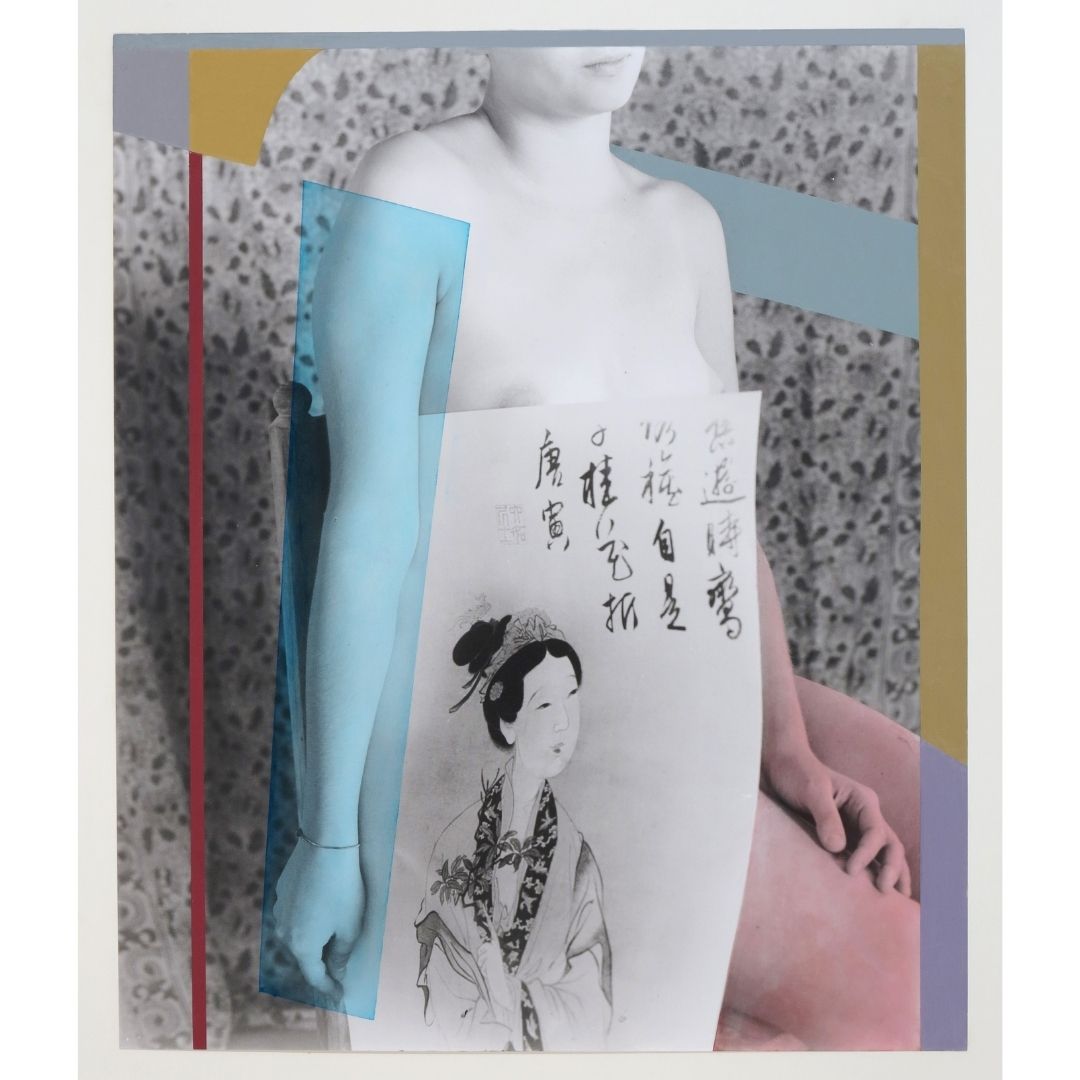
L to R: 1: “Blue Arm and Chinese Maiden,” 2012, 24 x 19 1/2 in. Oil on gelatin silver print | 2-3: After Tang Yin, “The Moon Goddess Chang E,” Ming Dynasty. Collection of the Metropolitan Museum of Art. | 4: “Artemis / Frame / Roses,” c. 1990, 41 1/4 x 43 3/4 in. Gelatin silver print | 5: “Annunciation,” 2002, 16 x 20 in. Gelatin silver print | 6: “Psyche’s Soul Within Cranach Venus,” 1990, 16 x 20 in. Gelatin silver print | 7: Lucas Cranach the Elder, “Adam and Eve,” 1528. Collection of the Uffizi Gallery. | 8: “Euridice and Amor,” 1982, 63 x 51 in. Acrylic on canvas |9: “Model and Apollo and Daphne,” 2008, 24 x 20 in. Gelatin silver print |10: “Daphne,” 1982, 78 x 60 in. Acrylic on canvas | 11: “Norwegian Aphrodite,” 1991, 16 x 20 in. Gelatin silver print | 12: “Mythological Nymphs in the Garden, Villa La Pietra,” 2008, 20 x 16. Gelatin silver print. Artworks by George Woodman © Woodman Family Foundation / Artists Rights Society (ARS), New York
George Woodman. “Blue Arm and Chinese Maiden,” 2012, 24 x 19 1/2 in. Oil on gelatin silver print © Woodman Family Foundation / Artists Rights Society (ARS), New York
George Woodman's convergence of flowers and mythology
George Woodman’s sustained fascination with botanical motifs and his equally enduring dialogue with mythology shaped his practice for decades. While flowers have long served as symbolic devices across art history, Woodman used them in ways unmistakably his own: through pattern paintings built from floral repetition and, later, layered photographs where nature appears as still‑life elements or atmospheric, superimposed grounds.
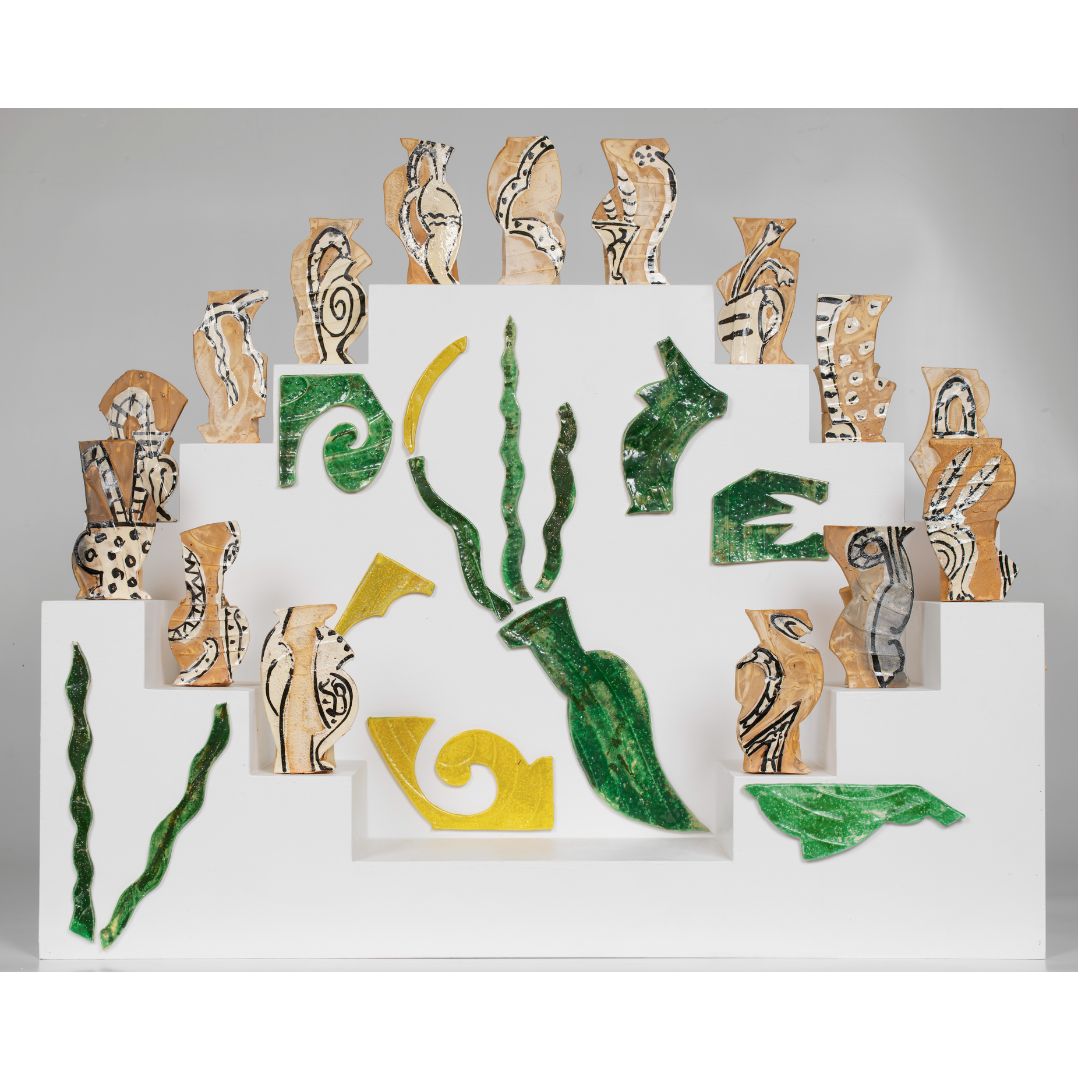
Betty Woodman. "Theater 2 — The Rockettes," 26 x 26 x 21 in. Glazed earthenware, wood, paint © Woodman Family Foundation / Artists Rights Society (ARS), New York
Betty Woodman's "Theater 2 – The Rockettes"
Betty Woodman was never confined by medium: from clay and paper to bronze and gold, she ventured widely across disciplines and forms. An artist interested in theatrical costumes, set designs, and performance, Woodman always had an eye toward the stage. This sensibility permeated her oeuvre, particularly in “Theater 2—The Rockettes” (2001).
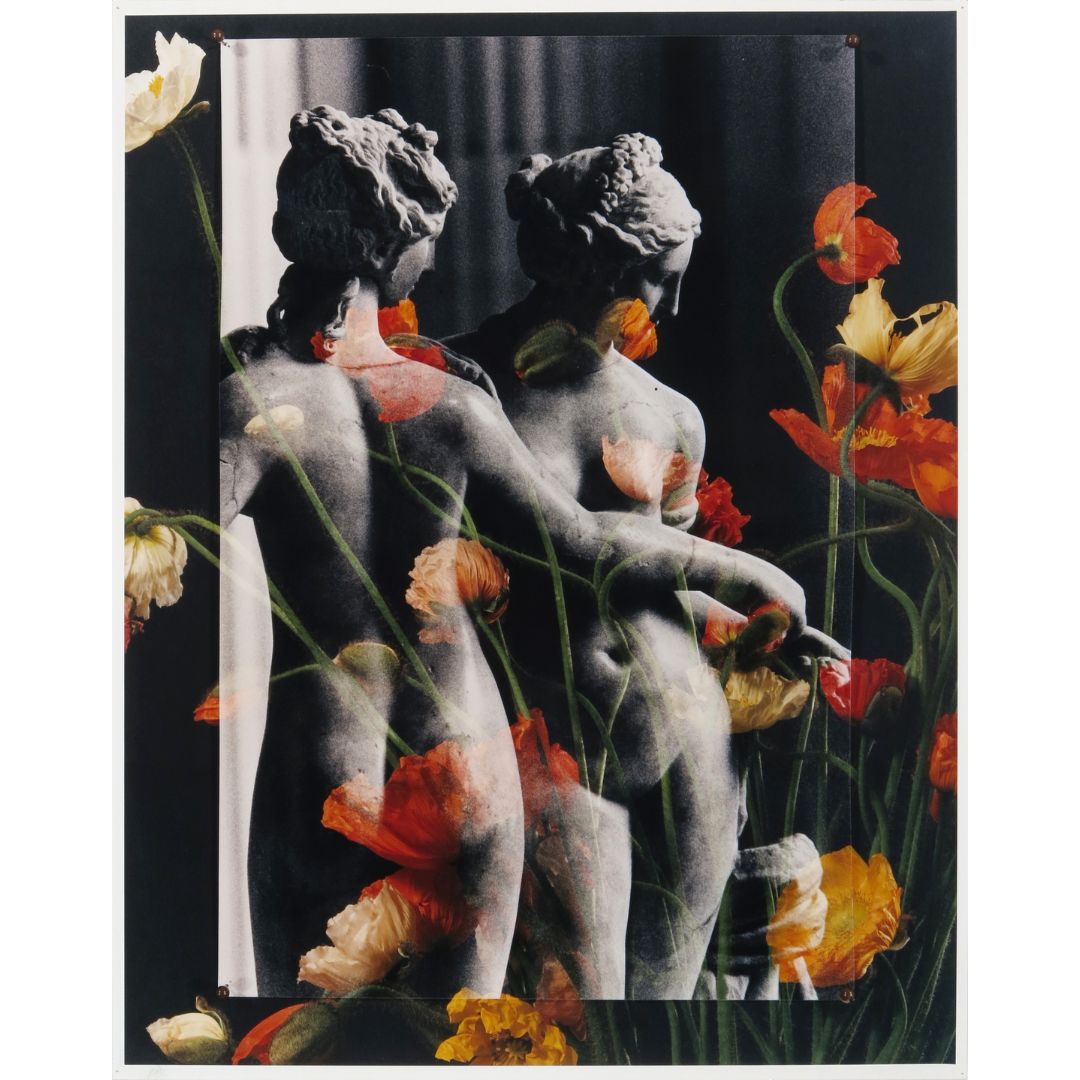
L to R: 1: “Naiads and Poppies,” 2002, 20 x 12 in. Gelatin silver print | 2: Mary Delany. “Punica Granatum,” 1778. Paper collage with body color, watercolor, ink. Collection of the British Museum | 3: “Lovers within Venus,” 1990, 14 1/2 x 20 in. Gelatin silver print | 4: “The Choreography of Saskia,” 2004, 23 3/4 x 19 3/4 in. Chromogenic print | 5: Spread from “Mrs. Delany: her life and her flowers,” 1986 | 6: “Saskia Hiding in a Bouquet,” c. 2002-04, 23 3/4 x 19 3/4 in. Chromogenic print | 7: Excerpt from “A Certain Presence.” “Paper Tilings by George Woodman,” 1982 | 8: “Paper Tilings,” 1981. Installation view, Wright State University, Dayton, OH, 1981 | 9: “Untitled,” c. 1980-84, 44 x 32 in. Oil on canvas | 10: Exhibition pamphlet, “Mrs. Delany’s Flower Collages: From the British Museum,” 1986 | 11-12: George Woodman. “Gulliver in the Garden.” The Village Voice, 4 November 1986 | 13: “The Vivienne Panels III,” c. 1993, 41 1/4 x 79 3/4 in. Gelatin silver print | 14: “Mrs. Delany: her life and her flowers,” 1986. All works by George Woodman unless indicated otherwise © Woodman Family Foundation / Artists Rights Society (ARS), New York
George Woodman. “Naiads and Poppies,” 2002, 20 x 12 in. Gelatin silver print © Woodman Family Foundation / Artists Rights Society (ARS), New York
George Woodman's review of "Mrs. Delany’s Flower Collages,” the Village Voice, 1986
George Woodman’s writings offer rare insight into his artistic sensibilities and philosophy. A prolific commentator on both his own work and that of others, his 1986 review in the Village Voice of “Mrs. Delany’s Flower Collages” at the Pierpont Morgan Library (now Morgan Library and Museum) reveals much about his enduring preoccupations.
.jpeg)
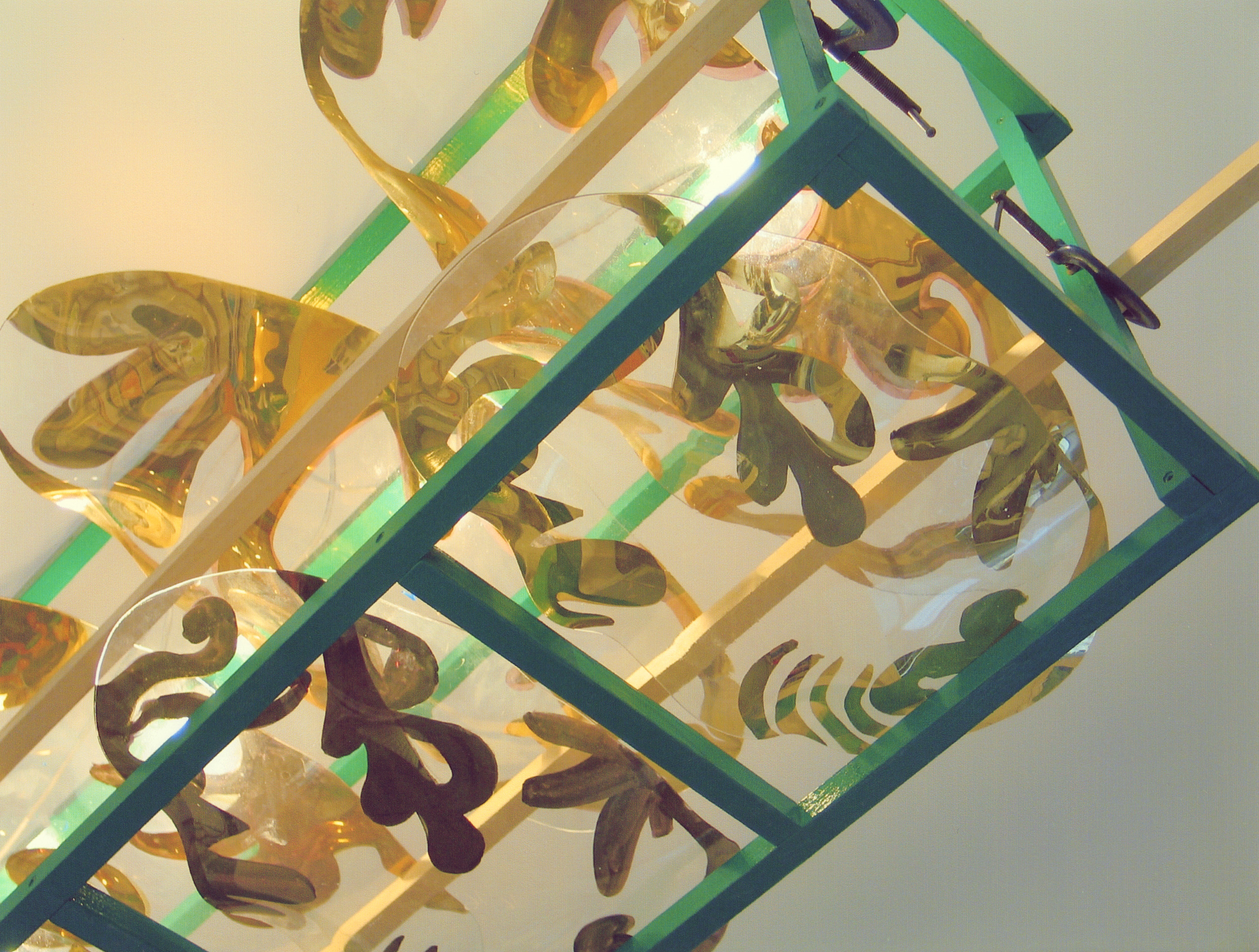
L to R: 1: “Chandelier”, 2004. Glass, gold, painted aluminum, wire and light bulbs, 24 x 71 x 31 inches, detail view | 2: “Chandelier”, 2004 | 3: Excerpt, correspondence between Betty Woodman’s studio and vendors, January 2004 | 4: Excerpt, correspondence between Betty Woodman’s studio and vendors, May 2004 | 5: Liquid gold samples, fired at 620° C for 30 min. | 6: Betty Woodman’s notes | 7: “La Coupe des Plaisirs”, 2003/2004. Glass, gold | 8: Packing list, Reusche & Co., 2007 | 9: “Charpentier”, 2007. Glazed soft-paste porcelain | 10: “Rosa Bonheur”, 2007. Glazed soft-paste porcelain | 11: “Chardin”, 2007. Porcelain | 12: Gold foil samples, Italy | 13: "Santa Maria Della Quercia Drawing”, 2005. Terra sigillata, ink and gold leaf on paper. Woodman Family Foundation Archives. All artworks by Betty Woodman © Woodman Family Foundation / ARS, New York
Betty Woodman, detail of “Chandelier”, 2004, 24x71x31 in. Glass, gold, painted aluminum, wire and light bulbs © Woodman Family Foundation / ARS, New York
Betty Woodman's pursuit of gold
Betty Woodman's creative process was deeply informed by travel and she often returned home with ideas sparked by experiences working abroad, drawing inspiration from the techniques she encountered during residencies. An example of these influences is Woodman’s pursuit of the radiant gold that appears throughout her work.
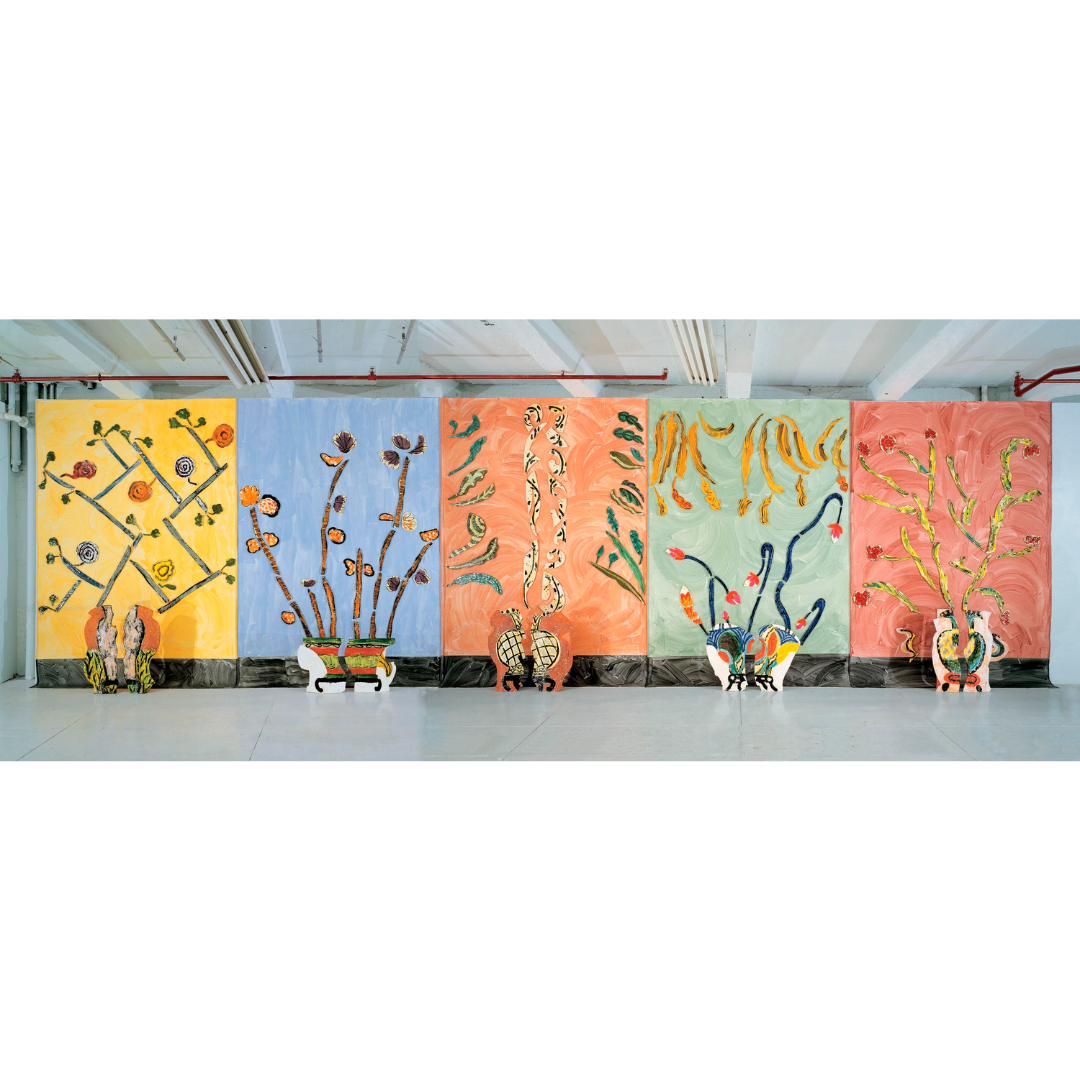
L to R: 1: Betty Woodman, “Ceramic Pictures of Korean Paintings: Rose Lattice Tree Vase, Tiger Lily Tree Vase, Evergreen Tree Vase, Lotus Tree Vase, Camellia Tree Vase,” 2001/2002, 37.5 x 10 x 1 ft. Glazed earthenware, clay, canvas | 2: Installation view, “Betty Woodman,” Daum Museum of Contemporary Art, Sedalia, Missouri, 2002 | 3, Pair: Detail from Betty Woodman, “Cactus, Lotus, and Butterfly,” 2005 / Page from “Korean Art Book Vol. 6: Minhwa I” by Yoon Yeol-soo, Yekyung Publishing, Korea, 2000 | 4: Betty Woodman, “Cactus, Lotus, and Butterfly,” 2005, 120 x 90 x 12 in. Glazed earthenware, canvas | 5, Pair: Page from “Korean Art Book Vol. 6: Minhwa I” / Detail from Betty Woodman, “Cartoon of Roman Paintings: Santa Brigida,” 2005 | 6: Betty Woodman, “Cartoon of Roman Paintings: Santa Brigida,” 2005, 98 x 86 in. Terra sigillata, ink and wax on paper | 7, Pair: Detail from Betty Woodman, “Cartoon of Roman Paintings: Santa Brigida,” 2005 / Page from “Korean Art Book Vol 7: Minhwa II” by Yoon Yeol-soo, Yekyung Publishing, Korea, 2000 | 8: Spread from “Korean Art Book Vol 6: Minhwa I” with handwritten note by Betty Woodman | 9: Betty Woodman, “Siena: Ceramic Pictures of Korean Vases,” 2004, 96 x 84 x 9 1/2 in. Glazed earthenware, clay, canvas | 10: “Korean Art Book” volumes 1, 2, 6, 7, from Betty Woodman’s collection. All Betty Woodman artworks © Woodman Family Foundation / Artists Rights Society (ARS), New York
Betty Woodman, “Ceramic Pictures of Korean Paintings: Rose Lattice Tree Vase, Tiger Lily Tree Vase, Evergreen Tree Vase, Lotus Tree Vase, Camellia Tree Vase,” 2001/2002, 37.5 x 10 x 1 ft. Glazed earthenware, clay, canvas © Woodman Family Foundation / Artists Rights Society (ARS), New York
Betty Woodman and works inspired by Korean folk painting
On a trip to South Korea in 2001, Betty Woodman was introduced to the Joseon Dynasty folk art (minhwa)—with motifs like vibrant scenes of peonies and lotuses. With these paintings in mind, she started a new series of wall-based works titled “Ceramic Pictures of Korean Paintings,” which she first showed at the Daum Museum in 2002 as a five-panel mural.
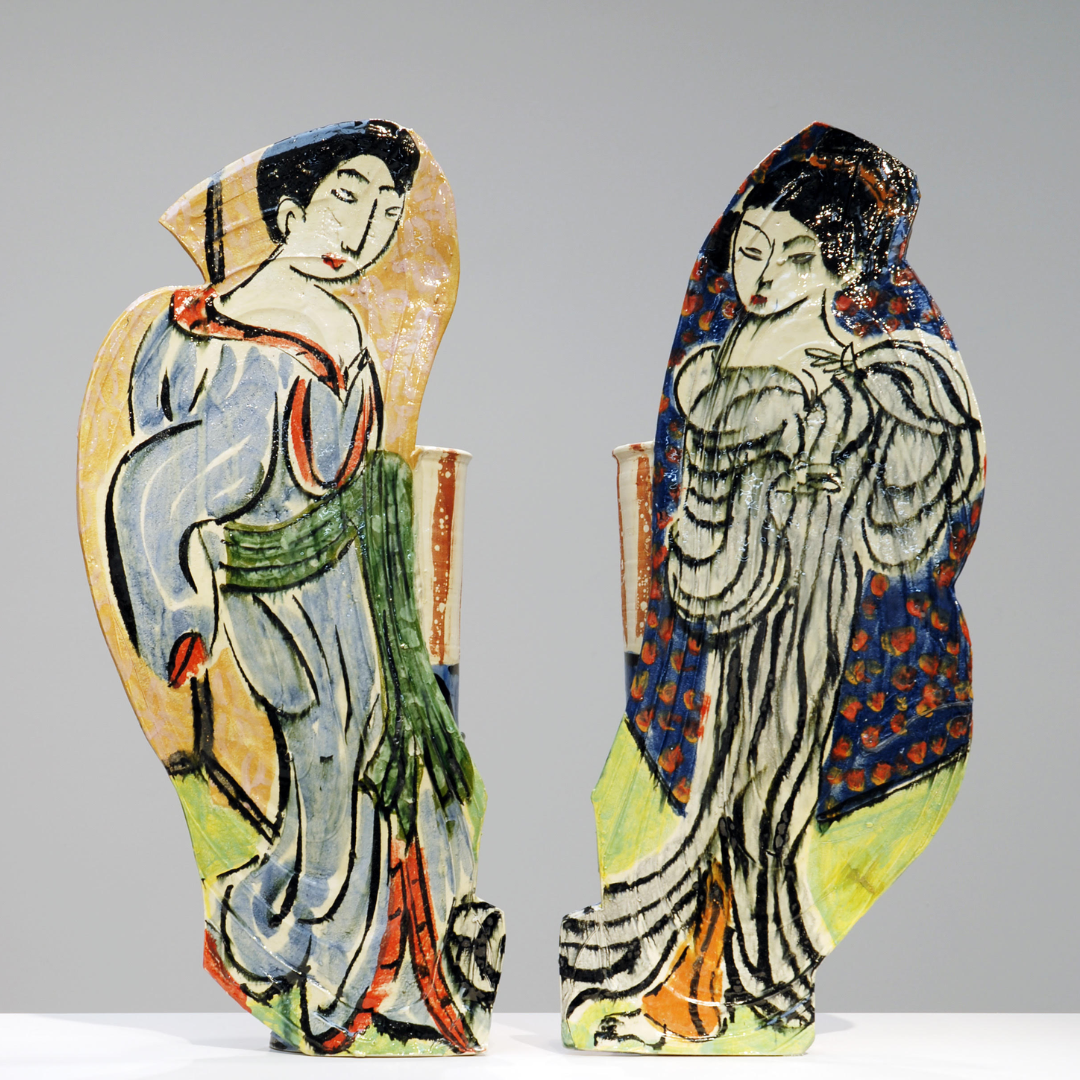
L to R: 1: Betty Woodman. “Edo Fashion Ladies,” 2006, glazed earthenware, 34 1/2 x 32 1/2 x 7 in. | 2: Page from “Fashion of Edo: Women's Dress in Ukiyo-e Paintings 1989." Japan Institute of Arts and Crafts, 1989 | 3 & 7: Betty Woodman. “After the Bath,” 2011, glazed earthenware, epoxy resin, lacquer, acrylic paint, 35 x 37 1/2 x 8 in. | 4: Pair: Detail from Betty Woodman, “After the Bath” / Ippitsusai Bunchō, “Kagiya Osen,” from “Japanese Prints” by Gabriele Fahr-Becker, Barnes & Noble Inc., 2003 | 5: Detail from Betty Woodman, “After the Bath” | 6: Ishikawa Toyonobu, “After the Bath,” page from “Japanese Prints” by Gabriele Fahr-Becker | 8: Spread from “Edo Chiyogami” by Hirose Tatsugoro, Seigensha, 2002 | 9: “Fashion of Edo: Women's Dress in Ukiyo-e Paintings 1989." Japan Institute of Arts and Crafts, 1989, with torn page | 10: Selected publications on Japanese art from Betty Woodman’s collection All Betty Woodman artworks © Woodman Family Foundation / Artists Rights Society (ARS), New York.
Betty Woodman. “Edo Fashion Ladies,” 2006, glazed earthenware, 34 1/2 x 32 1/2 x 7 in. © Woodman Family Foundation / Artists Rights Society (ARS), New York
Betty Woodman’s books on Japanese textiles and woodblock prints
Over the past few months, the Foundation delved into Betty Woodman's and George Woodman’s personal library as part of our ongoing work to build a study center. Betty Woodman’s books on Japanese textiles and woodblock prints, in particular, are extensively bookmarked, with pages cut and ripped away by the artist. She often amassed many of these books on her travels regardless of whether she could read the language, choosing instead to let the images weave themselves into her visual lexicon.
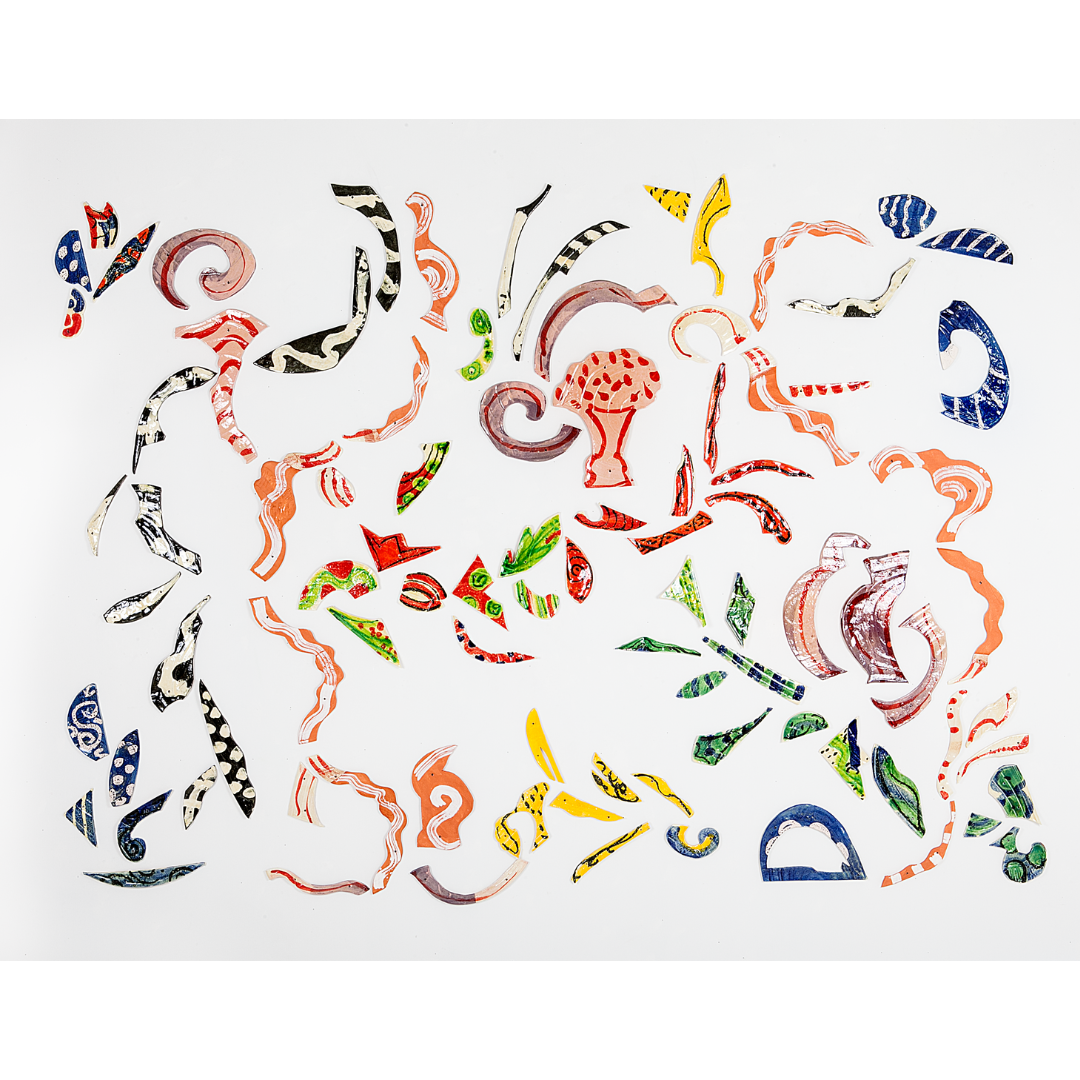
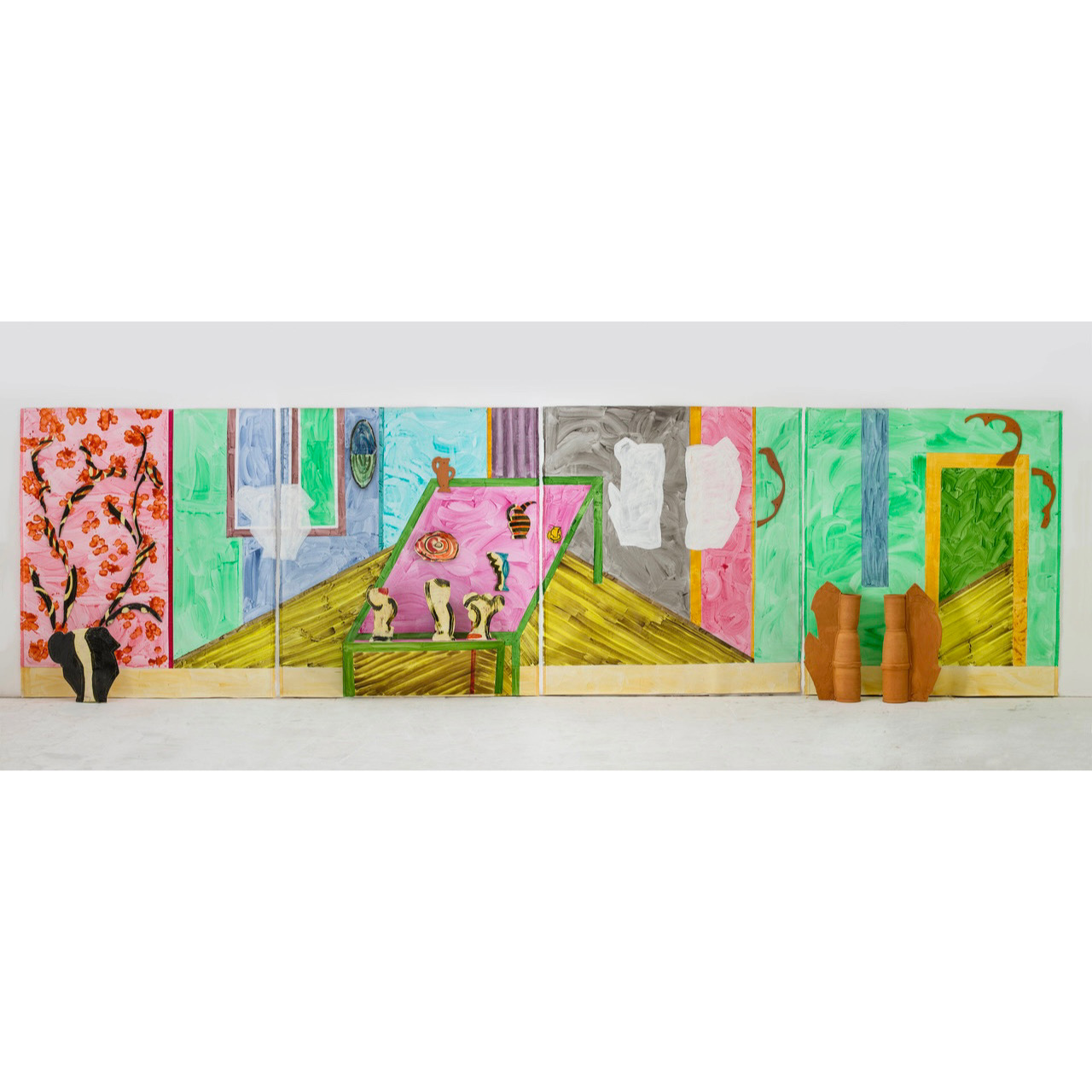
L to R: 1: Betty Woodman, “Wallpaper,” 2013, 84 x 120 in. Glazed earthenware, epoxy resin, lacquer, acrylic paint | 2, 9: Page from “The Cut-Outs of Henri Matisse” | 3: Betty Woodman, “Orange Rug with Clay Bones,” 2013, 105 1/4 x 47 x 1 in. Earthenware, canvas, acrylic paint | 4: Detail from Henri Matisse, “Oceania, the Sea,” 1948, 68 1/8 × 152 1/2 in. Linen, plain weave; screen printed. Produced by Zika Ascher, Ltd. Art Institute of Chicago. | 5: Detail from “Orange Rug with Clay Bones,” 2013 | 6: Betty Woodman, “Balustrade Relief Vase 05-1,” 2005, 55 x 48 x 9 in. Glazed earthenware, epoxy resin, lacquer | 7: Betty Woodman, "Outside and In," 2017, 75 1/2 x 120 x 10 1/2 in. Glazed earthenware, epoxy resin, lacquer, acrylic paint, canvas, wood | 8: Betty Woodman, “House of the South,” 1994-1996, 159 x 246 x 9 1/2 in. Glazed earthenware, epoxy resin, lacquer, paint. Installation view from “The Art of Betty Woodman,” Metropolitan Museum of Art, New York, New York, 2006 | 10: "The Cut-Outs of Henri Matisse” by John Elderfield, New York: George Braziller, 1978, from Betty Woodman’s collection. All Betty Woodman artworks © Woodman Family Foundation / Artists Rights Society (ARS), New York. All Henri Matisse artworks © Succession H. Matisse / Artists Rights Society (ARS), New York
Betty Woodman, “Wallpaper,” 2013, 84 x 120 in. Glazed earthenware, epoxy resin, lacquer, acrylic paint © Woodman Family Foundation / Artists Rights Society (ARS), New York
Betty Woodman's works and Matisse's cut outs
Betty Woodman's eclecticism reflects a wide array of influences, including those from modernist French painters like Gauguin, Bonnard, and Matisse. Yet Woodman’s connection to Matisse transcends their shared use of vivid, exuberant colors. Both artists indulged in decorative impulses through their inventive use of positive and negative space.
.jpeg)
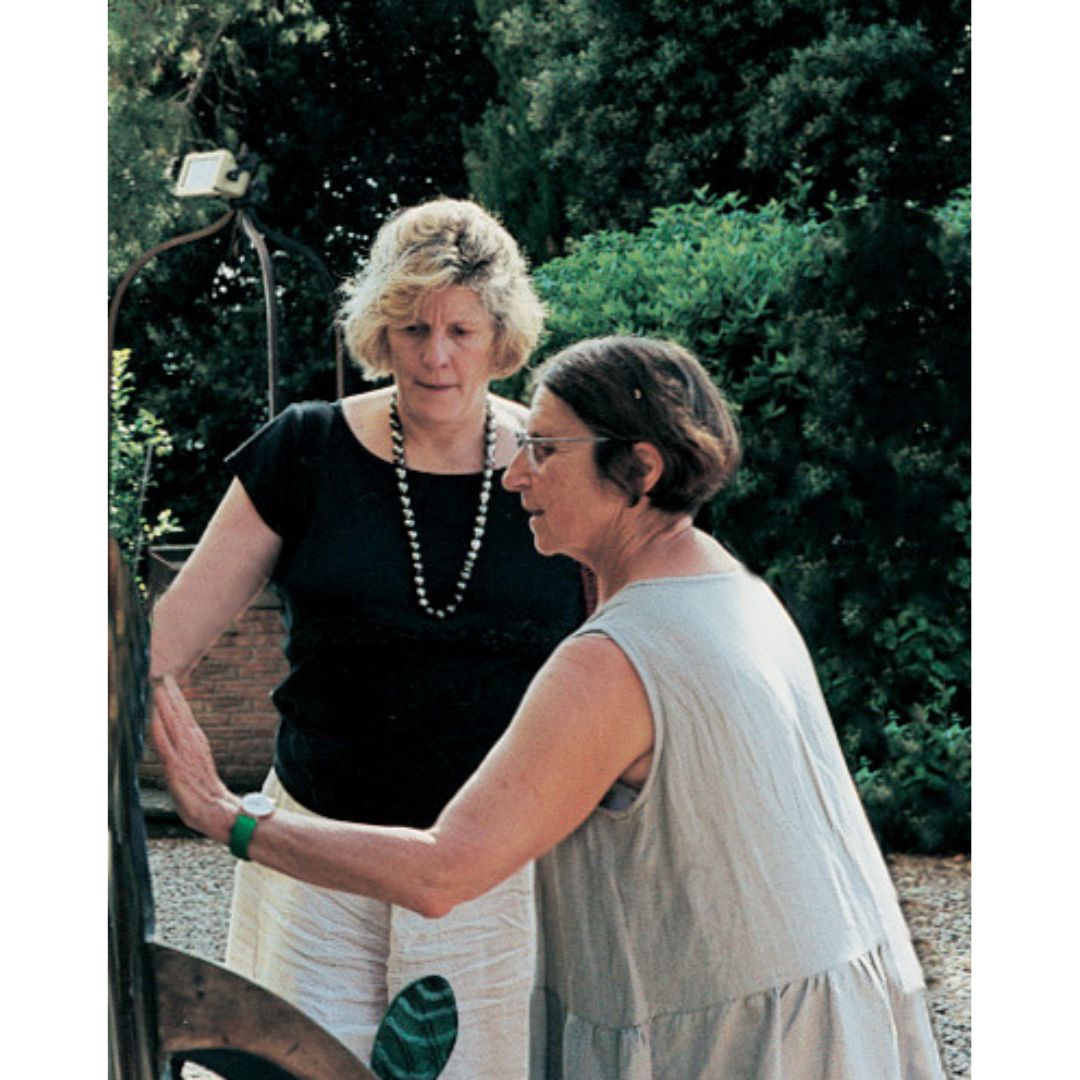
L to R: 1: Agnes Gund and Betty Woodman, Antella, Italy, c. 2000s | 2: Agnes Gund and George Woodman, Italy, c. 1990s. Woodman Family Foundation Archives.
Agnes Gund and Betty Woodman, Antella, Italy, c. 2000s. Woodman Family Foundation Archives
Celebrating the life and impact of Agnes Gund
Tireless advocate and patron saint of art and social justice. Devoted friend and supporter to so many artists, curators, and institutions, including Betty Woodman and George Woodman and many of our Board members. Equity-focused creator of Studio in a School and the Studio Institute, whose summer interns we've been fortunate to host for many years.
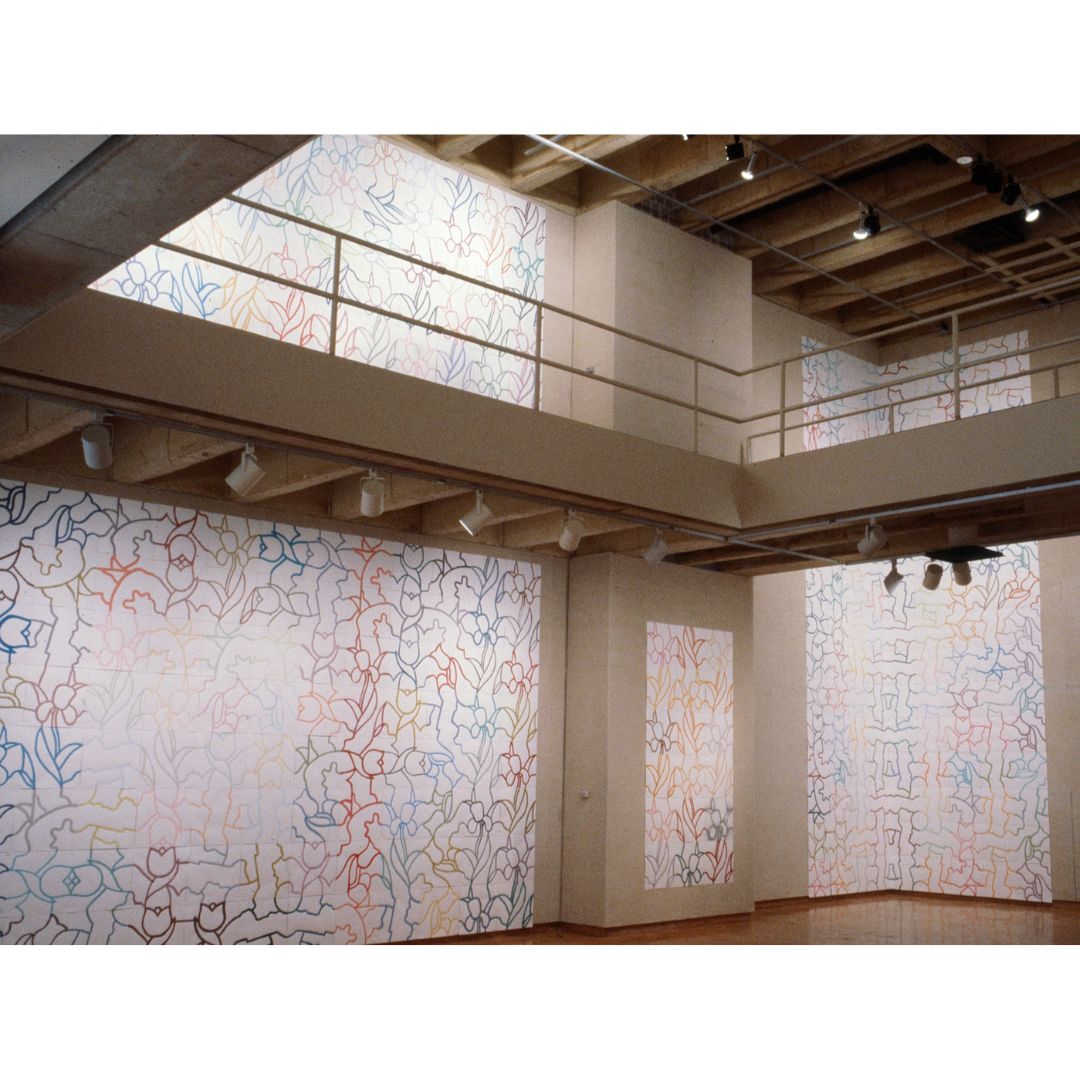
L to R: 1: George Woodman. “Paper Tilings,” 1981. Installation view, Wright State University, Dayton, OH, 1981 | 2, 3: Correspondence from Betty to George, 1952. Woodman Family Foundation Archives | 4: Detail from “Paper Tilings,” 1981, Wright State University | 5: Henri Matisse. “La Vierge et l’Enfant,” 1950. From “Matisse: From Color to Architecture” | 6: George Woodman. Paper tiles, 1980. Installation view, Denver Art Museum, Denver, CO, 1980 | 7: Henri Matisse. “L’Oiseau,” 1946. From “Matisse: From Color to Architecture” | 8: Spread from “Matisse: From Color to Architecture” | 9: Chapelle du Rosaire, Vence, France. Photo © David Huguenin | 10: George Woodman. “Sentimental Geometry,” 1981, 120 x 252 in. Hand-painted paper tiles. Installation view, Yellowstone Art Center, Billings, MT, 1981 | 11: Chapelle du Rosaire, Vence, France. Photo © Musée Matisse de Nice | 12: Betty Woodman. “The Chapel,” 2011, 105 x 86 x 13 in. Glazed earthenware, epoxy resin, lacquer, acrylic paint, wood, canvas | 13: Henri Matisse. “L’Arbre de Vie,” 1949. From “Matisse: From Color to Architecture” | 14: Betty Woodman. “Windows of Matisse,” 2005, 37 x 44 1/2 x 7 1/2 in. Glazed earthenware, epoxy resin, lacquer, paint | 15: Page from “Paper Tilings by George Woodman,” 1981 | 16: “Matisse: From Color to Architecture” by René Percheron and Christian Brouder, 2004. Works by Matisse © Succession H. Matisse / Artists Rights Society (ARS), New York. Works by Betty Woodman and George Woodman © Woodman Family Foundation / ARS, New York
George Woodman. “Paper Tilings,” 1981. Installation view, Wright State University, Dayton, OH, 1981 © Woodman Family Foundation / ARS, New York
Matisse’s influence on the Woodman family: La Chapelle du Rosaire
Matisse’s influence on the Woodman family is evident not only in the joie de vivre and cut-out forms of Betty Woodman’s ceramic sculptures, but also in the architectural sensibilities that inform both her and George Woodman’s work.
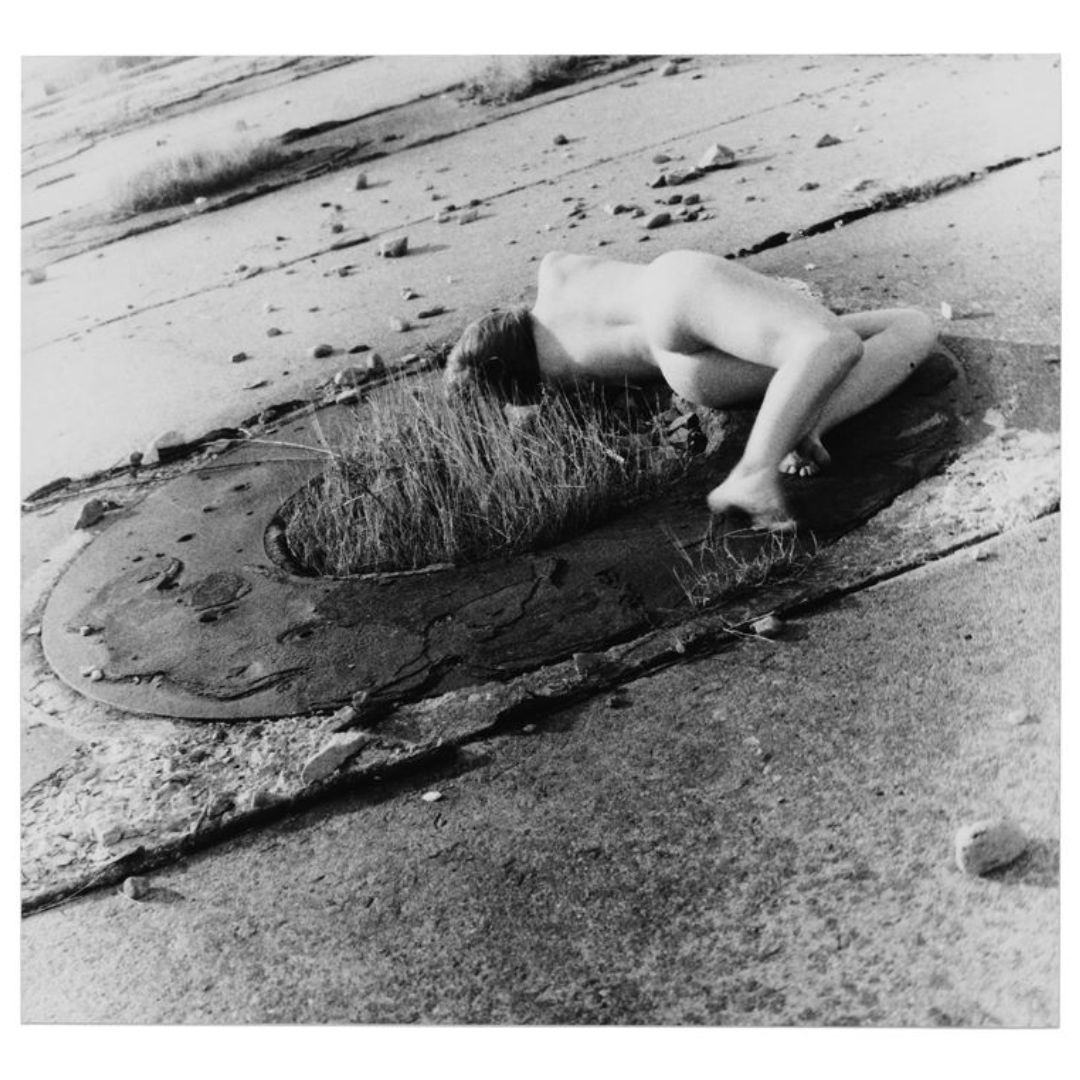
L to R: 1: Francesca Woodman. “Untitled,” 1976, 6 1/2 x 7 in. Gelatin silver print | 2: Betty Woodman. “Beach Girls,” 2013, 21 x 31 1/2 in. India ink, clay, pencil and acrylic paint on paper | 3: Francesca Woodman. “Untitled,” 1976, 6 3/8 x 6 3/8 in. Gelatin silver print | 4: Betty Woodman. “At the Beach,” 2007, 50 x 84 1/2 x 0 1/2 in. Glazed earthenware, canvas, terra sigillata | 5: Francesca Woodman. “Seashore Circle,” 1976, 5 3/16 x 5 3/16 in. Gelatin silver print | 6: Betty Woodman. “Balustrade Relief Vase: 97-8,” 1997, 57 x 62 x 9 in. Glazed earthenware | 7: George Woodman. “Betty at the Seashore,” 1995, 12 x 9 1/2 in. Gelatin silver print | 8: Betty Woodman. “Low Triptych: Seaside Still Life,” 2006, 24 1/2 x 74 1/2 x 9 in. Glazed earthenware, epoxy resin, lacquer, acrylic paint | 9: Francesca Woodman. “Untitled,” c. 1979-80, 6 1/2 x 9 5/8 in. Gelatin silver print | 10: Betty Woodman. “Posing with Vases at the Beach,” 2008, 33 x 81 x 6 3/4 in. Glazed earthenware, epoxy resin, lacquer, paint | 11: Betty Woodman. “Conversations on the Shore,” 1994, 84 x 142 x 53 in. Glazed earthenware, epoxy resin, lacquer, paint © Woodman Family Foundation / Artists Rights Society (ARS), New York
Francesca Woodman. “Untitled,” 1976, 6 1/2 x 7 in. Gelatin silver print © Woodman Family Foundation / Artists Rights Society (ARS), New York
The Woodmans and the alluring shores
Betty Woodman, Francesca Woodman, and George Woodman also succumbed to the lure of beaches and seashores in their work, each artist reimagining the beachscape with a distinct sensibility and overlapping visual languages.
L to R: 1: Betty Woodman. “Lake View,” 2013, 60 x 46 x 11 1/2 in. Glazed earthenware, epoxy resin, lacquer, acrylic paint, wood, canvas | 2: George Woodman. “Love Nests at Lake Lemon,” 1962, 38 x 50 in. Oil on canvas | 3: Francesca Woodman. “Untitled,” 1979, 3 13/16 x 3 13/16 in. Gelatin silver print | 4: Betty Woodman. “Lago di Como,” 1995, 26 1/2 x 43 1/2 x 10 1/2 in. Glazed earthenware | 5: George Woodman. “Untitled,” c. 2000, 19 1/8 x 10 in. Gelatin silver print | 6: Betty Woodman. “Deco Lake Shore,” 2002, 24 x 50 in. Terra sigilatta, wax, acrylic paint, graphite on paper. Collection of the Metropolitan Museum of Art, New York. | 7: Francesca Woodman. “Untitled,” c. 1972-75, 3 7/8 x 5 7/8 in. Gelatin silver print | 8: George Woodman. “Swimming at Kippy Stroud’s,” 2002, 16 x 20. Gelatin silver print | 9: Francesca Woodman. "Untitled," c.1979-80, 4 1/2 x 4 3/4 in. Gelatin silver print © Woodman Family Foundation / Artists Rights Society (ARS), New York
Betty Woodman. “Lake View,” 2013, 60 x 46 x 11 1/2 in. Glazed earthenware, epoxy resin, lacquer, acrylic paint, wood, canvas © Woodman Family Foundation / Artists Rights Society (ARS), New York
The Woodmans and the serenity of lakes
This summer, take in the fluid beauty of water as seen through the eyes of Betty Woodman, George Woodman, and Francesca Woodman.

L to R: 1: “Azulejas - Oribe Memory,” 2003, 34 x 68 x 9 in. | 2: Portuguese Tile Vases & Their Audience,” 2001, approx. 35 x 38 x 8 in. | 3: Azulejaria barroca portuguesa: Figuras de convite” by Luísa Arruda, 1993; “Waves of influence: cinco séculos do azulejo português” by Olivia Georgia, 1995; “Caminho do oriente: Guia do azulejo” by Luísa Arruda, 1998; “Azulejaria portuguesa” by José Meco, 1985 | 4: “Portuguese Vases,” 2005, 17 x 87 x 7 in. | 5: “Chinese and Vietnamese Ceramics with Highlights from The Brow Collection.” Published by Zetterquist Galleries, 2017 | 6: “The Ming Sisters,” 2003, 32 x 81 x 8 in. | 7: “Blue Girl,” 2005, 30 x 70 x 9 in. | 8: “Untitled #15 [Study for Edition by Sèvres, Blue],” 2011/2012, 2 1/2 x 8 x 4 1/2 in. | 9: “Persian Pillow Pitcher No. 6,” 1981 | 10: “Persian Ceramics and Related Materials” by Eric J. Zetterquist, 1993 | 11: “Pillow Pitcher: Delft,” 1996, 24 x 26 x 23 in. | 12: “Divided Vases: Classic Vases - Observed,” 2002, 30 x 29 x 10 1/2 in. | 13: “Baroque Diptych,” 2001, 36 x 63 x 8 in. | 14: “Kimono Vases: October,” 1990, 30 3/4 x 43 x 9 1/2 in. | 15: “Vase and Shadow: Spiral Vase with Blue Shadow,” c. 1980s, 29 x 21 x 2 in. | 16: Page from “The Studio Potter,” Vol. 35, No. 1, December 2006. Works by Betty Woodman © Woodman Family Foundation / Artists Rights Society (ARS), New York
Betty Woodman, “Azulejas - Oribe Memory,” 2003, 34 x 68 x 9 in. Glazed earthenware © Woodman Family Foundation / Artists Rights Society (ARS), New York
Betty Woodman's favorite ceramic color, blue, and her body of work
Betty Woodman is known for her exuberant body of work, which is often bathed in vivid hues of yellow, fuchsia, red, and orange. Yet in the December 2006 issue of The Studio Potter devoted solely to color, she confessed—“without a moment’s hesitation”—that blue was her favorite.
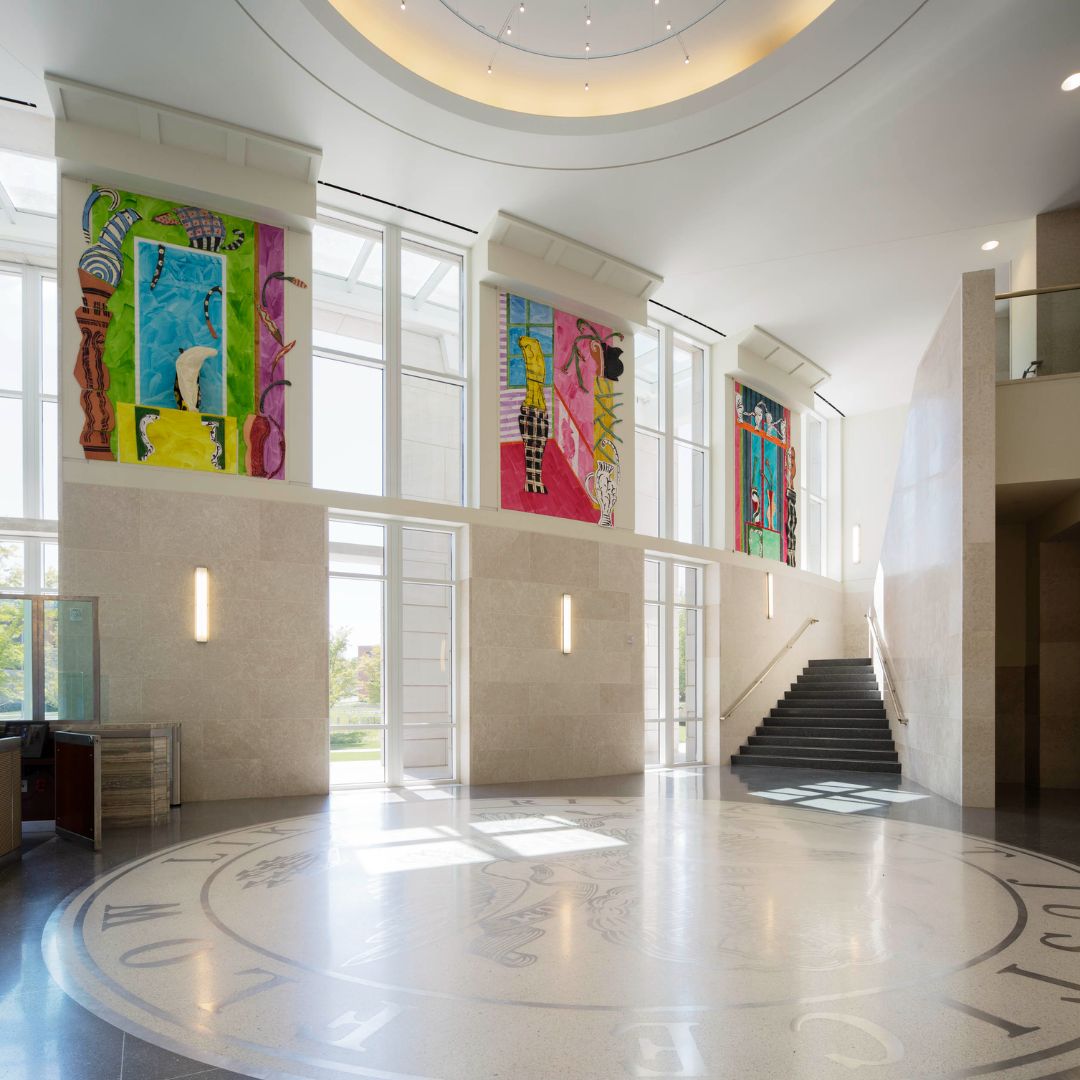
L to R: 1, 3, 5, 7, 8: Installation views, Christopher S. Bond Courthouse, Jefferson City, MO. Commissioned by the US General Services Administration. Photo © Aaron Dougherty | 2: “River View: Sunshine,” 2012, approx. 11 x 8.5 ft. Glazed earthenware, epoxy resin, lacquer, acrylic paint, canvas, wood | 4: “River View: Day Dreaming,” 2012, approx. 11 x 8.5 ft. Glazed earthenware, epoxy resin, lacquer, acrylic paint, canvas | 6: “River View: Vases at Dusk,” 2012, approx. 11 x 8.5 ft. Glazed earthenware, epoxy resin, lacquer, acrylic paint, canvas, wood | 9: Thomas Hart Benton painting “A Social History of the State of Missouri,” 1936. Commerce and Industrial Development Collection, Missouri State Archives. | 10: Betty Woodman’s site visit to the Christopher S. Bond Courthouse, Jefferson City, MO, 2012. Artworks by Betty Woodman © Woodman Family Foundation / Artists Rights Society (ARS), New York
Installation view, Christopher S. Bond Courthouse, Jefferson City, MO. Photo © Aaron Dougherty
Betty Woodman's installation at the Christopher S. Bond Courthouse, Jefferson City, Missouri, 2012
In 2012, Betty Woodman was commissioned to create an artwork for the Christopher S. Bond courthouse in Jefferson City, Missouri, through the General Services Administration’s Art in Architecture program.
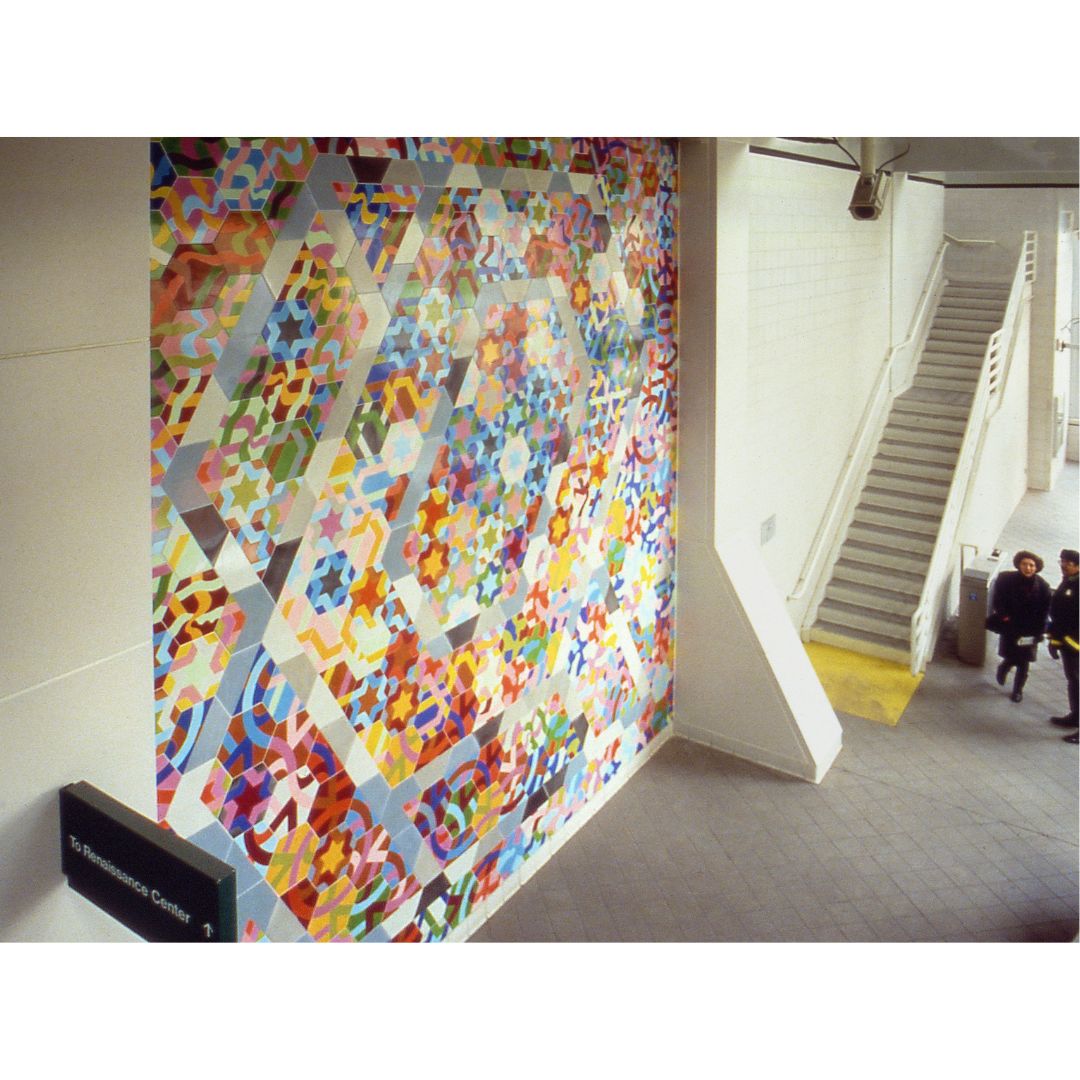
L to R: 1-4: “Dreamers and Voyagers Come to Detroit,” 1987. Installation views, Renaissance Center Station, Detroit, MI, 1987 | 5: Students laying tiles on the floor, Renaissance Center station, Detroit, MI, 1987 | 6-7: Production and silkscreening of tiles, Franco Pecchioli SRL, Borgo San Lorenzo, Tuscany, Italy | 8-9: Notes and sketches on modules’ designs and colors, 1986 | 10: Bullock, Lorinda. “A creator starts over. Renaissance indeed: tile art reborn.” Detroit Free Press, 17 November 2004 | 11-13: “Path Games,” 2004. Installation views, Renaissance Center Station, Detroit, MI, 2004 | 14: Drawing of modules for “Path Games." All artworks, sketches, and notes by George Woodman © Woodman Family Foundation / Artists Rights Society (ARS), New York. Woodman Family Foundation Archive.
George Woodman. “Dreamers and Voyagers Come to Detroit,” 1987. Installation view, Renaissance Center Station, Detroit, MI, 1987. Woodman Family Foundation Archives
George Woodman's tile installations at Detroit People Mover's Renaissance Center station, Detroit, Michigan, 1987/2004
In 1987, three years after his first ceramic tile public commission for Buffalo Metro Rail, New York, George Woodman realized an installation for the Detroit People Mover’s Renaissance Center station.
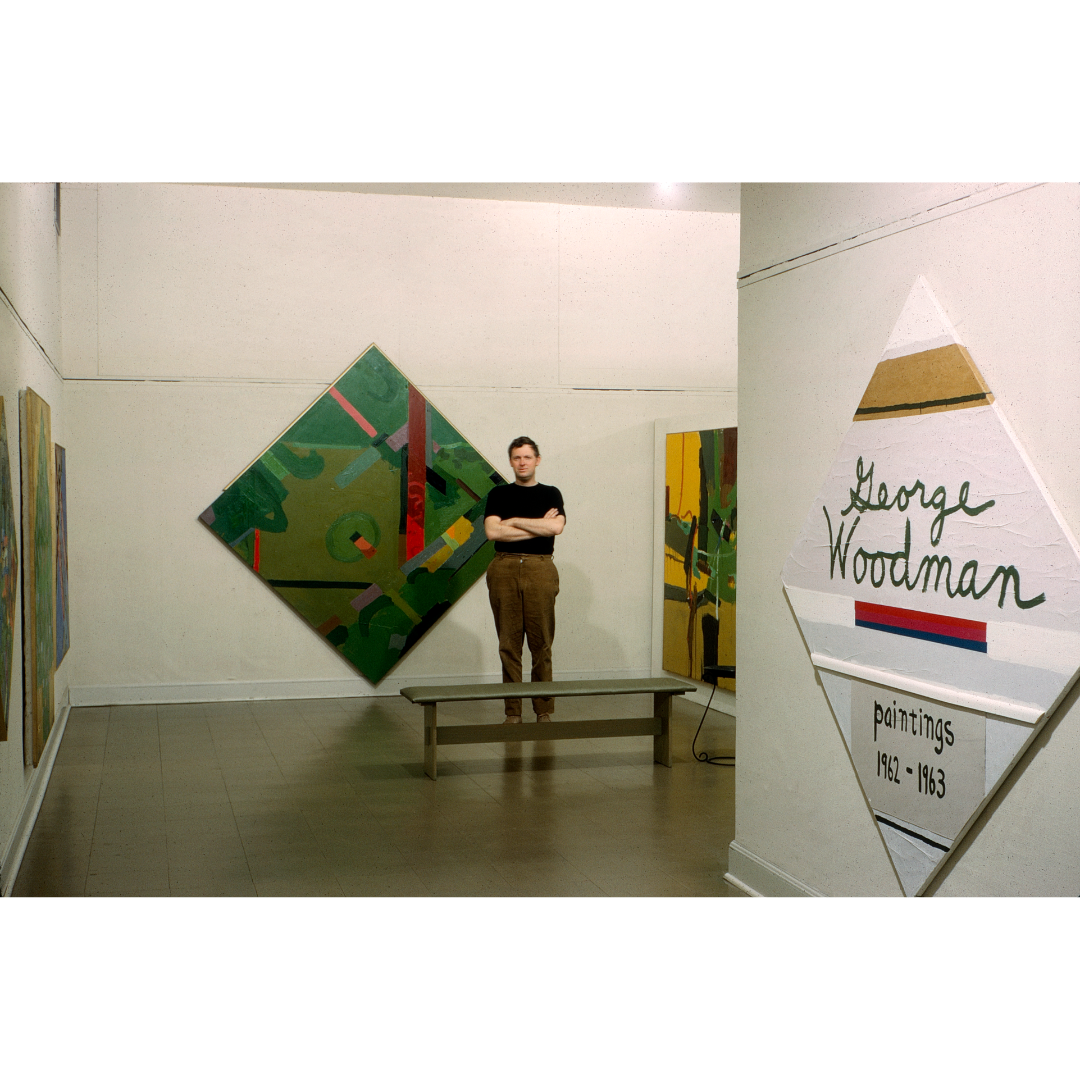
L to R: 1, 15: George Woodman, installation view of "George Woodman: Paintings 1962-1963," Henderson Gallery, University of Colorado, Boulder, Colorado | 2, 6, 10, 12-13: Installation view of "George Woodman: Paintings 1962-1963," Henderson Gallery, University of Colorado, Boulder, Colorado | 3: “End of the Alphabet,” c. 1963, 52 x 52 in. | 4: “The Magic Box,” c. 1963, 55 x 45 in. | 5: “Landscape (After the Death of Adonis),” 1963, 72 x 72 in. | 7: “Untitled,” c. 1962-63, dimensions unknown. | 8: “Cleopatra (With Asp),” c. 1963, 48 x 51 in. | 9: “April Cool” or “Buddhist Shrine” or “Diamond Gestalt,” 1963, 70 x 70 in. | 11: “Love is a Bridge,” c. 1963, 52 x 52 in. | 14: “Mid-West Landscape (With Fallout)," 1963, 48 x 80 in. All oil on canvas. All artworks by George Woodman © Woodman Family Foundation / Artists Rights Society (ARS), New York. Woodman Family Foundation Archives.
George Woodman, installation view of "George Woodman: Paintings 1962-1963," Henderson Gallery, University of Colorado, Boulder, Colorado. Woodman Family Foundation Archives.
George Woodman in "George Woodman: Paintings 1962-1963," Henderson Gallery, University of Colorado, Boulder, Colorado
In December of 1963, George Woodman opened an exhibition of his recent paintings at the Henderson Gallery at University of Colorado, Boulder, where he also taught painting and philosophy of art.
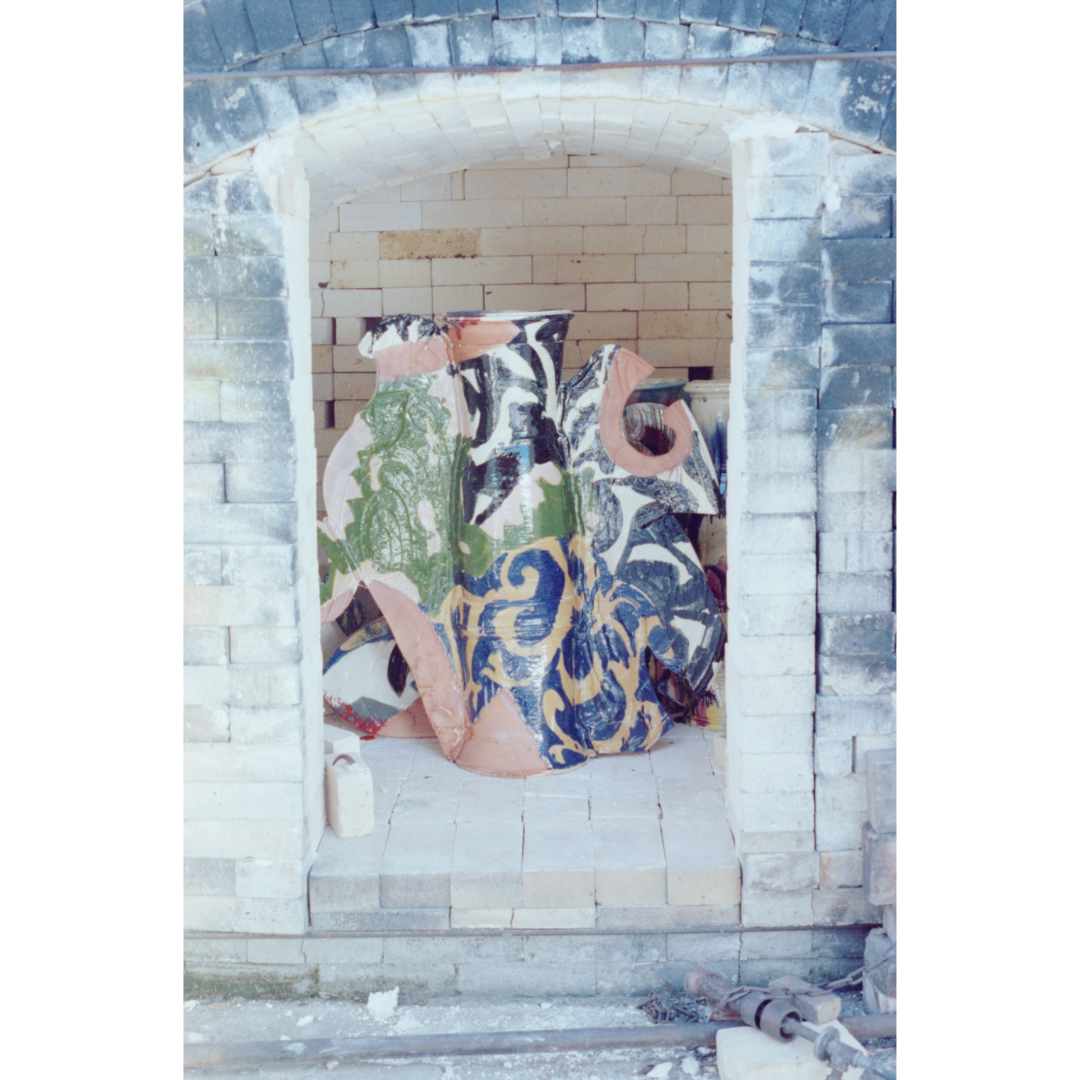
L to R: 1: Still Life Vase in kiln, Boulder, Colorado, 1991 | 2: Betty and kiln, Boulder, Colorado, March 1970 | 3: Betty and kiln, Boulder, Colorado, May 1965 | 4: “Folded Tri-part Vase,” 1975, 8 x 25 x 8 in. Salt glazed stoneware | 5: Betty and kiln, Boulder, Colorado, c. 1960s | 6: Kiln, Antella, Italy, c. 1990s | 7: Kiln, Antella, Italy, c. 1996 | 8: Kiln, Antella, Italy, c. 1990s | 9: Betty and kiln, Antella, Italy, c. 1990s | 10: Betty and George firing the kiln, Antella, Italy, c. 1973 | 11: “Pillow Pitcher: Italian,” 1977, 15 x 30 x 15 in. Terra sigillata | 12: Betty and kiln, Antella, Italy, c. 1960s | 13: Betty and kiln, Antella, Italy, c. 1969 | 14: “Fabric Samples” in progress in kiln, New York, New York, 2005 | 15: “Fabric Samples,” 2005, 30 x 31 x 8 in. Glazed earthenware. Installation view from “The Art of Betty Woodman,” Metropolitan Museum of Art, New York, New York, 2006 | 16: Ceramic fragments in the kiln, New York, New York, 2013 | 17: Detail from “Wallpaper 9,” 2015, dimensions variable. Glazed earthenware, epoxy resin, lacquer, acrylic paint | 18: “Vase,” 1955, 5 x 5 x 5 in. Lusterware | 19: Kiln, Albuquerque, New Mexico, 1955. All artworks by Betty Woodman © Woodman Family Foundation / Artists Rights Society (ARS), New York. Woodman Family Foundation Archives.
Still Life Vase in kiln, Boulder, Colorado, 1991. Artwork by Betty Woodman © Woodman Family Foundation / Artists Rights Society (ARS), New York. Woodman Family Foundation Archives.
Betty Woodman and her kilns
Throughout her career, Betty Woodman embraced the possibilities that different kilns and firing techniques offered, adapting her approach to the materials available in the diverse places where she lived and worked.
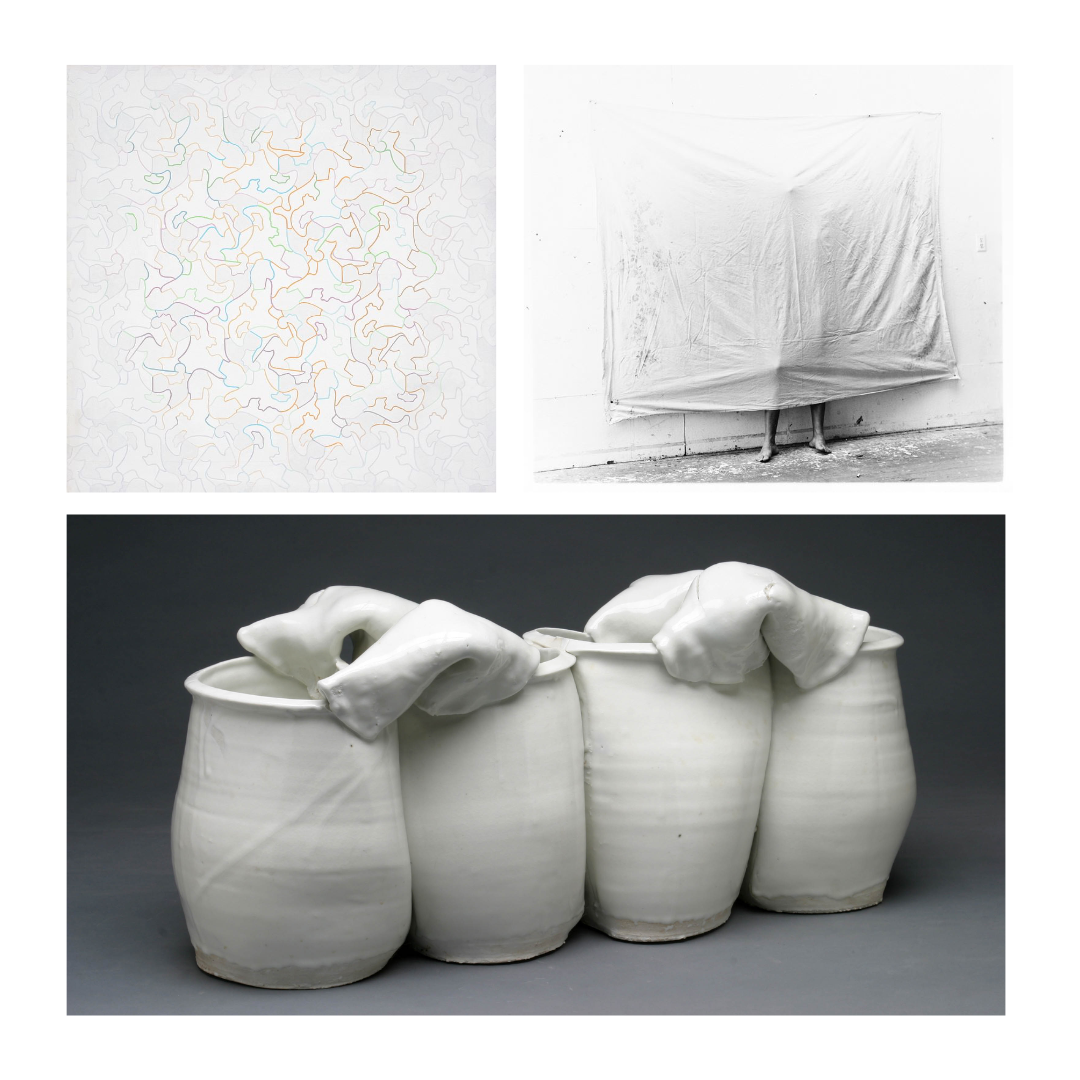

L to R: George Woodman. “285” or “Bari” or “Winterreise”, 1975, 65 x 65 in. Acrylic on canvas | Francesca Woodman. “Untitled”, c. 1975-78, 6 5/8 x 6 9/16 in. Gelatin silver print | Betty Woodman. “Joined Vases”, 1972, 11 1/2 x 23 x 10 in. Porcelain | Francesca Woodman. “Untitled”, c. 1979-80, 11 x 14 in. Gelatin silver print | George Woodman. “Study in White: Marble from Michelangelo’s Quarry”, 2004, 16 x 20 in. Gelatin silver print | Betty Woodman. “Boys”, 2013, 28 x 28 x 7 in. Glazed earthenware | George Woodman. “Untitled”, 1974, 84 x 84 in. Acrylic on canvas | Detail from Betty Woodman. “Aeolian Pyramid”, 2001/2006, approx. 150 x 168 x 100 in. Glazed earthenware, epoxy resin, lacquer, paint | George Woodman. “Tessellation Sky”, 1975, 54 1/2 x 54 1/2 in. Acrylic on canvas | Betty Woodman. “Nina’s Room”, 2012, 86 x 107 x 12 1/2 in. Glazed earthenware, epoxy resin, lacquer, acrylic paint, canvas | Francesca Woodman. “Untitled”, c. 1977-78, 3 13/16 x 3 7/8 in. Gelatin silver print | Betty Woodman. “Judith’s Window”, 2012, 59 1/2 x 43 1/2 x 10 1/2 in. Glazed earthenware, epoxy resin, lacquer, acrylic paint, canvas, wood | Francesca Woodman. “Untitled”, 1980, 8 1/2 x 8 1/2 in. Gelatin silver print | Betty Woodman. “Divided Vases: Window”, 2012, 33 1/4 x 42 x 7 1/2 in. Glazed earthenware, epoxy resin, lacquer, paint | Francesca Woodman. “Untitled”, 1976, 5 1/8 x 5 1/8 in. Gelatin silver print | George Woodman. “Untitled”, c. 1980, dimensions unknown. Acrylic on canvas | Francesca Woodman. “Untitled”, c. 1979-80, 3 7/8 x 5 5/8 in. Gelatin silver print | Francesca Woodman. “Untitled,” c. 1979-80, 5 1/2 x 5 5/8 in. Gelatin silver print | George Woodman. “Christening Dress and Roman Sculpture (A Roman Fragment with a Christening Dress)”, 2011, 42 x 38 1/2 in. Oil on gelatin silver print | Betty Woodman. “White Amphoras”, 2004, 33 x 57 x 12 in. Glazed earthenware. All artworks © Woodman Family Foundation / Artists Rights Society (ARS), New York
George Woodman. “285” or “Bari” or “Winterreise”, 1975, 65 x 65 in. Acrylic on canvas © Woodman Family Foundation / Artists Rights Society (ARS), New York
The Woodmans and the use of white
Betty Woodman and George Woodman are often celebrated for their exuberant use of color, while Francesca Woodman is best known for her dramatic black-and-white photographs, filled with shades of grey. Working across different mediums and methods, the Woodman artists used white—and the absence of color—to fascinating effects.
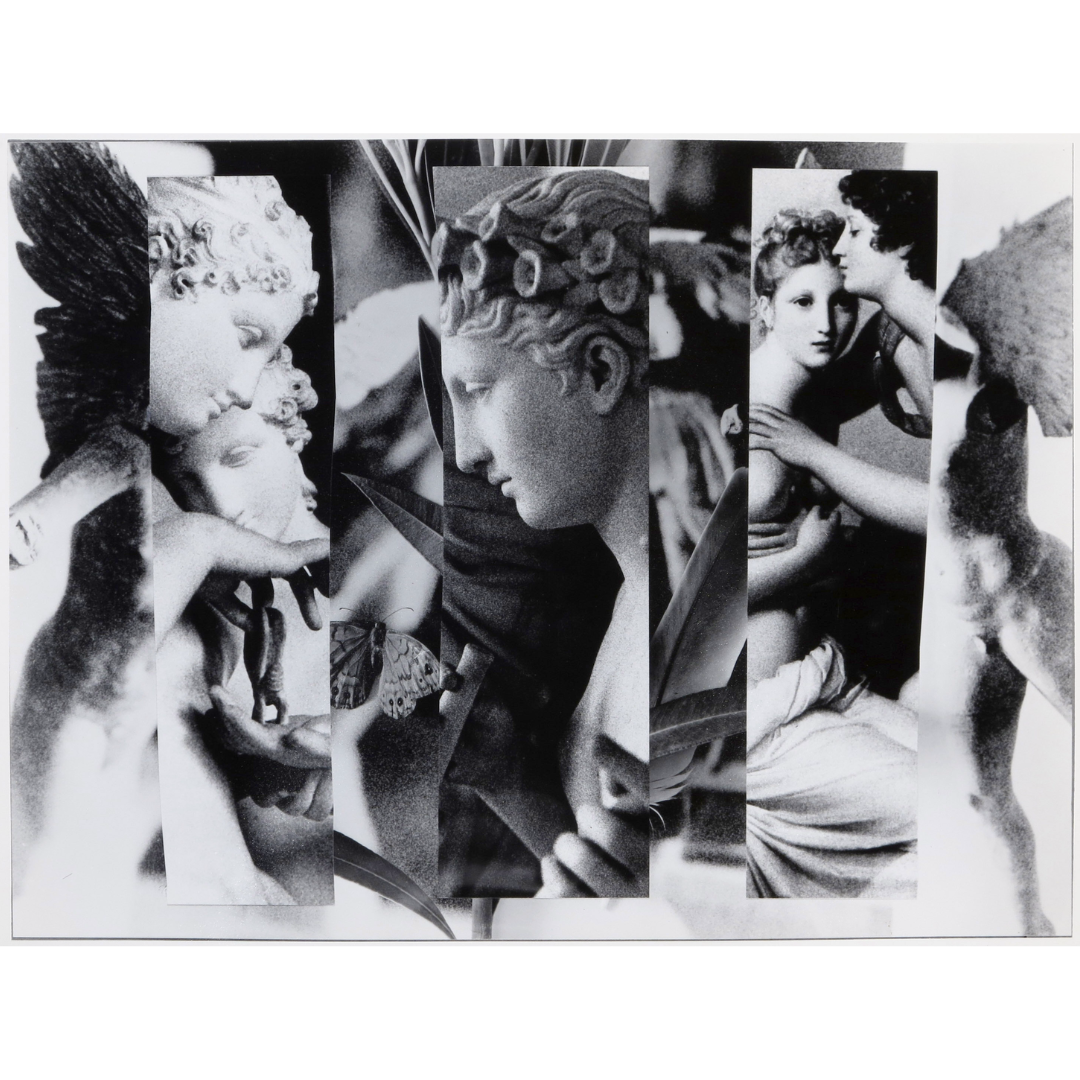
L to R: "Hymn to Classicism," 1993, 20 x 24 in. Gelatin silver print - "Psyche and Amor," 1993, 20 x 16 in. Gelatin silver print | "Psyche and Amor in the Wisteria," 1988, 20 x 16 in. Gelatin silver print | "Psyche, Amor and Iris," 1988, 20 x 16 in. Gelatin silver print | "Psyche, Amor and Sara," 2010, 16 5/16 x 22 5/8 in. Oil on gelatin silver print | "Canova Museum," 2010, 42 x 36 in. Oil on gelatin silver print. All artworks by George Woodman © Woodman Family Foundation / Artists Rights Society (ARS), New York
George Woodman. "Hymn to Classicism," 1993, 20 x 24 in. Gelatin silver print © Woodman Family Foundation / Artists Rights Society (ARS), New York
Cupid and Psyche's divine love in George Woodman's photographs
Neoclassical beauty, particularly as depicted through sculptures of embracing lovers, is a recurring theme in George Woodman’s photographs—especially the myth of Psyche and Cupid’s divine love.
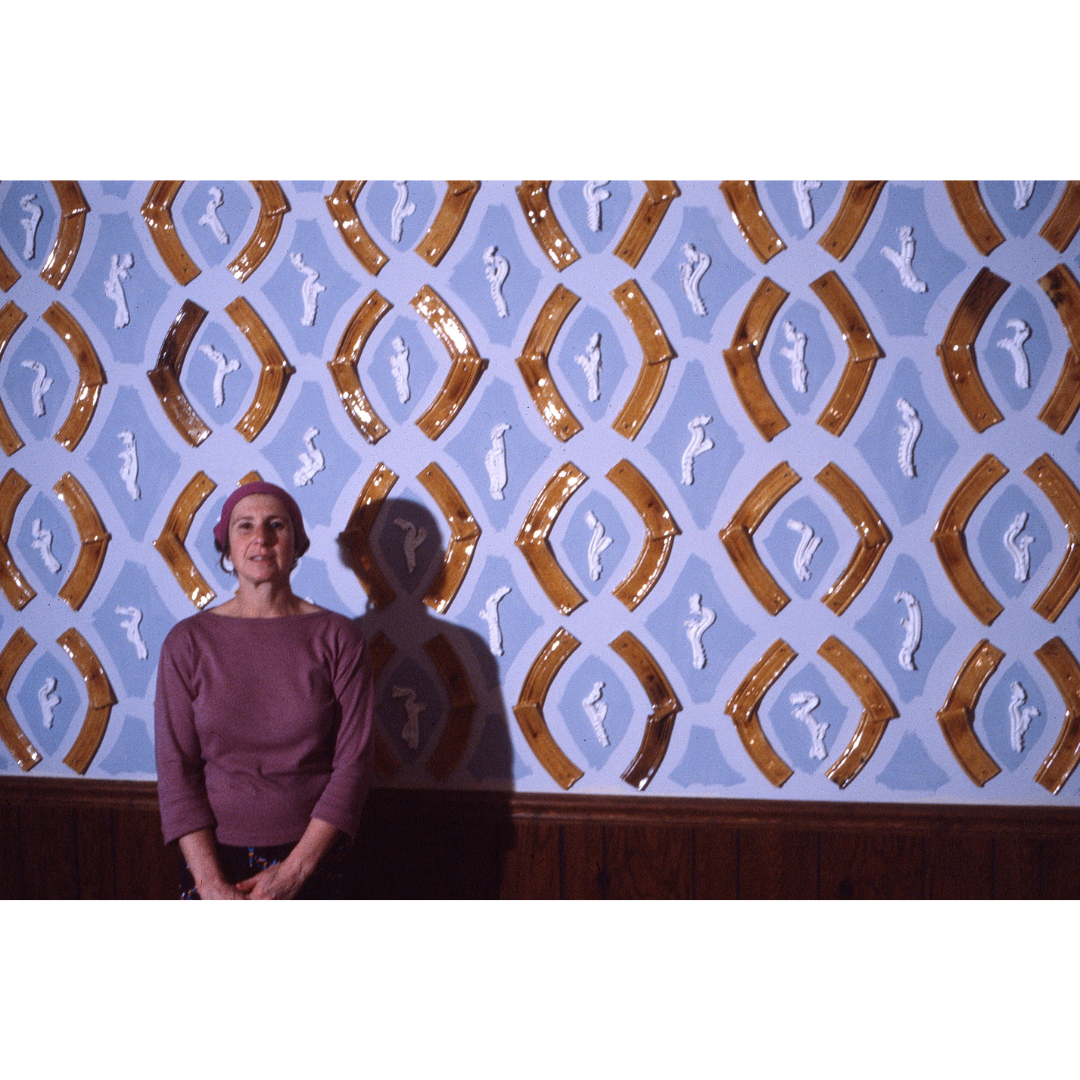
L to R: 1-3, 5, 6: Installation views, “An Interior Exchanged,” Fashion Institute of Technology, New York, New York, 1982. Woodman Family Foundation Archives | 4: Spread from “Wallpapers for Historic Buildings” by Richard C. Nylander, The Preservation Press, Washington, D.C., 1983 | 7: Betty Woodman, “Cloistered Arbor Room,” 1981, 10 x 23 ft. Glazed earthenware, epoxy resin, lacquer, fabric. Installation view from “The Elizabeth Reed Keller Memorial Exhibition: Ceramics,” Suzanne Lemberg Usdan Gallery, Bennington College, Bennington, Vermont, 1981 | 8: Betty Woodman, “Bedroom with Lattice,” 2009, 92 x 85 x 15 in. Glazed earthenware, paint, canvas | 9: Spread from “Pompei ercolano stabile oplontis: le città sepolte dal Vesuvio” by Pietro Giovanni Guzzo, Electa Napoli, Italy, 2003 | 10: Betty Woodman, “Villa Oplontis,” 2006, 45 x 121 x 11 in. Terra sigillata, canvas, glazed earthenware, epoxy resin, lacquer, wood | 11: Betty Woodman, “Il Giardino Dipinto,” 1993, 9 x 35 ft. Glazed earthenware, epoxy resin, lacquer, paint. Installation view from “Betty Woodman: Il Giardino Dipinto,” Rhode Island School of Design Museum, Providence, Rhode Island, 2005 | 12: Selected books on wall paintings, wallpapers, and architecture from Betty Woodman’s collection | 13: Betty Woodman, “Wallpaper: 11,” 2016, 120 x 144 in. Glazed earthenware, epoxy resin, lacquer, acrylic paint. All Betty Woodman artworks © Woodman Family Foundation / Artists Rights Society (ARS), New York
Installation view, “An Interior Exchanged,” Fashion Institute of Technology, New York, New York, 1982. Woodman Family Foundation Archives
Betty Woodman's collaboration with Cynthia Carlson and her pivot to the wall
In the spring of 1981, Betty Woodman and Cynthia Carlson started planning for “An Interior Exchanged,” an environmental collaboration presented in ARTISANSPACE at the Fashion Institute of Technology in 1982.
.png)
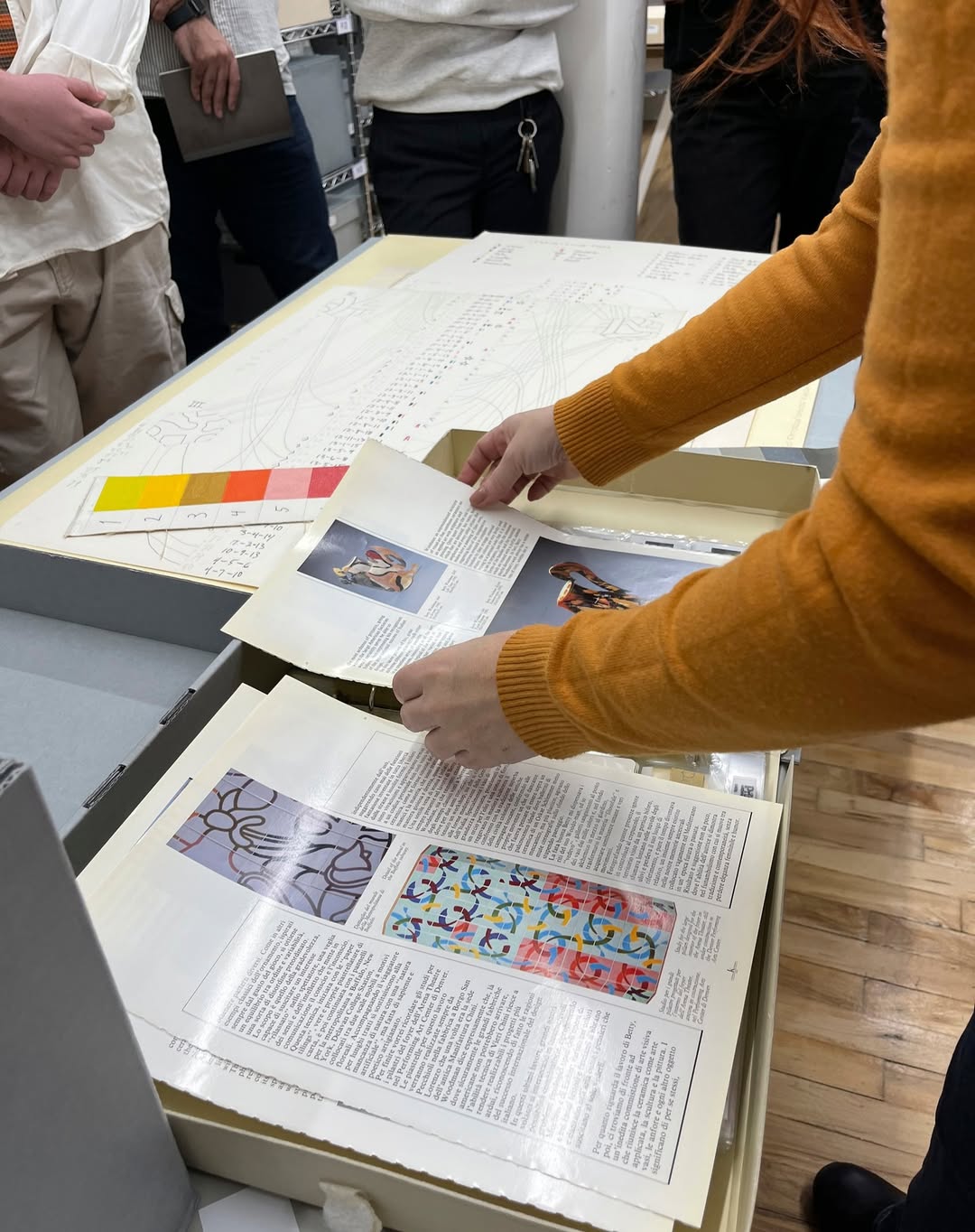
L to R: Micaela shows the Pratt class a magazine article on George Woodman and Betty Woodman. Photo by Cristina Pattuelli. | Detail of a drawing done by Francesca Woodman with a note to Betty Woodman and George Woodman. The drawing includes a sofa Francesca used as a prop in photographs and teacups likely depict Betty Woodman’s ceramics. Flight information in the note may help us establish timelines for all three artists in the future. | Photo boxes owned by George Woodman. While the boxes are not “archival” (acid free), the information written on them by the artist makes them valuable in establishing provenance of final artworks. | The archive interior. Simple industrial rolling racks are utilized to hold archival assets.
Micaela shows the Pratt class a magazine article on George Woodman and Betty Woodman. Photo by Cristina Pattuelli.
Visit to WFF Archive from the Pratt School of Information’s MSLIS program, November 18, 2024
The Woodman Family Foundation archive was delighted to host students from the Art Documentation class in the Pratt School of Information’s MSLIS program on November 18.
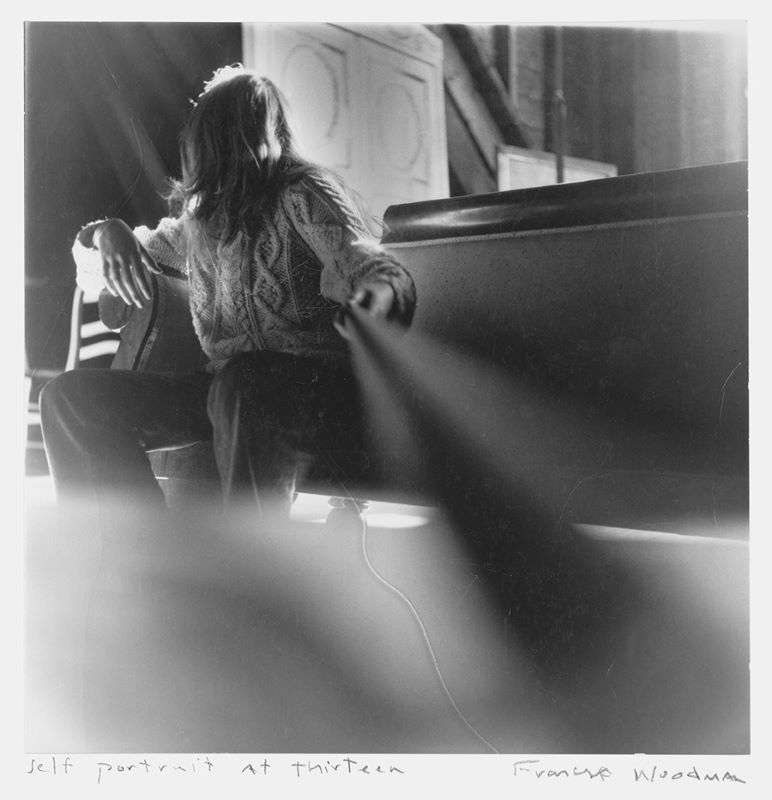
L to R: “Self-Portrait at Thirteen," c. 1972, 6 3/4 x 6 11/16 in. Gelatin silver print | 2 & 3: Francesca Woodman's Yashica Mat-124G camera | “Untitled," 1979, 3 5/16 x 3 1/2 in. Chromogenic print. All artworks by Francesca Woodman © Woodman Family Foundation / Artists Rights Society (ARS), New York. Woodman Family Foundation Archives.
Francesca Woodman, “Self-Portrait at Thirteen," c. 1972, 6 3/4 x 6 11/16 in. Gelatin silver print © Woodman Family Foundation / Artists Rights Society (ARS), New York.
Francesca Woodman's first camera
In 1972, Francesca Woodman received her first camera, a 6x6 twin-lens reflex Yashica Mat-124G, from her father, George Woodman.
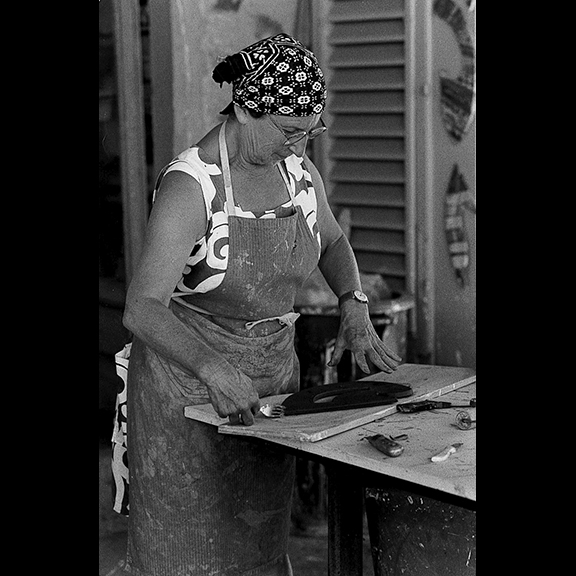
Image details: 1. Betty Woodman at work in her studio in Antella, Italy, 1996. Photograph by George Woodman | 2. An assemblage of Betty Woodman’s studio materials. Clockwise from bottom left: Rocket Expansion cement, broken ceramic pieces, measuring cup, sponges, Orton standard pyrometric cones (open box) Orton small pyrometric cones, fork, toothbrush, kitchen knife | 3. George Woodman in his New York City studio c. 1980s | 4. An assemblage of George Woodman’s studio materials. Clockwise from bottom left: Gorton vapor equalizing valve, Bessey vise clamp, Xcemite screw driver, rubber hook tool, Dap silicone, GE silicone, Stanley level, Conair hair dryer, Wiss pliers, Great Neck wood chisel, Maimeri set of paints
Betty Woodman at work in her studio in Antella, Italy, 1996. Photograph by George Woodman. Woodman Family Foundation Archives.
Tools used by Betty Woodman and George Woodman
October is American Archives Month and we are celebrating by looking at some of the tools of the trade used by George Woodman and Betty Woodman in our collection.
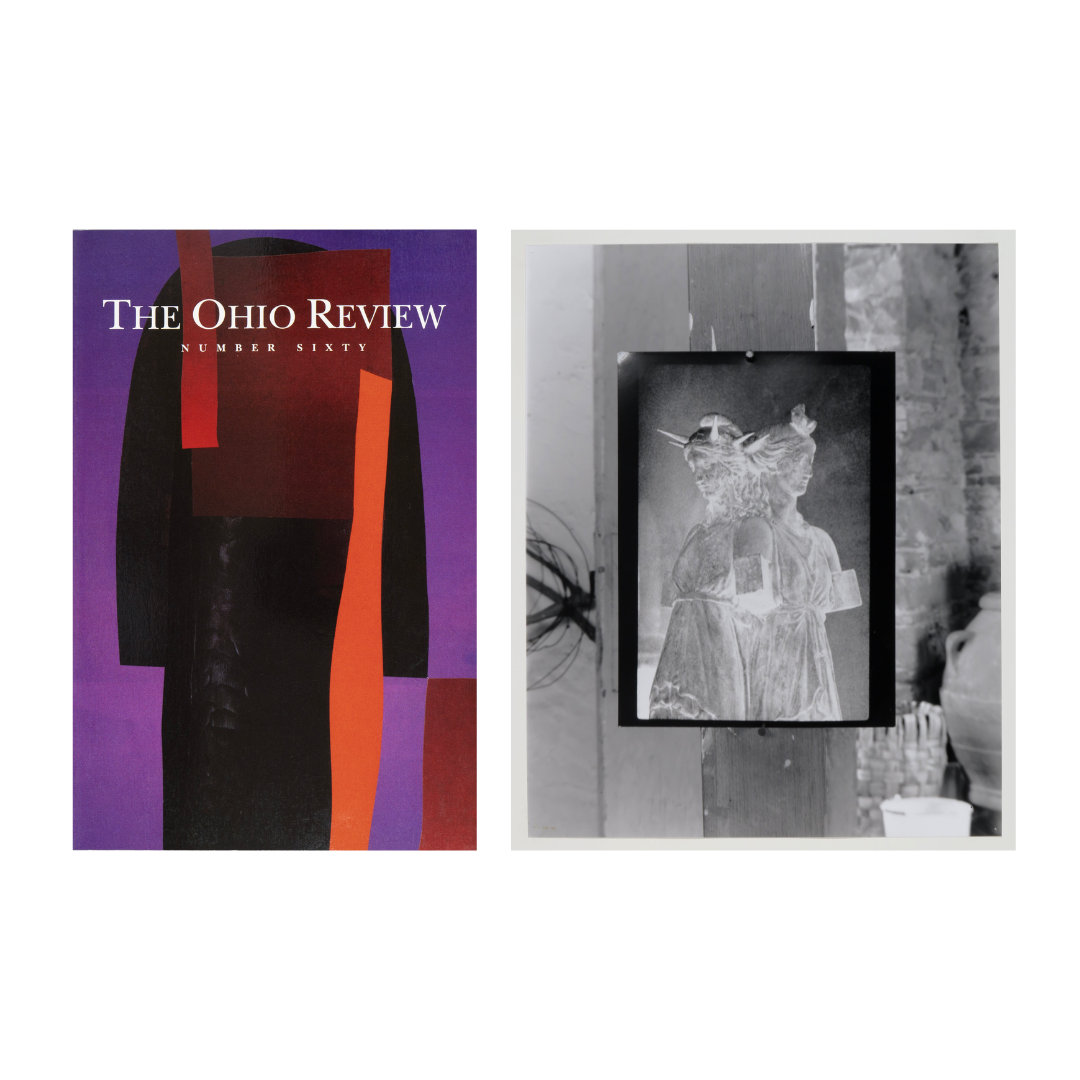
L to R: Pair: Dodd, Wayne (Ed.) The Ohio Review, No. 60. Athens, OH: The Ohio University, 1999. / “A Classical Mystery,” 1996 | Quote from “Some Photographs of Photographs” by George Woodman in The Ohio Review, No. 60, 1999. | “A Classical Mystery,” 1996, 20 x 16 in. | “Apollo and Psyche” or “Pysche et Amour,” 1997, 20 x 16 in. | “Still Life with Rachel” or “Childhood Memories,” c. 1997-98, 20 x 16 in. | “French Fashion in Madison Square” or “M. Vionnet in Madison Square,” 1999, 24 x 20 in. | Woodman, George. “Some Photographs of Photographs,” in The Ohio Review, No. 60, 1999. All gelatin silver prints. All works by George Woodman © Woodman Family Foundation / Artists Rights Society (ARS), New York.
Pair: Dodd, Wayne (Ed.) The Ohio Review, No. 60. Athens, OH: The Ohio University, 1999. / George Woodman. “A Classical Mystery,” 1996, gelatin silver print, 20 x 16 in. © Woodman Family Foundation / Artists Rights Society (ARS), New York
George Woodman's essay and photographs in The Ohio Review, No. 60, 1999
In 1999, The Ohio Review—a long-running literary journal published by the English Department at Ohio University—included a portfolio of thirteen photographs and an accompanying essay by George Woodman, appearing among pages of poetry, prose and fiction.
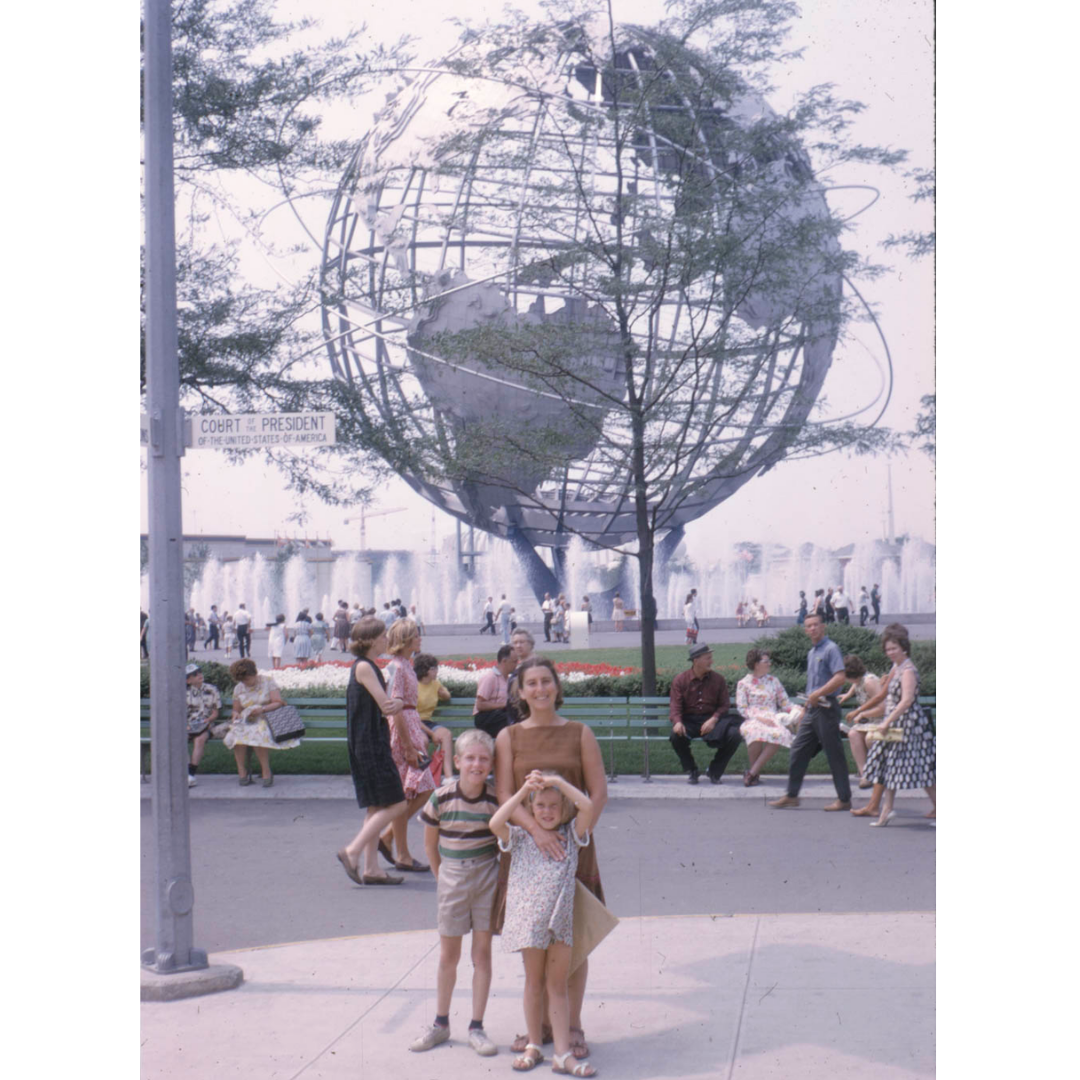
L to R: Betty, Charles, and Francesca Woodman in front of the New York World's Fair Unisphere, 1964 / Charles and Francesca Woodman in front of Thailand's pavilion, 1964 / Bird's eye view of the New York World's Fair, 1964. Woodman Family Foundation Archives.
Betty, Charles, and Francesca Woodman in front of the New York World's Fair Unisphere, 1964. Woodman Family Foundation Archives.
The Woodmans at the 1964 New York World's Fair
Sixty years ago, before they had traveled much of the world together, the Woodman family visited the 1964-1965 New York World’s Fair in Flushing Meadows-Corona Park.
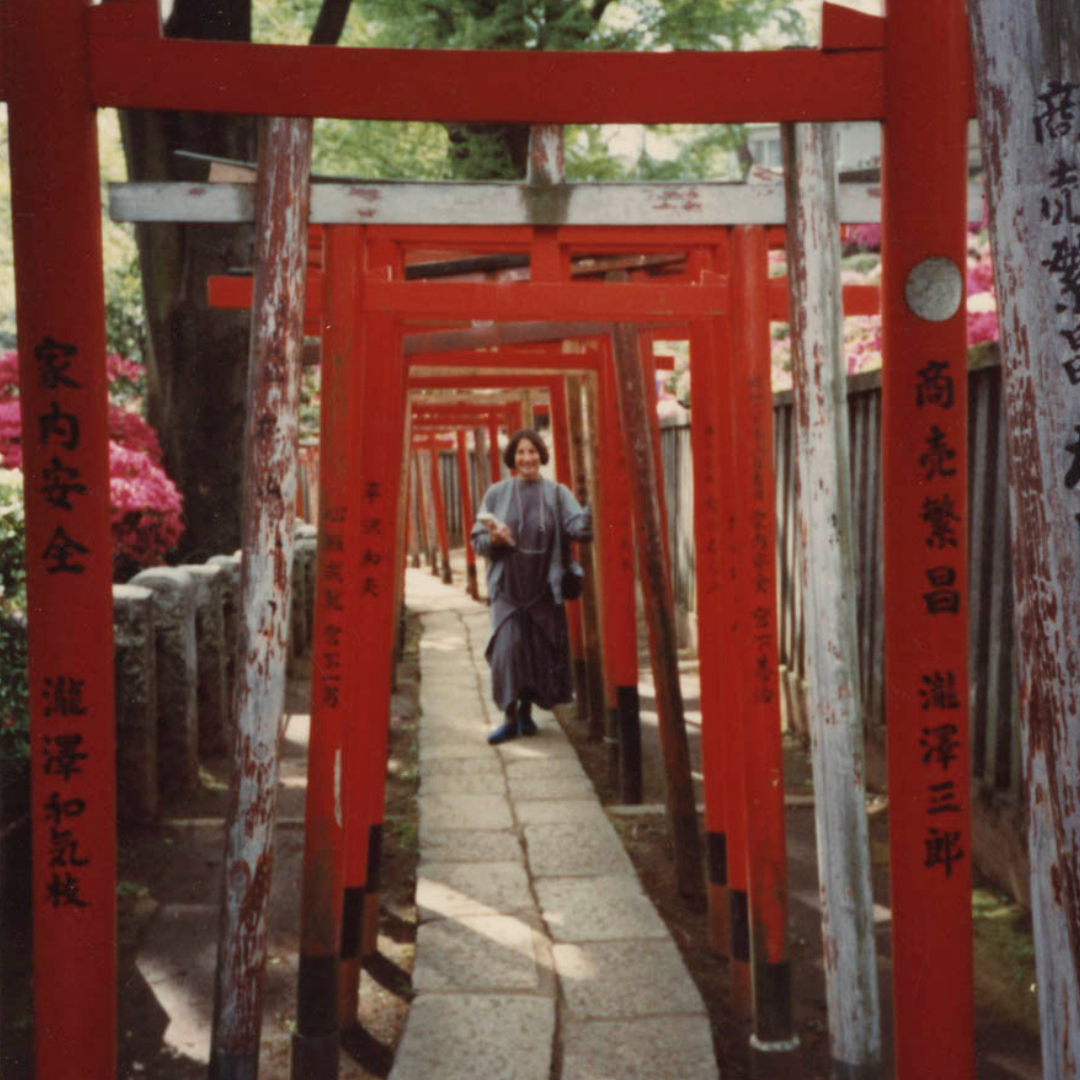
Detail: Betty Woodman walking under torii gates, Japan, 1990 / Pair: Details of Betty Woodman and George Woodman in a traditional ryokan inn, Japan, 1990 / Betty Woodman, Japan, 1990 / George Woodman, Japan, 1990 / George Woodman, Shinto shrine, Japan, 1990 / Hōryū-ji Temple, Nara, Japan, 1990 / Buddhist Guardian statue, Hōryū-ji Temple, Nara, Japan, 1990 / Pillars, Hōryū-ji Temple, Nara, Japan, 1990 / Shave ice stall, Japan, 1990. Woodman Family Foundation Archives.
Detail: Betty Woodman walking under torii gates, Japan, 1990. Woodman Family Foundation Archives.
Betty Woodman and George Woodman in Japan, 1990
As the solstice today marks the official beginning of summer, we are reminded of the Woodmans’ extensive travels around the world and their months immersed in global artistic influences.
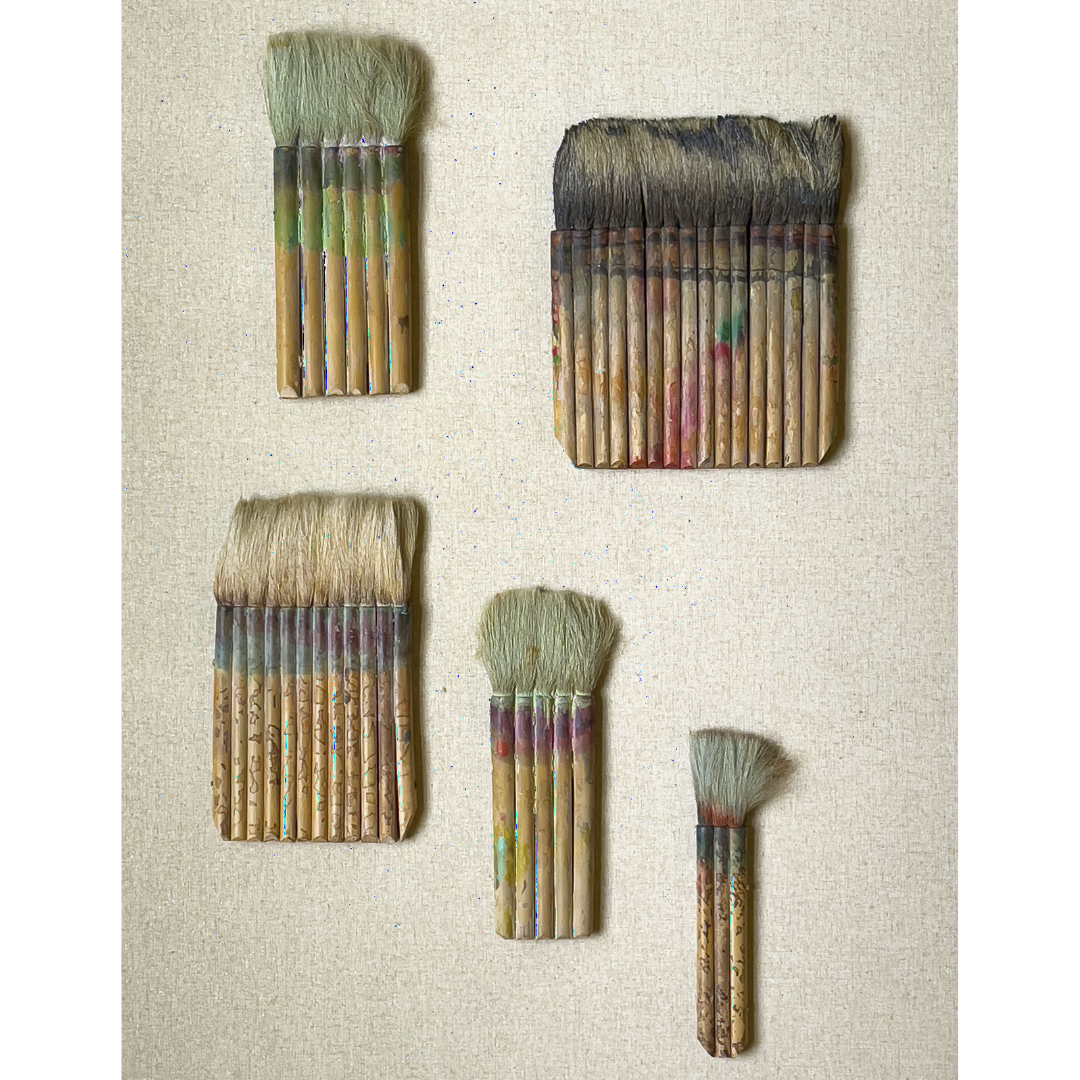
L to R: Images 1-4: Betty Woodman’s brushes / Detail of "Roman Girls," 2008, 35 x 70 x 11 in. Glazed earthenware, epoxy resin, lacquer, paint / Detail of "History of the Amphora," 2011, 6 ft. x 8 ft. x 1 in. Glazed earthenware, epoxy resin, lacquer, acrylic paint / Detail of “Country House,” 2005, 66 x 32 x 9 1/2 in. Glazed earthenware, epoxy resin, lacquer / Woodman’s glazes / Detail of "Spring Wall Relief," 2009, 60 x 48 x 1 in. Glazed earthenware / Detail of "His and Hers Vases: Ferris Wheel," 2006, 28.5 x 73 x 14.5 in. Glazed earthenware, epoxy resin, lacquer, and paint / All works by Betty Woodman. © Woodman Family Foundation / Artists Rights Society (ARS), New York. Woodman Family Foundation Archives.
Betty Woodman’s brushes. Woodman Family Foundation Archives.
Betty Woodman's glazes, paints, and brushes
Betty Woodman’s numerous glazes, paints, and the varied configurations of brushes—sometimes mixed or assembled by the artist herself to achieve desired color swatches, brushy marks, and parallel stripes—reflect her continuously innovative work with ceramic forms.
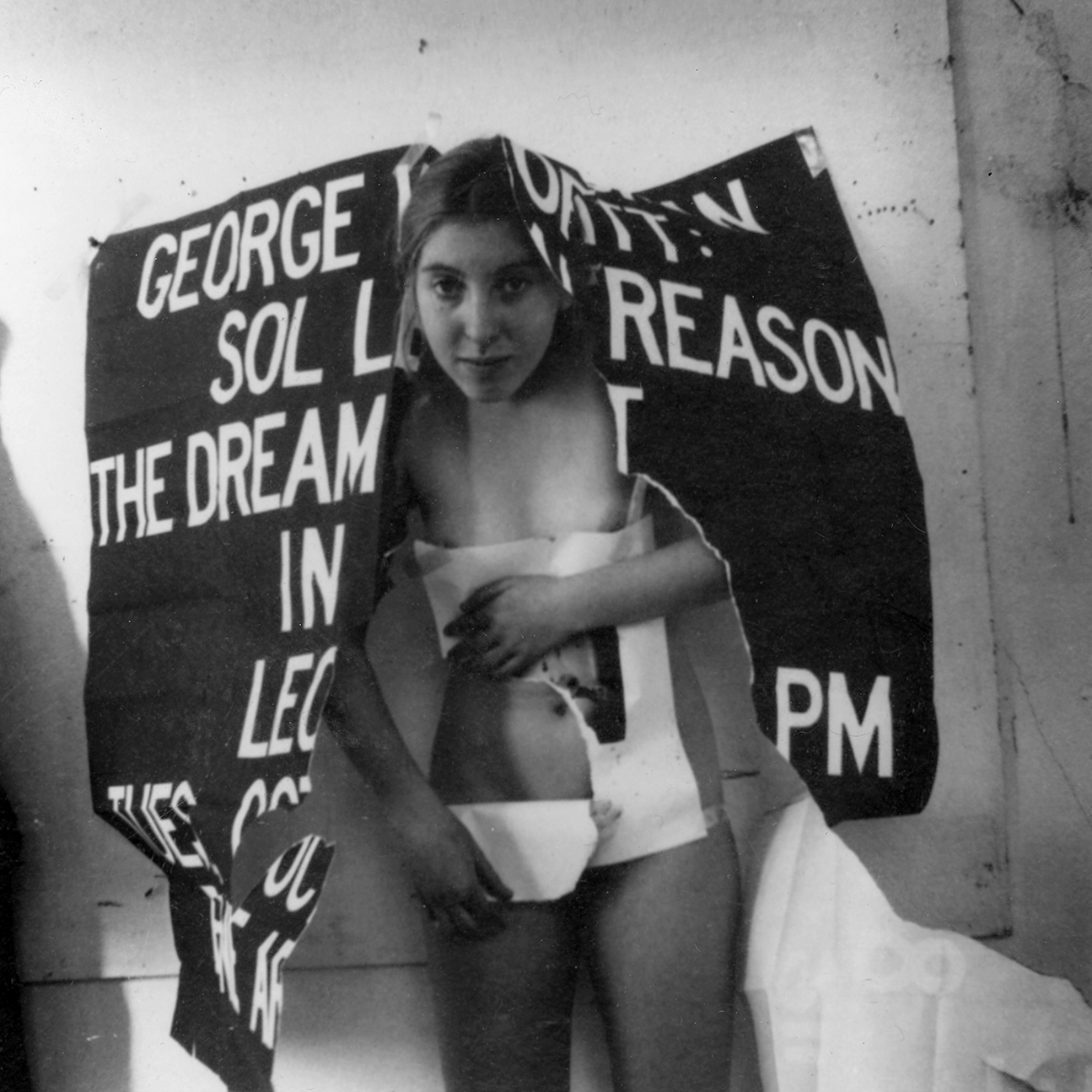
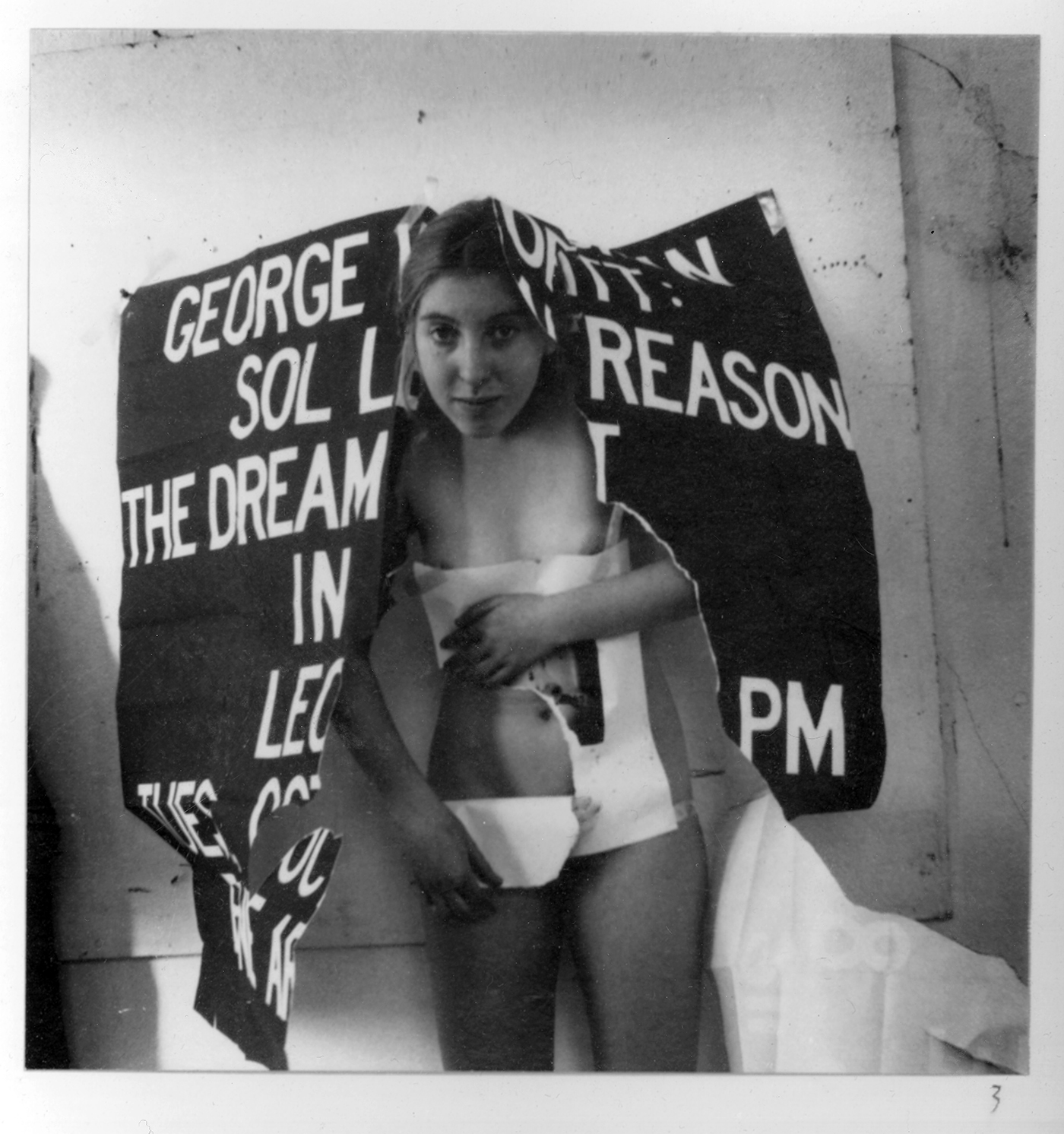
L to R: All images Francesca Woodman. “Untitled,” 1976. Gelatin silver prints. 10 x 24 in.
Francesca Woodman. “Untitled,” 1976. Gelatin silver prints. 10 x 24 in.
Francesca Woodman. "Untitled," 1976
As the child of artists, Francesca Woodman grew up on the periphery of the Fine Arts Department at the University of Colorado, Boulder, where her father, George Woodman, taught painting and the philosophy of art. Well-versed as she was from a young age in art history and contemporary art, Francesca was famously precocious in asserting her own ideas. In this series of photographs, which she gifted to her father, she humorously and good-naturedly carves out her own position as an artist, bursting through a poster for his 1976 lecture on minimalist heavy-weight Sol LeWitt, replacing it with a poster for her own exhibition at the Addison Gallery, and then herself.
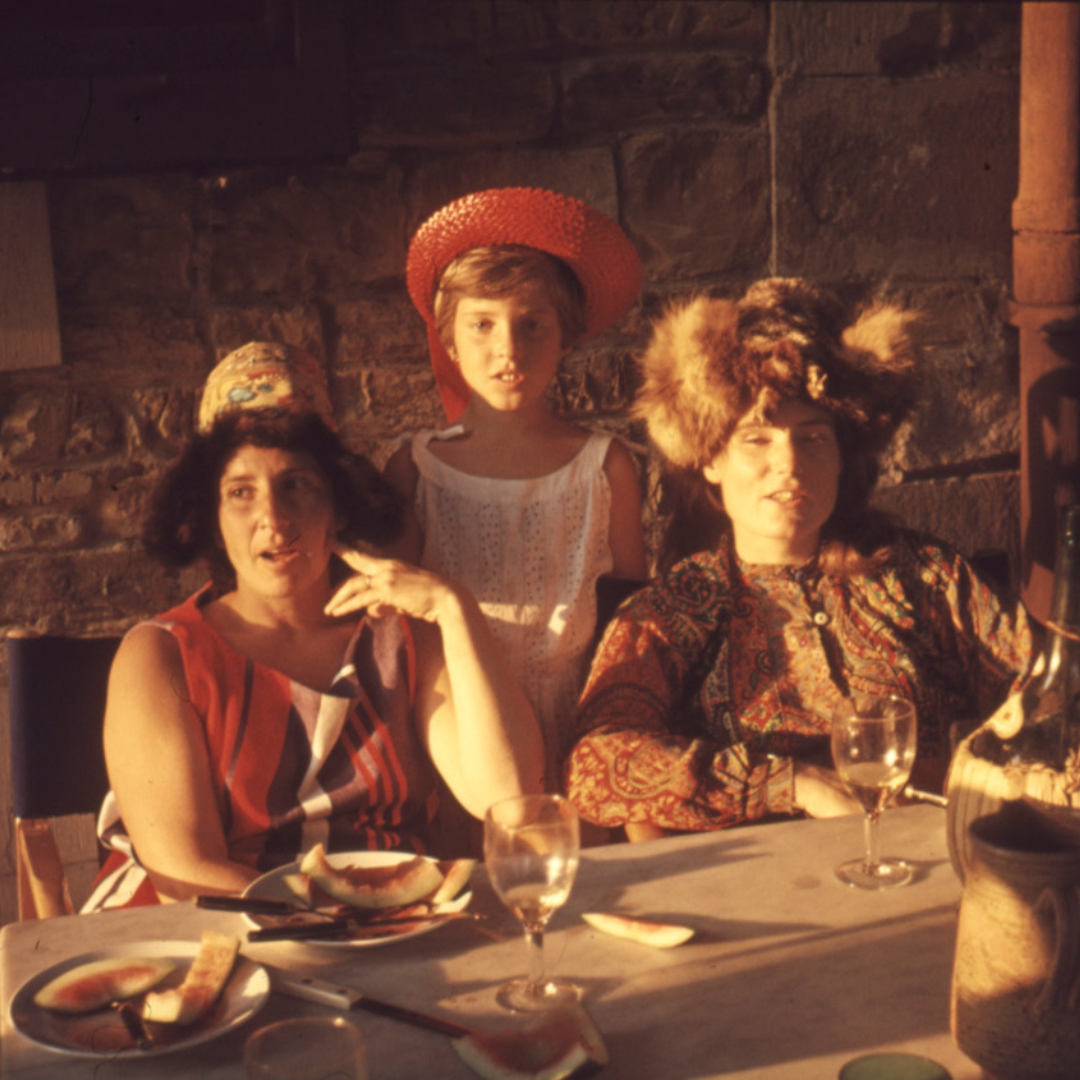
L to R: Betty Woodman, Francesca Woodman and Nancy Graves in Italy, 1966 / Charlie Woodman and Richard Serra in Italy, 1966 / Betty Woodman with Nancy Graves, Richard Serra and unknown friend in Italy, 1965. Woodman Family Foundation Archives.
Betty Woodman, Francesca Woodman and Nancy Graves in Italy, 1966. Woodman Family Foundation Archives.
The Woodmans, Nancy Graves and Richard Serra in Italy
Over the course of a year from 1965-66, the Woodman family lived and worked in Italy, just outside of Florence. During that time, Betty and George became close friends with the artists and then-couple Nancy Graves and Richard Serra, who, like Betty, was there for the year on a Fulbright-Hays scholarship. They spent many hours together around the table, sharing meals, funny hats and conversations about art.

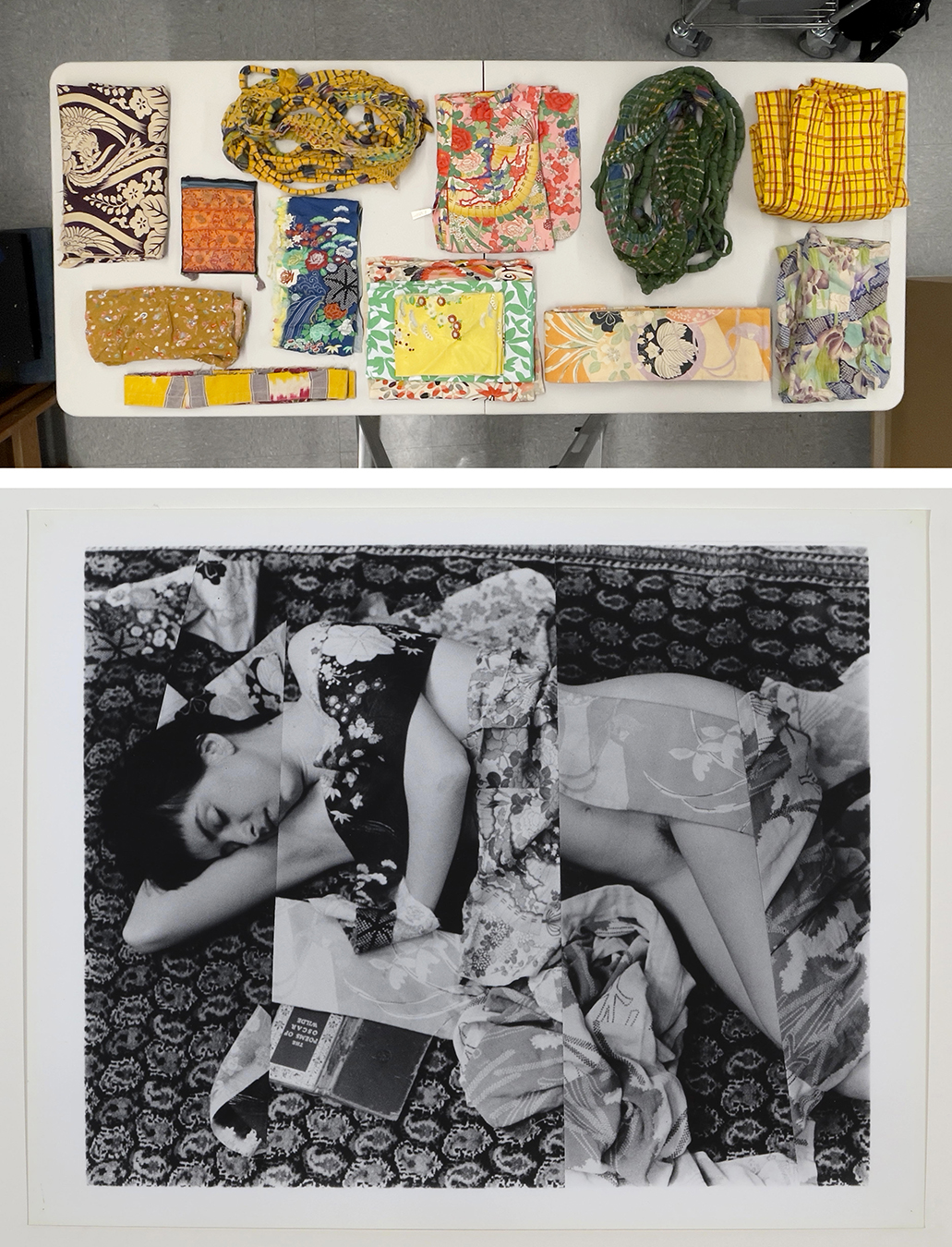
L to R: All artworks by George Woodman. Pair: “Repose (The Sleeper),” 2003. 24 x 30 in / Ephemera, c. 1950s-2010s, George Woodman Collection, Woodman Family Foundation Archives, New York / “Repose (The Sleeper),” 2003. 24 x 30 in / Images 3-4, 8: Ephemera, c. 1980s-2010s, George Woodman Collection, Woodman Family Foundation Archives, New York / “Saskia in a Still Life,” 2003. 30 x 22 in / “Jessica and Airplane,” 2002. 30 x 40 in / “Still Life with Rachel,” 1997. 20 x 16 in. All artworks gelatin silver prints.
Pair: George Woodman. “Repose (The Sleeper),” 2003. 24 x 30 in. Gelatin silver print / Ephemera, c. 1950s-2010s, George Woodman Collection, Woodman Family Foundation Archives, New York.
Ephemera used in George Woodman's photographs
"…[T]hings have a life, greater or smaller, in the eye and the mind. This life unfolds, no limits can be set upon it, and the way it happens may be similar or very dissimilar from one person to another,” George Woodman wrote of objects generally, when considering those housed in museum collections, but these observations illuminate his own approach to still life and photography. The Woodman Family Foundation Archives include an eclectic array of found objects, toys and fabrics used by Woodman in his photographs.
L to R: Betty Woodman. “Courtyard: Pontormo,” 2016. 110 x 84 x 10 in. Glazed earthenware, epoxy resin, lacquer, acrylic paint, and canvas / Images 2-3: Spreads from “Betty Woodman: New York/Florence.” Purple Magazine, Fall/Winter, 2017 / Betty Woodman. “Courtyard: Van Gogh,” 2016. 96 x 84 x 10 in. Glazed earthenware, epoxy resin, lacquer, acrylic paint, and canvas.
Betty Woodman. “Courtyard: Pontormo,” 2016. 110 x 84 x 10 in. Glazed earthenware, epoxy resin, lacquer, acrylic paint, and canvas.
Betty Woodman interview with Selva Barni, "Purple Magazine," Fall/Winter 2017
In this interview with Selva Barni, published in "Purple Magazine" in 2017, Betty Woodman talks about taking chances in her work and life, her relationship to feminism, her shift from potter to sculptor, and much more.
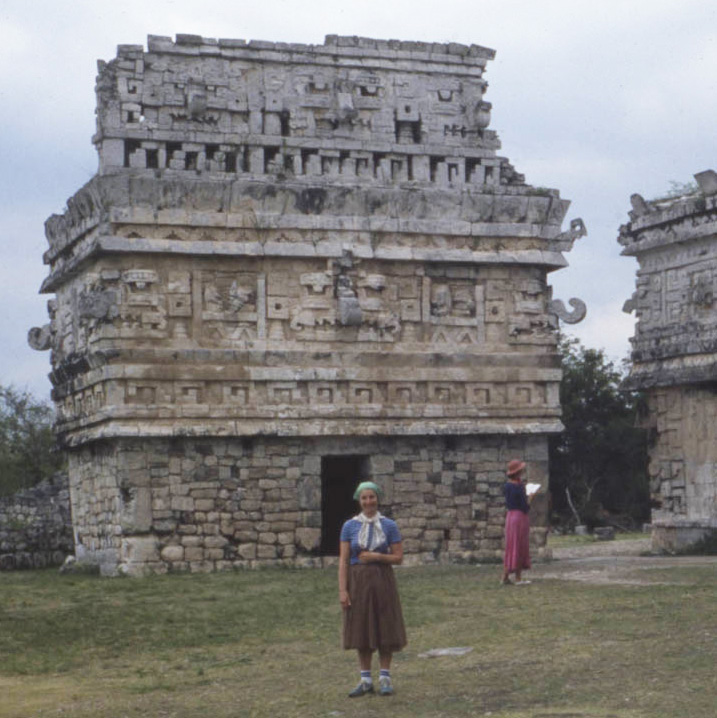
L to R: Detail of Betty Woodman / Betty Woodman, Uxmal, Yucatán, Mexico, c. 1980s / Betty Woodman and friend, Yucatán, Mexico, c. 1980s / Pyramid of the Magician, Uxmal, Yucatán, Mexico, c. 1980s / Pyramid of the Magician, Uxmal, Yucatán, Mexico, c. 1980s / George Woodman, Yucatán, Mexico, c. 1980s / Betty Woodman, Hotel Real Toledo by Kavia, Mérida, Yucatán, Mexico, c. 1980s / George Woodman, Hotel Real Toledo by Kavia, Mérida, Yucatán, Mexico, c. 1980s / George Woodman, Hotel Real Toledo by Kavia, Mérida, Yucatán, Mexico, c. 1980s. Woodman Family Foundation Archives.
Detail of Betty Woodman, Uxmal, Yucatán, Mexico, c. 1980s. Woodman Family Foundation Archives.
Yucatán, Mexico, c. 1980s: SUMMER TRAVELS WITH THE WOODMAN FAMILY
The Woodmans’ travels also took them beyond the historical and cultural capitals of Europe. For Betty and George, this included trips to India, China, Japan, Korea, and more than one visit to Mexico—a country where they spent three months on their honeymoon in the summer of 1953.
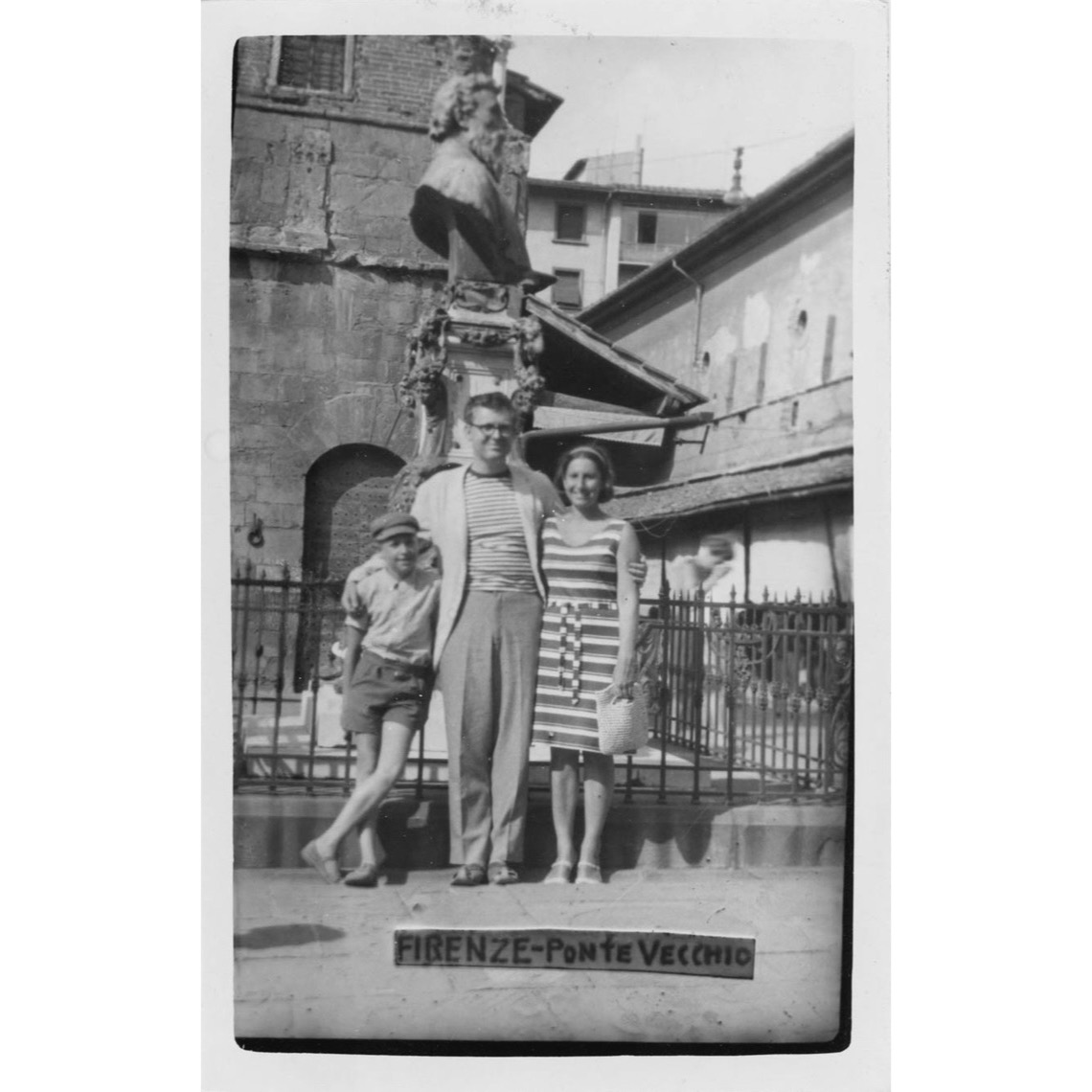
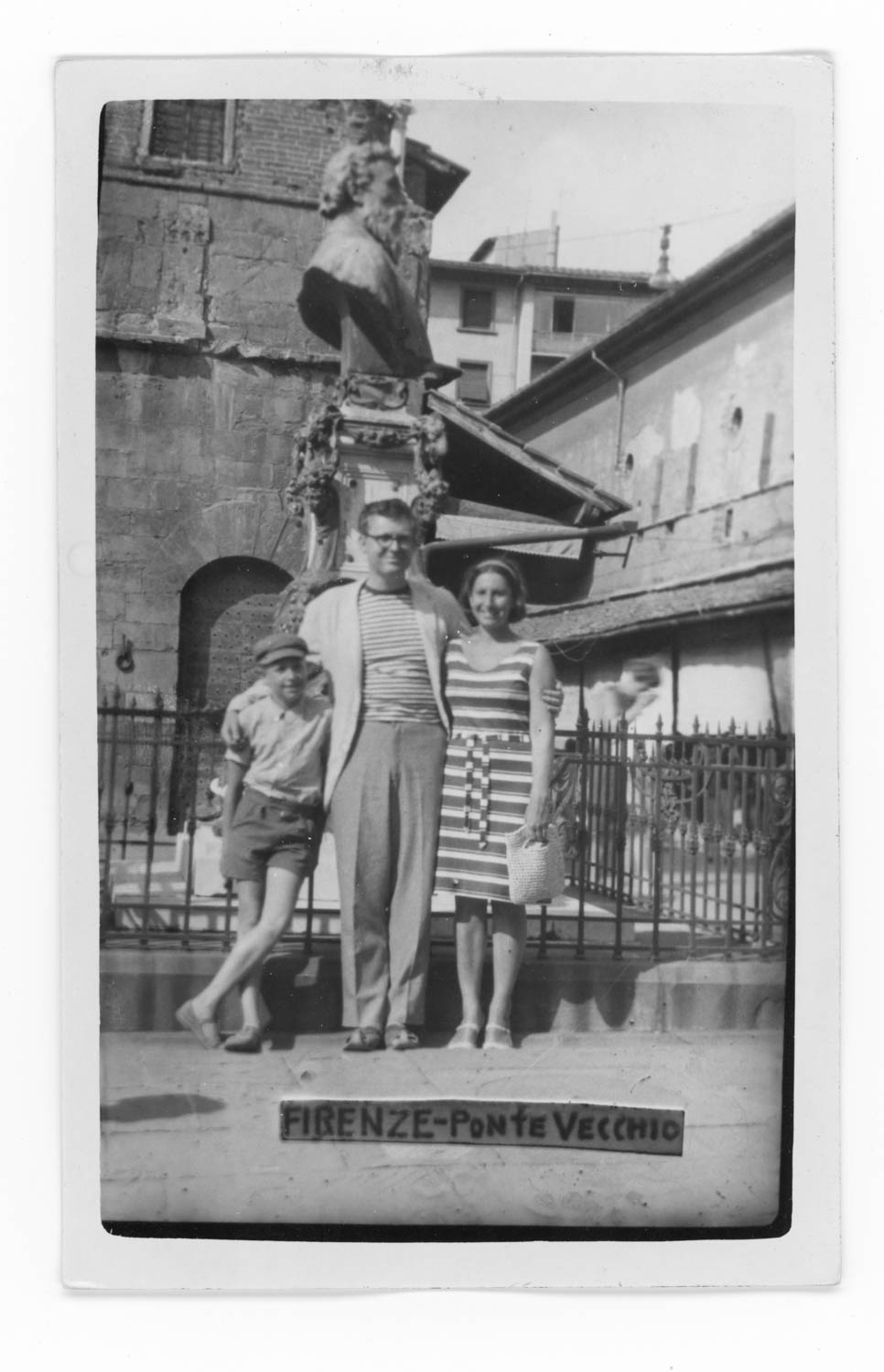
L to R: Charles Woodman, George Woodman, and Betty Woodman, Ponte Vecchio, Florence, Italy, c. 1966 / George Woodman, Florence, Italy, 1966 / Francesca Woodman and Charles Woodman, Fiesole, Italy, c. 1966 / Charles Woodman and Francesca Woodman, Pompeii, Metropolitan City of Naples, Campania, Italy, 1966 / Charles Woodman and Francesca Woodman, Alhambra, Granada, Spain, c. 1966 / Tile detail Alhambra, Granada, Spain / Detail of George Woodman, ceramic tile installation Delavan-Canisius College Station, NFTA-Metro, Buffalo, NY, 1984 / George Woodman. “A Gentle Tessellation,” 1966/68. 43 1/4 x 43 1/34 in. Acrylic on canvas / George Woodman with tile mural commissioned by General Motors and the Detroit Transportation Corporation. Detail of the work in progress on the floor of George's studio, Antella, Italy, 2003. All images Woodman Family Foundation Archives unless otherwise noted. All artworks © Woodman Family Foundation / Artists Rights Society (ARS), New York.
Charles Woodman, George Woodman, and Betty Woodman, Ponte Vecchio, Florence, Italy, c. 1966. Woodman Family Foundation Archives.
Family trips to Florence, Fiesole, and Pompeii in Italy, and Granada, Spain. c. 1966: SUMMER TRAVELS WITH THE WOODMAN FAMILY
The Woodmans spent another year together just outside of Florence from 1965-66. Betty had a Fulbright-Hays fellowship and George a faculty fellowship from the University of Colorado, while Charlie and Francesca attended the local public school.
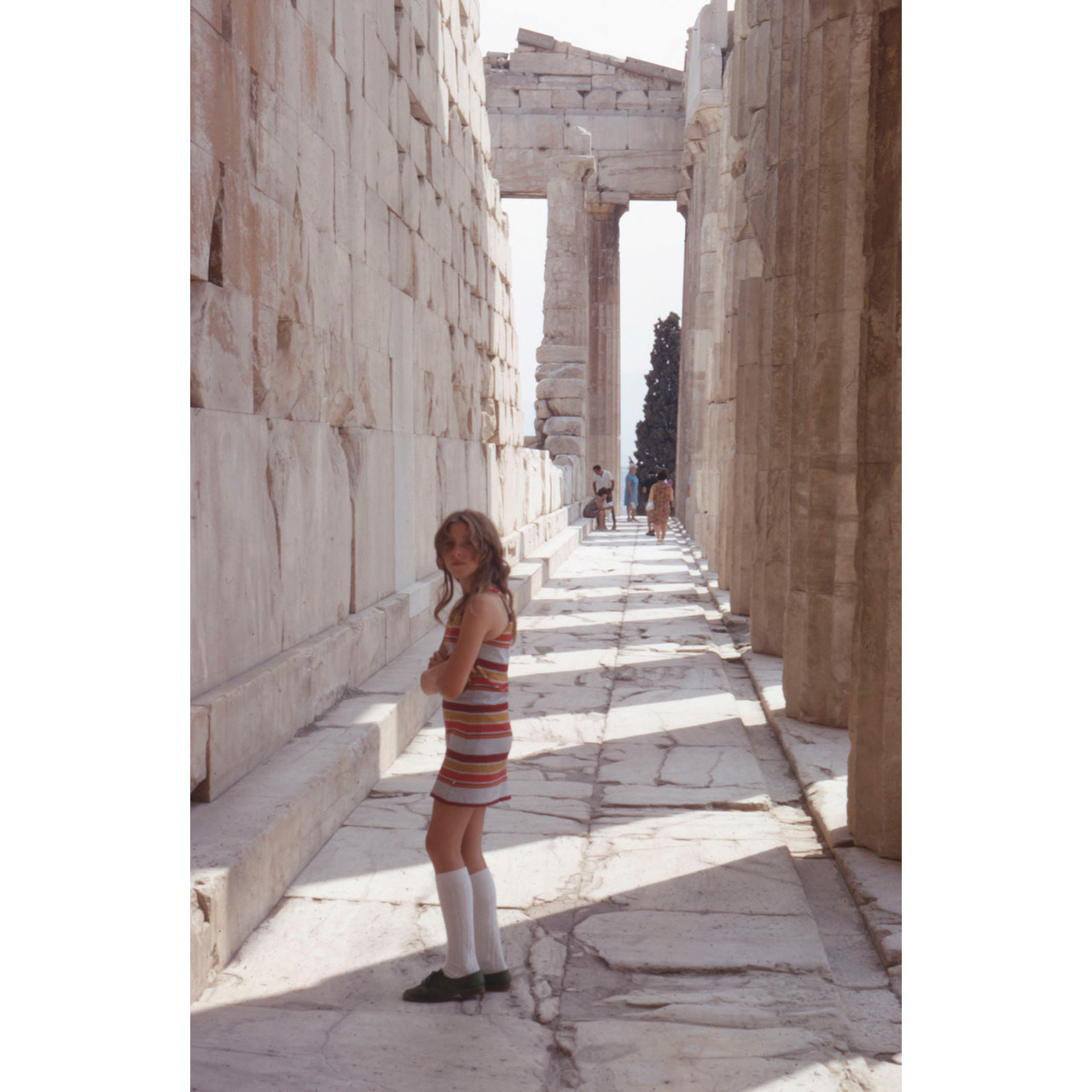
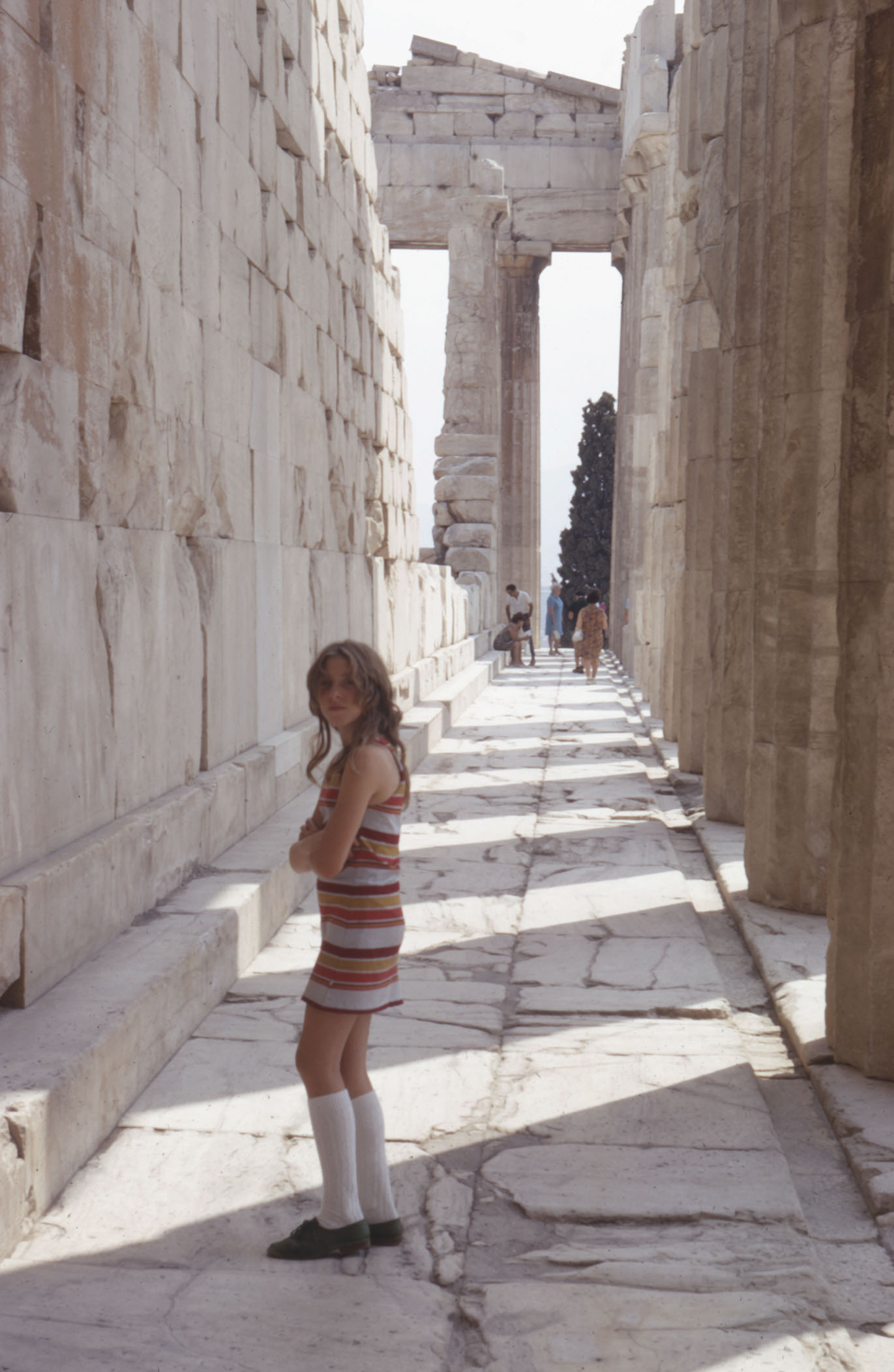
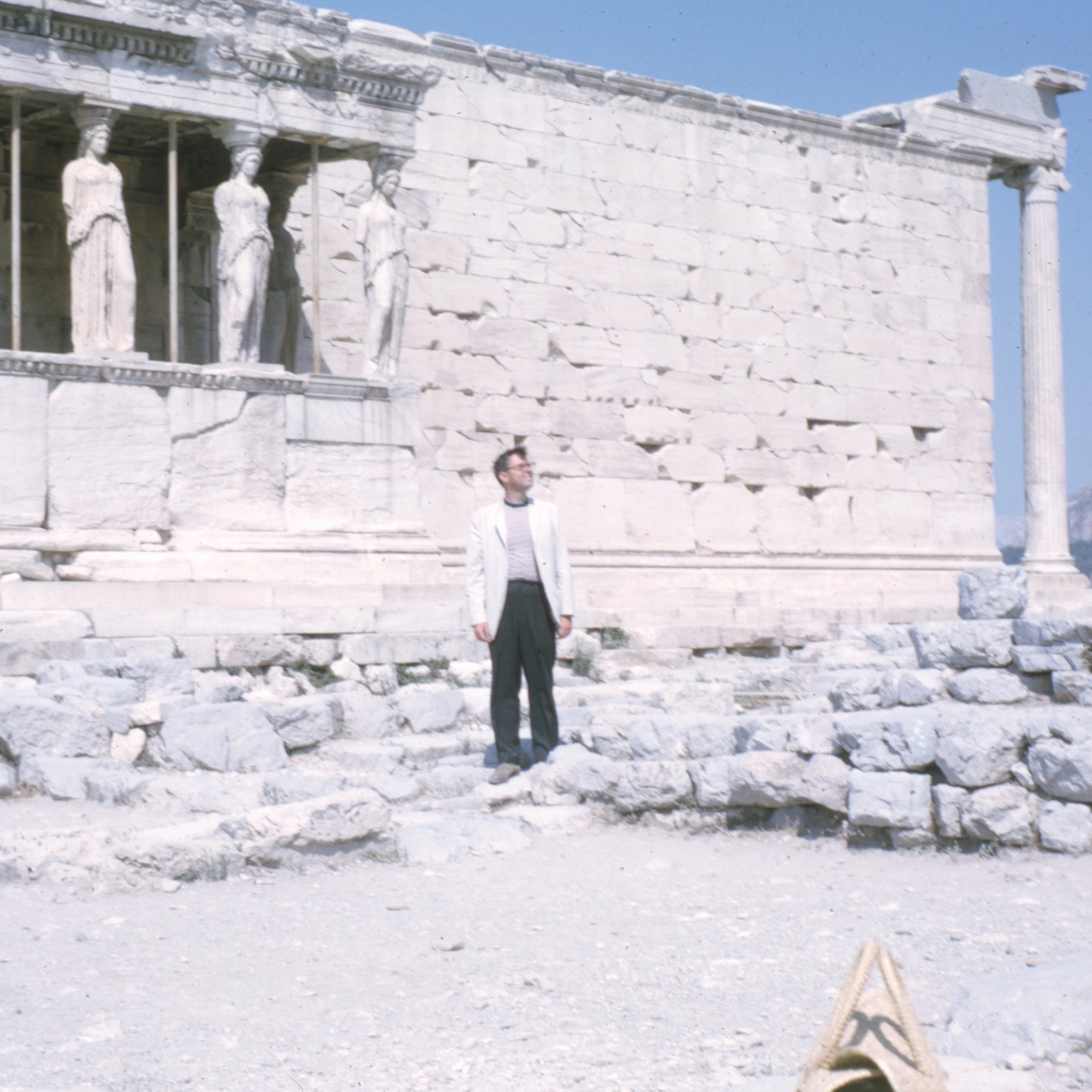
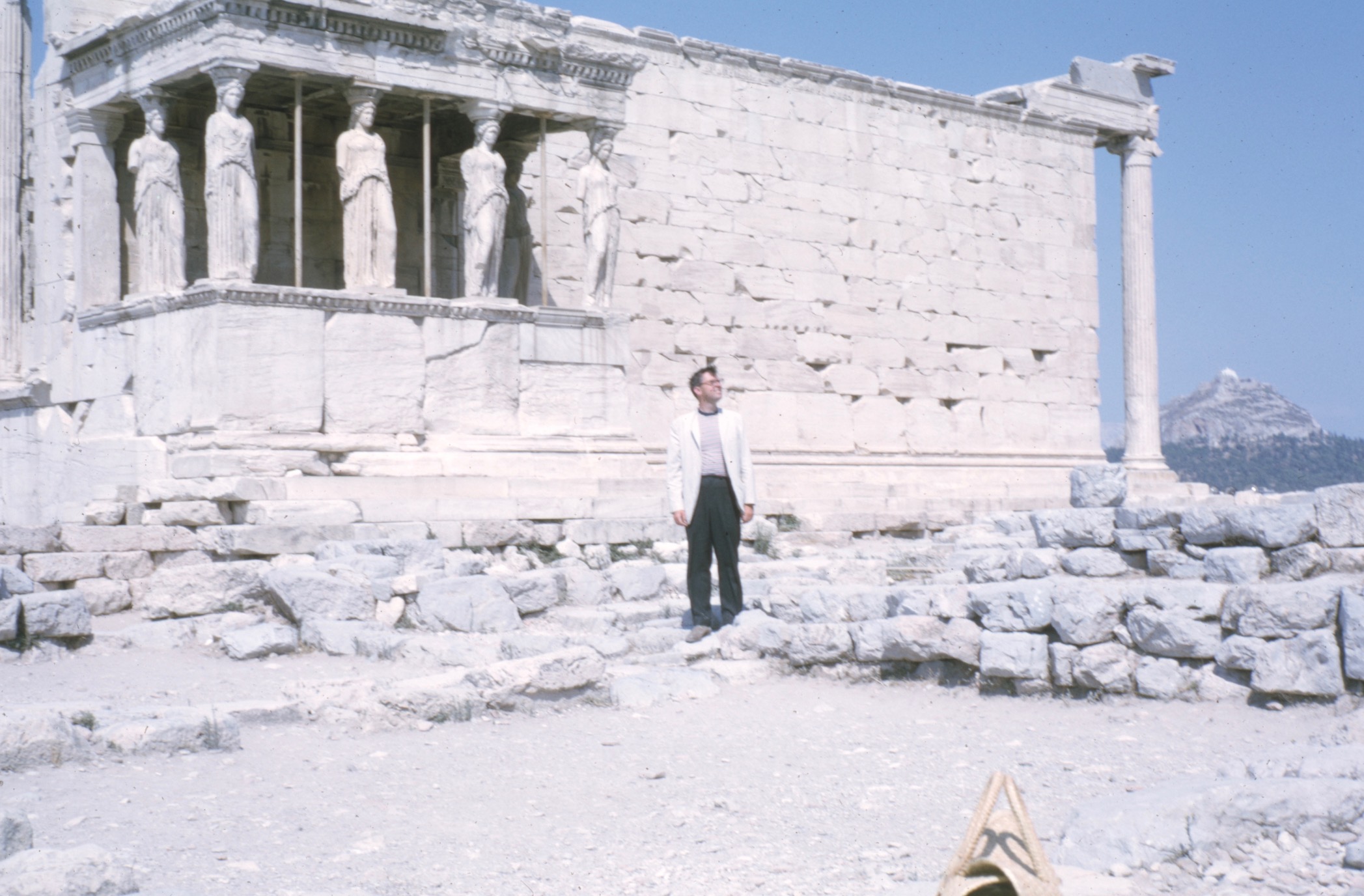
L to R: Francesca Woodman, 1971 / Pair: Betty Woodman, 1971 / George Woodman, 1971 / Francesca Woodman and friend, 1971 / Betty Woodman and friend, 1966 / Francesca Woodman and Charles Woodman, 1966 / George Woodman, 1966 / View of Acropolis of Athens from boat, Athens, Greece, 1966 / Betty Woodman, Greece, 1971 / Francesca Woodman, Greece, 1971. All images Acropolis of Athens, Athens, Greece unless otherwise noted. Woodman Family Foundation Archives.
Francesca Woodman, Acropolis of Athens, Athens, Greece, 1971. Woodman Family Foundation Archives.
Acropolis of Athens, Athens, Greece, 1971 and 1966: SUMMER TRAVELS WITH THE WOODMAN FAMILY
The Woodman family made at least two trips to Greece together. The impact and influence of classical ruins, the architecture as well as the female form, can be seen in all of their work over many decades.
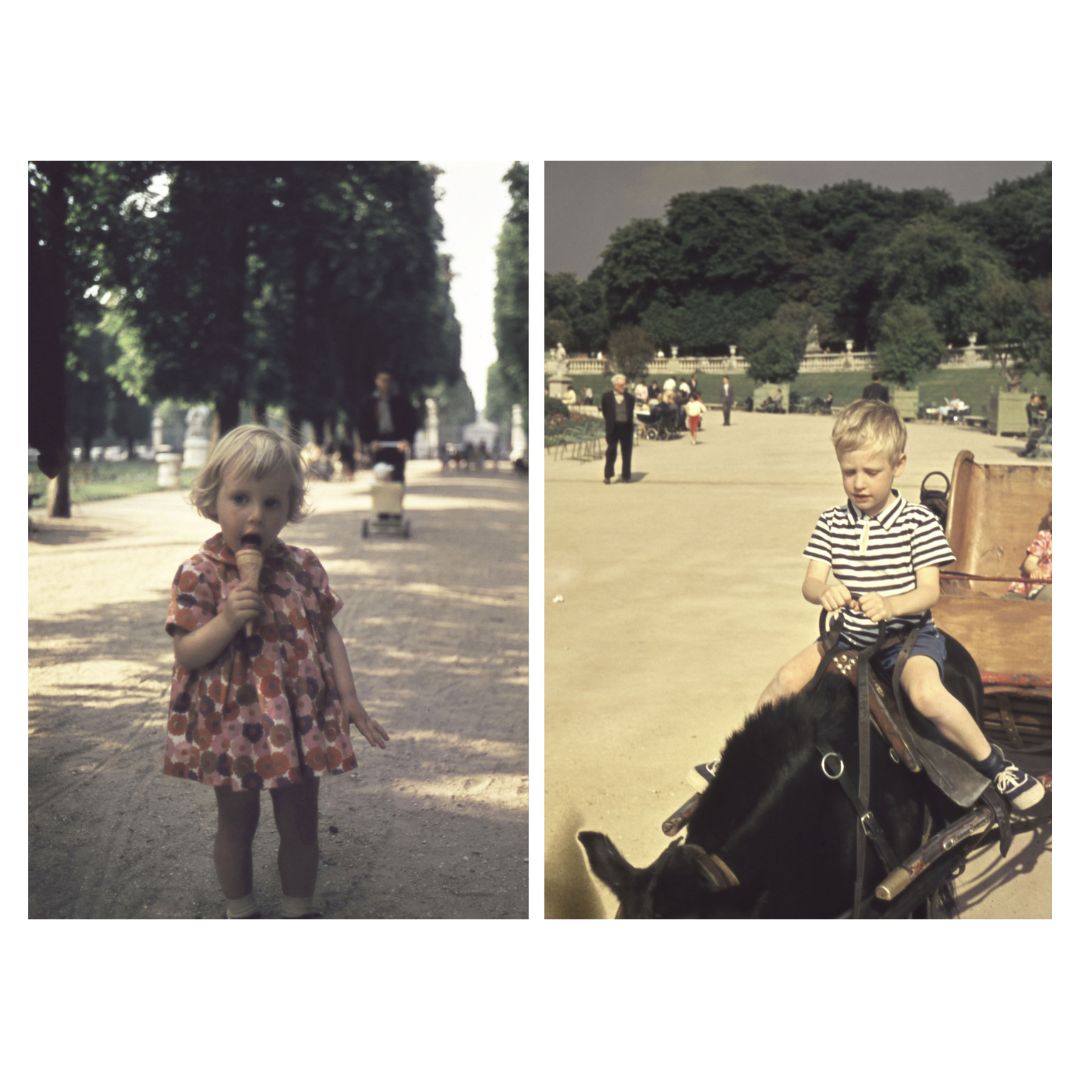
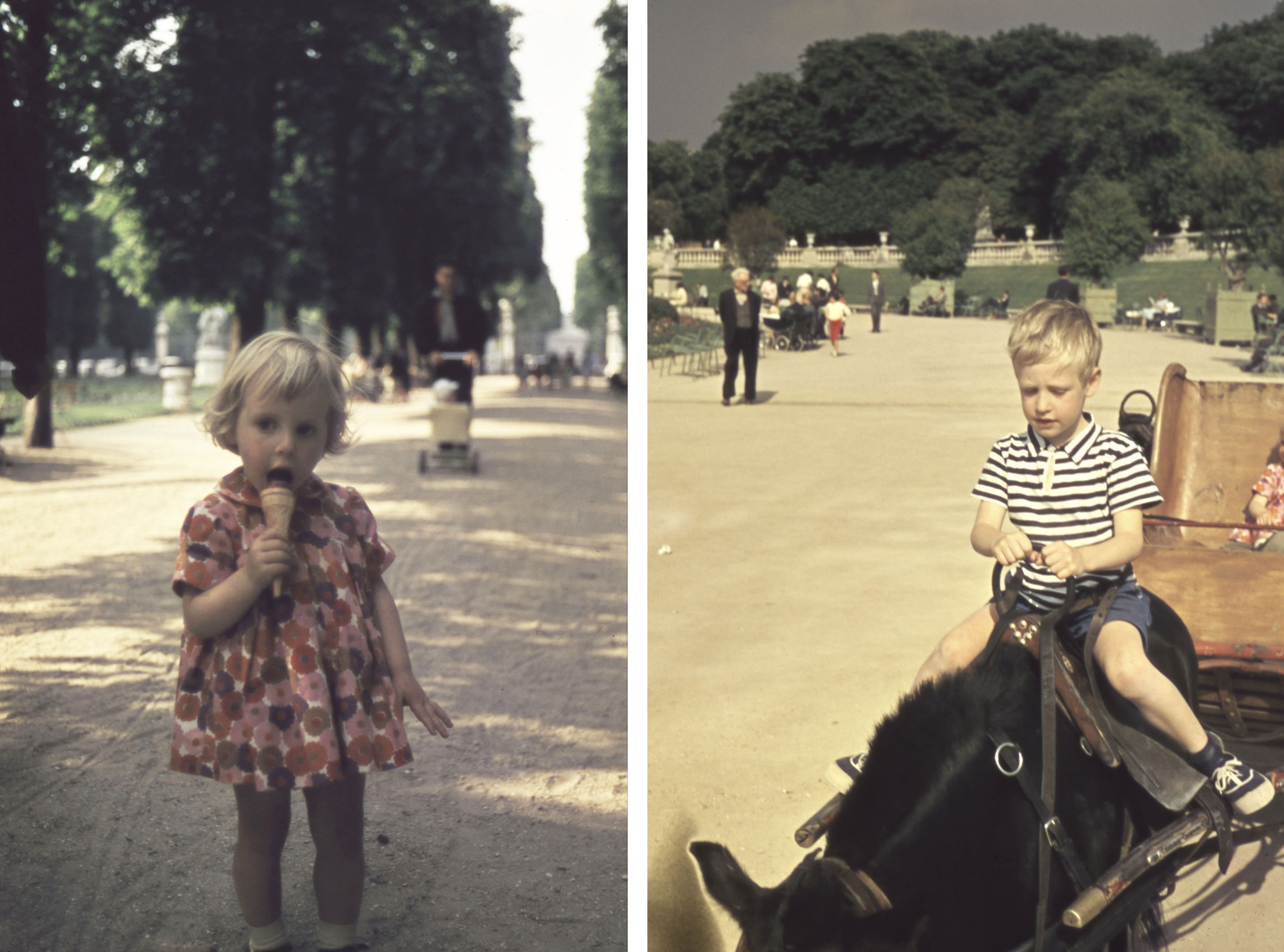
L to R: Pair: Francesca Woodman, Jardin du Luxembourg, Paris, France, 1960 / Charles Woodman, Jardin du Luxembourg, Paris, France, 1960 / Detail of Betty Woodman and Francesca Woodman / Betty Woodman and Francesca Woodman, Jardin du Luxembourg, Paris, France, 1960 / Charles Woodman, Fontaine des Quatre-Parties-du-Monde, Jardin du Luxembourg, Paris, France, 1960 / Francesca Woodman and Charles Woodman, Paris, France, 1960 / Musée du Louvre, Paris, France, 1960 / Paris, France, 1960 / Betty Woodman and Charles Woodman, Paris, France, 1960. Woodman Family Foundation Archives.
Pair: Francesca Woodman, Jardin du Luxembourg, Paris, France, 1960 / Charles Woodman, Jardin du Luxembourg, Paris, France, 1960. Woodman Family Foundation Archives.
Paris, France, 1960: SUMMER TRAVELS WITH THE WOODMAN FAMILY
The Woodman family used their Italian home-base to see the sites around Europe, which meant that Francesca and Charlie began traveling with their parents from a young age.
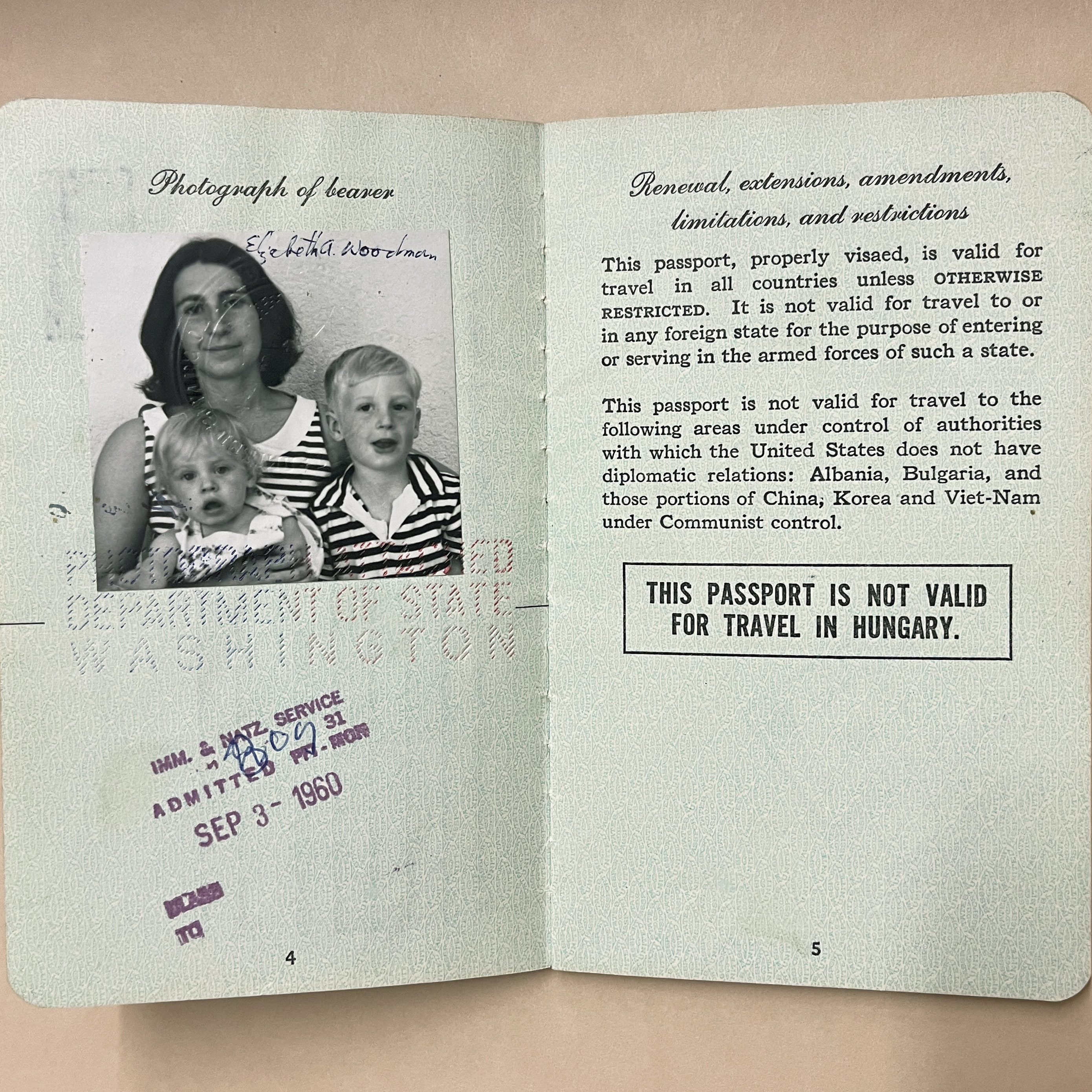
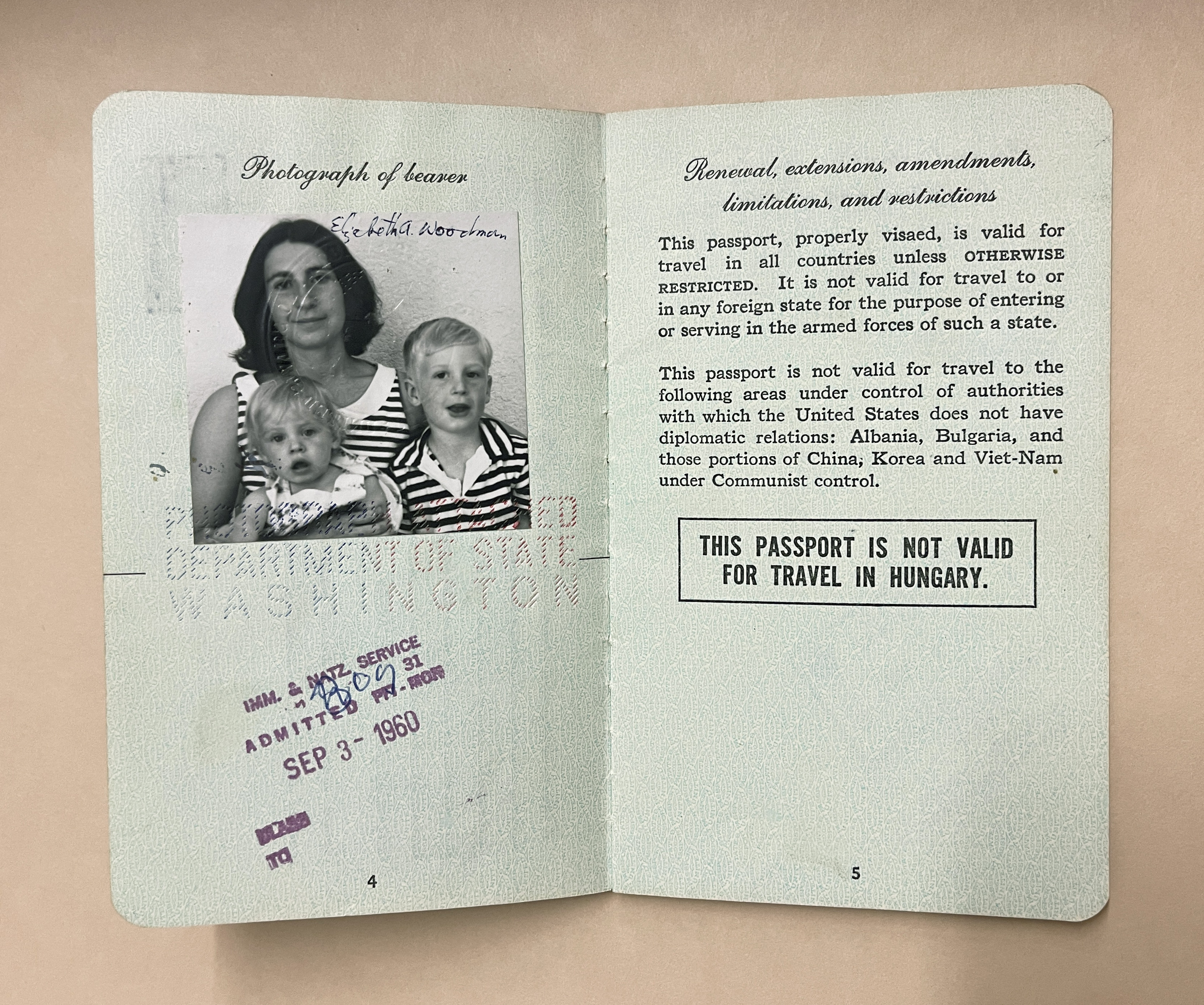
L to R: 1-2: Betty Woodman with Francesca Woodman and Charles Woodman, passport, 1959 / 3-4: George Woodman, passport, 1959 / 5-6: Betty Woodman with Charles Woodman and Francesca Woodman, passport, 1965 / 7-8: George Woodman, passport, 1965 / 9-10: Betty Woodman with Francesca Woodman, passport, 1970. Woodman Family Foundation Archives.
Betty Woodman with Francesca Woodman and Charles Woodman, passport, 1959. Woodman Family Foundation Archives.
The Woodmans' passports, 1959, 1965, and 1970: SUMMER TRAVELS WITH THE WOODMAN FAMILY
As everyone heads out on vacation this August, we’re taking a look back at the Woodman family’s travels throughout the years with images from our archives.
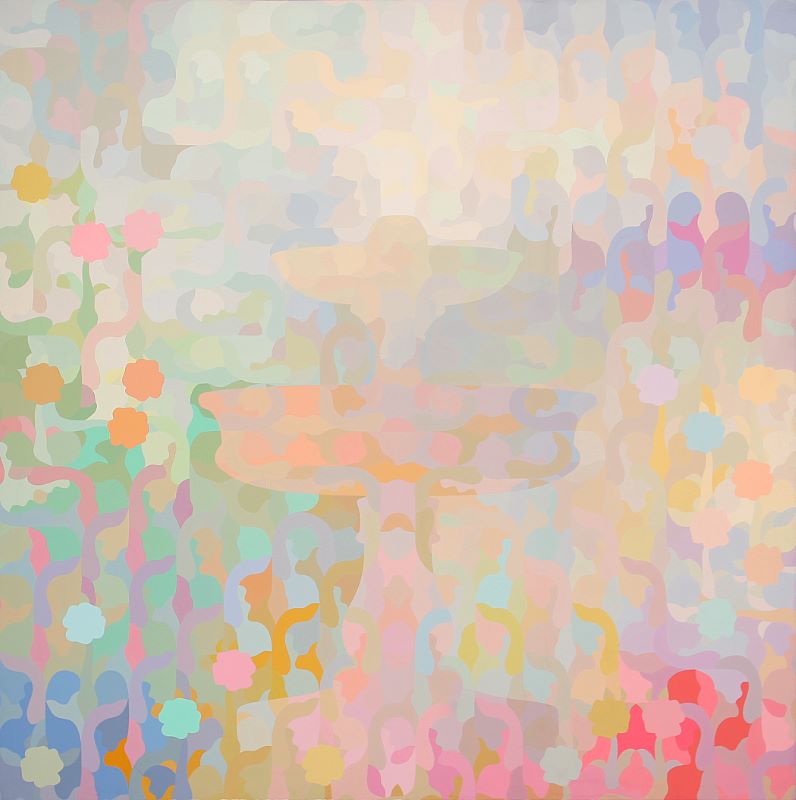
L to R: “ La Grande Fontaine du Printemps,” 1980. 85 x 84 in / “Fence Screen,” c. 1980-81. 75 x 110 in / “Untitled,” c. 1980-84. 44 x 32 in. Oil on canvas / “Iris,” 1991. 48 x 37 in. Collection of Denver Art Museum, Denver, Colorado / “Daphne,” 1982. 78 x 60 in. / Detail of "Low Balustrade Screen" or "Garden Balustrade Screen,” 1981 / “Low Balustrade Screen" or "Garden Balustrade Screen,” 1981. 42 x 151 1/2 in. Each panel 42 x 30 in. Photo: John Berens / Irene Clurman. “George Woodman.” Arts Magazine, April 1982 / Installation view, “Paper Tilings,” 1982. Acrylic paint on paper. University Galleries, Wright State University, Dayton, Ohio. Woodman Family Foundation Archive. All artworks acrylic on canvas unless otherwise noted. All works by George Woodman © Woodman Family Foundation / Artists Rights Society (ARS), New York
George Woodman. “ La Grande Fontaine du Printemps,” 1980. 85 x 84 in. Acrylic on canvas.
Irene Clurman on George Woodman, "Arts Magazine," April 1982
In her essay for "Arts Magazine” related to George Woodman’s 1982 solo exhibition at Haber-Theodore Gallery in New York, Irene Clurman discusses the transformation of Woodman’s patterns and palette into more representational forms.
L to R: 1-8: Stills from Francesca Woodman, "Selected Video Works," c. 1975-78. Half-inch black-and-white open reel video with sound, transferred to DVD, 11:43 minutes / Pages from "Francesca Woodman." San Francisco: SFMOMA in association with DAP, New York, 2011.
Still from Francesca Woodman, "Selected Video Works," Providence, Rhode Island, 1976-78. Half-inch black-and-white open reel video with sound, transferred to DVD, 11:43 minutes.
Jennifer Blessing on Francesca Woodman's work in video
In the catalogue that accompanied the exhibition "Francesca Woodman," presented at SFMOMA, San Francisco in 2011 and the Guggenheim Museum, New York, in 2012, Guggenheim Senior Curator of Photography Jennifer Blessing writes about the primacy of process in Francesca Woodman’s work in video
L to R: “The Summer House,” 2015. 338 1/2 x 94 1/2 x 12 in. Glazed earthenware, epoxy resin, lacquer, acrylic paint, canvas, and wood. Photo: Bruno Bruchi / 2-3: Details of “The Summer House,” 2015 / “Vase Upon Vase: Orfeo,” 2013. 66 1/2 x 23 x 16 1/4 in. Glazed earthenware, epoxy resin, lacquer, acrylic paint, and wood. Photo: Brian Forrest / “Cherry Blossom Time,” 2005. 65 x 27 1/2 x 9 3/4 in. Photo: Christopher Burke / Installation view of “Portugal” (2005), The Great Hall, The Metropolitan Museum of Art, 2006. 34 1/4 x 29 1/2 x 18 in. Photo: Peter Harkawik / “Rose et Noir,” 1989. 21 x 26 x 22 in. Photo: Christopher Burke / Images 5-7: All glazed earthenware, epoxy resin, lacquer, and acrylic paint / Cover of “Frieze," No. 177, March, 2016. All artworks by Betty Woodman © Woodman Family Foundation / Artists Rights Society (ARS), New York
Betty Woodman. “The Summer House,” 2015. 338 1/2 x 94 1/2 x 12 in. Glazed earthenware, epoxy resin, lacquer, acrylic paint, canvas, and wood © Woodman Family Foundation / Artists Rights Society (ARS), New York
Betty Woodman interview with Amy Sherlock, "Feel More," "Frieze," No. 177, March 2016
“FEEL MORE: Ahead of her solo exhibition at the Institute of Contemporary Arts, London, Betty Woodman talks to Amy Sherlock about ceramic histories and modern painting.”

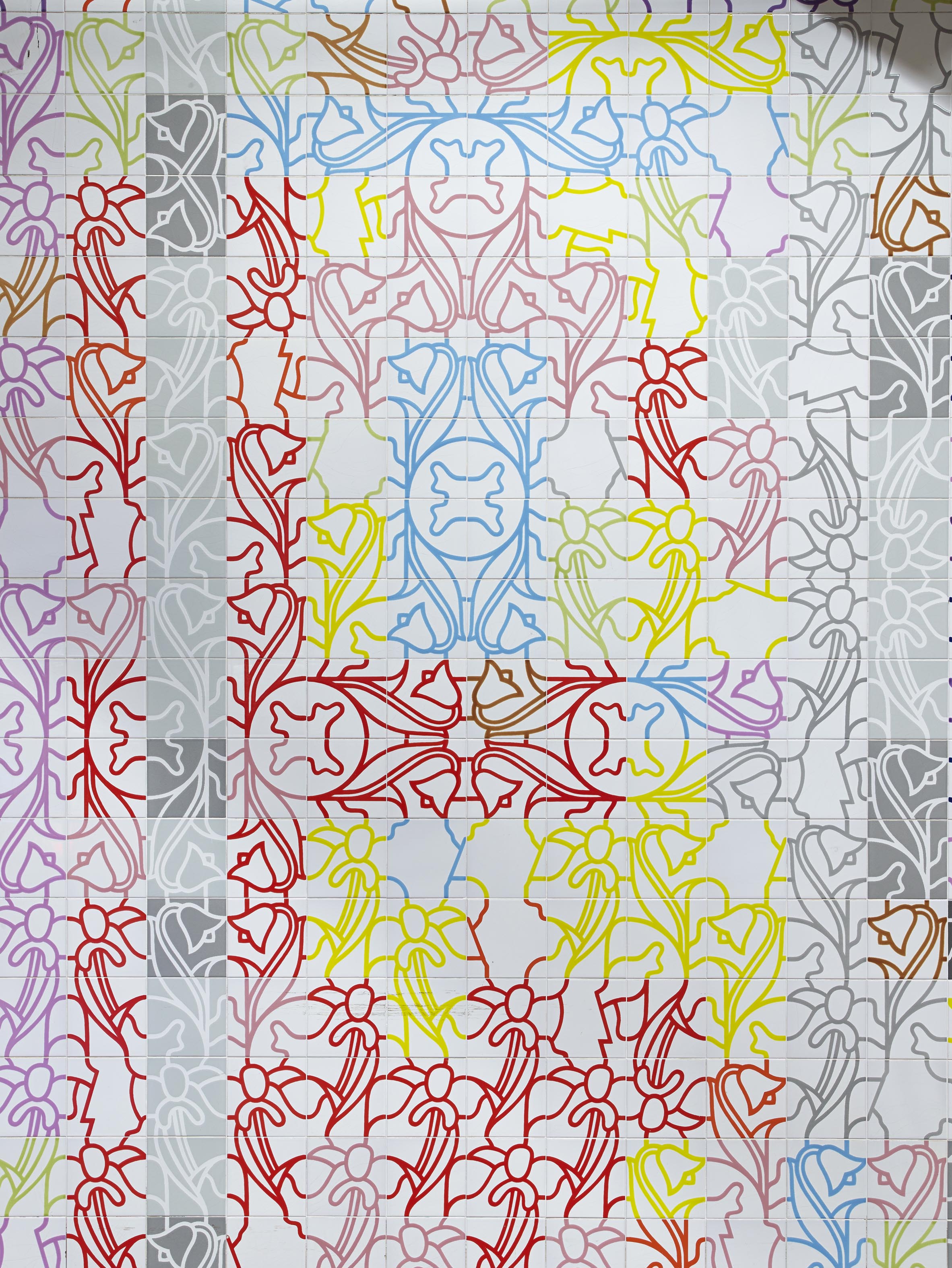
L to R: All images George Woodman, ceramic tile installation, 1984, Delavan-Canisius College Station, NFTA-Metro, Buffalo, New York. Woodman Family Foundation Archives.
George Woodman, ceramic tile installation, 1984, Delavan-Canisius College Station, NFTA-Metro, Buffalo, New York. Woodman Family Foundation Archives.
George Woodman's ceramic tile installation, 1984, Delavan-Canisius College Station, NFTA-Metro, Buffalo, New York
In 1984, George Woodman’s first public commission in ceramic tile was installed in the Delavan-Canisius NFTA-Metro station in Buffalo, New York. Three walls in the station’s mezzanine—measuring 11 feet high by 72 feet long in total—are still today covered in pattern made from 8 inch square tiles, greeting riders as they pass from the trains to the street.
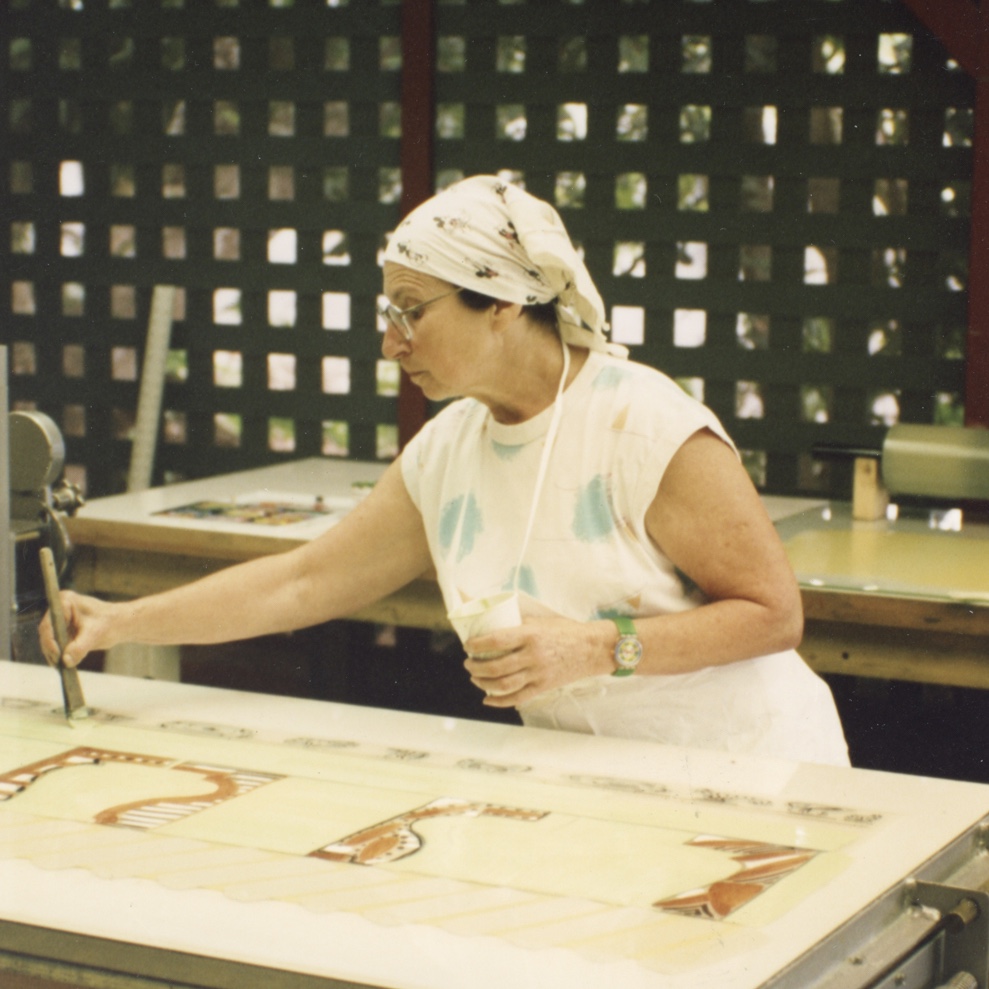
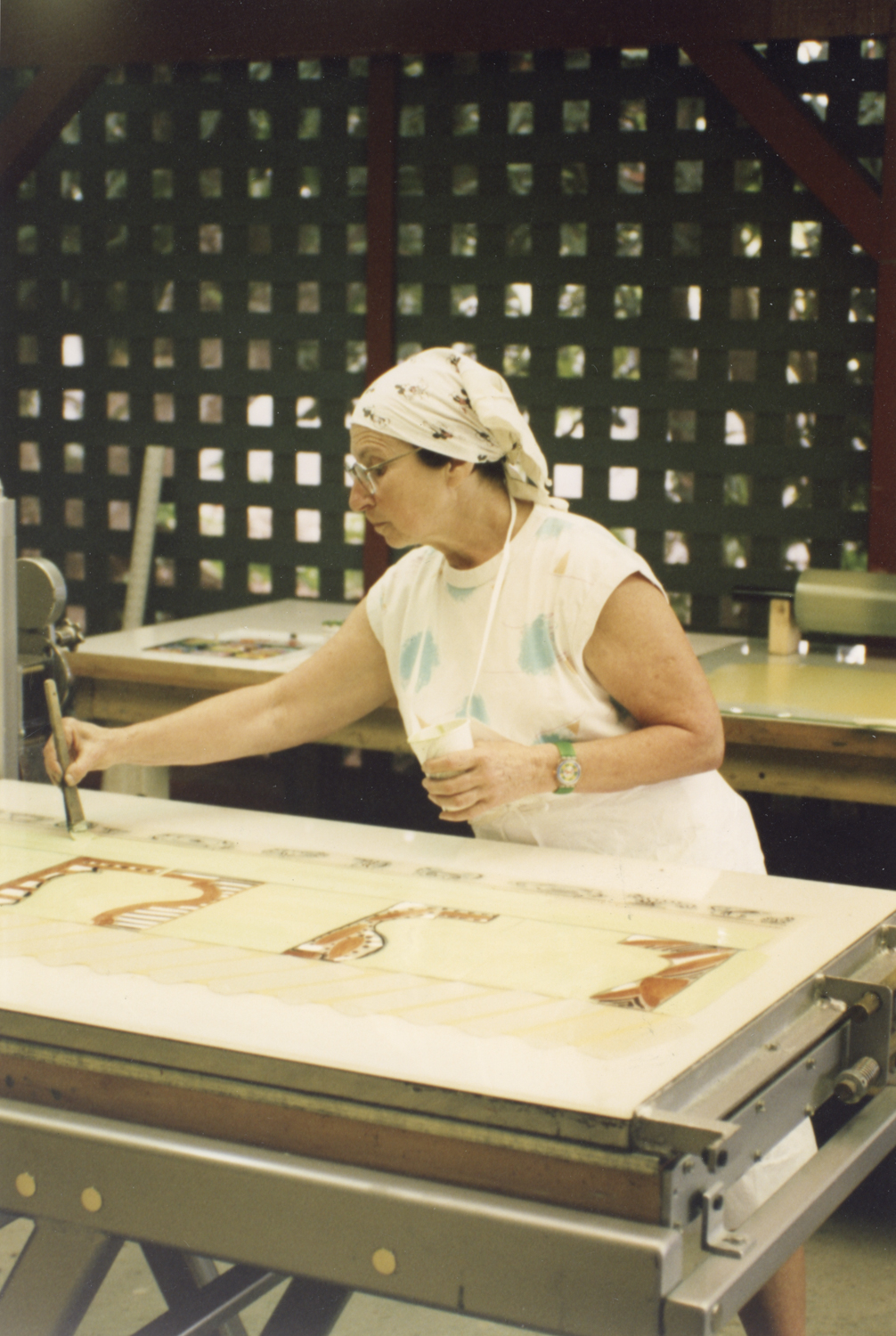
L to R: 1-5: Betty Woodman and George Woodman working in Bud and Barbara Shark’s studio, Holualoa, Hawaii, 1996 / 6: Betty Woodman and George Woodman in front of lava wall, City of Refuge, Hawaii, 1996 / 7–8: Betty Woodman and George Woodman, South Point, Hawaii, 1996. All photos by Barbara Shark. Woodman Family Foundation Archives..
Betty Woodman working in Bud and Barbara Shark’s studio, Holualoa, Hawaii, 1996. Photo by Barbara Shark. Woodman Family Foundation Archives.
Betty Woodman and George Woodman at Bud and Barbara Shark's studio, Holualoa, Hawaii, 1996
In January of 1996, Betty and George Woodman escaped a snowy Colorado winter to join their good friends Bud and Barbara Shark in Holualoa on the Big Island of Hawaii.
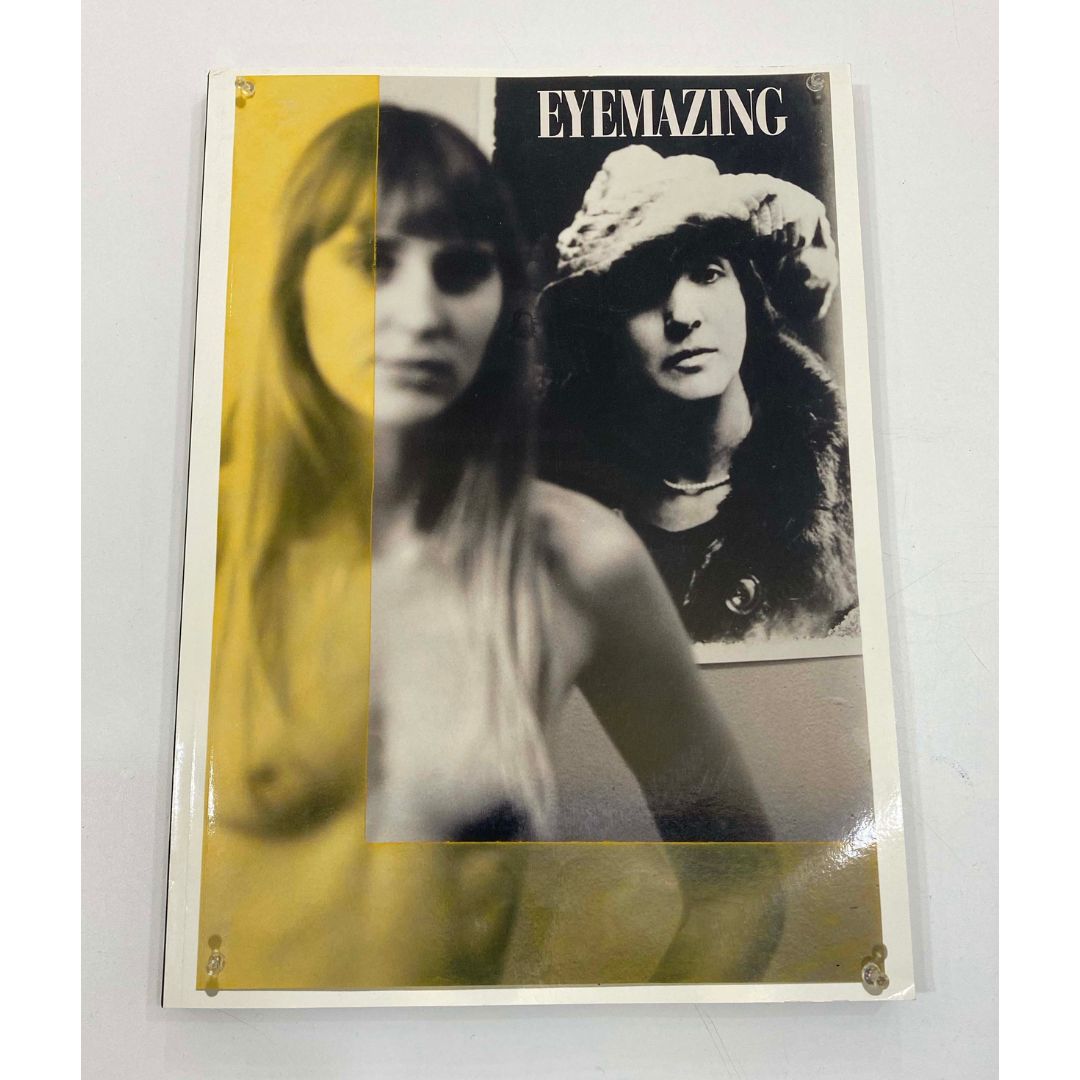
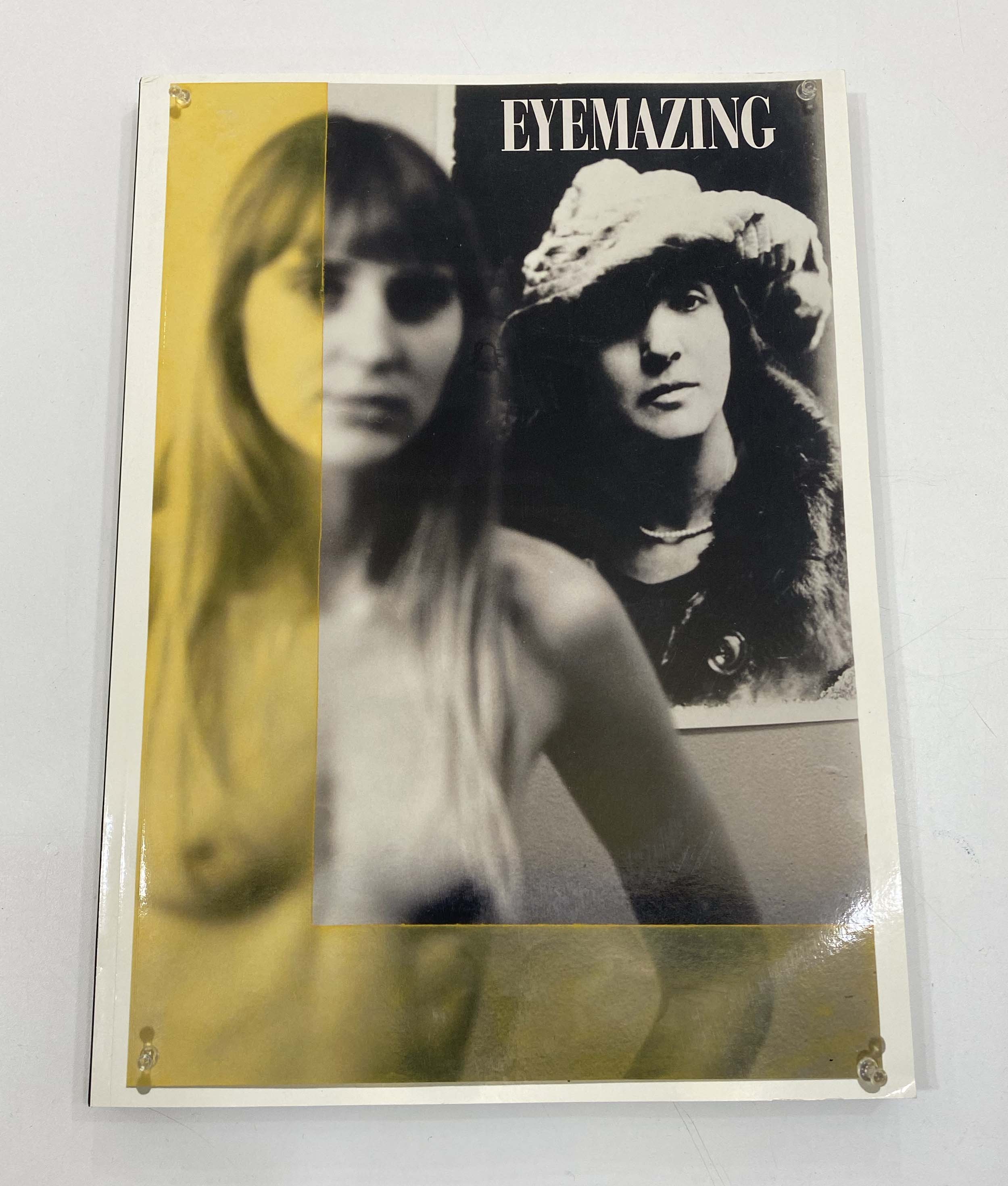
L to R: 1-8: Spreads from “George Woodman,” EYEMAZING 4, 2012 / "Loie and Florentine Aristocrat," 2008. 19 1/4 x 13 1/4 in. Oil paint on gelatin silver print / “La Pietra Madonna,” 2007. 12 x 15 in. Oil paint on gelatin silver print / “Nancy with a Green Leg,” 2005. 24 x 20 in. Oil paint on gelatin silver print / “Loie Wearing an 18th Century Sculpture,” 2012. 24 x 20 in. Oil paint on gelatin silver print / “Angel Grieving Over Lion,” 2007. 24 x 20 in. Oil paint on gelatin silver print / “In La Pietra Library,” 2009. 42 x 36 in. Oil paint on gelatin silver print / “Loie Meets a Rousseau,” 2009. 57 1/2 x 39 1/2 in. Gelatin silver print / “Loie Embraces a Piero di Cosimo,” 2009. 24 x 20 in. Gelatin silver print. All artworks by George Woodman © Woodman Family Foundation / Artists Rights Society (ARS), New York
Spread from “George Woodman,” EYEMAZING 4, 2012. Woodman Family Foundation Archives.
George Woodman in "EYEMAZING Magazine," 2012
“The painted photographs of George Woodman are ripe with mental connections, rich evidence of the artist’s talent for noticing, for witnessing, for making new wholeness,” wrote Clayton Maxwell in a 2012 essay for EYEMAZING magazine, which accompanied a portfolio of his photographs combined with oil paint and other images.
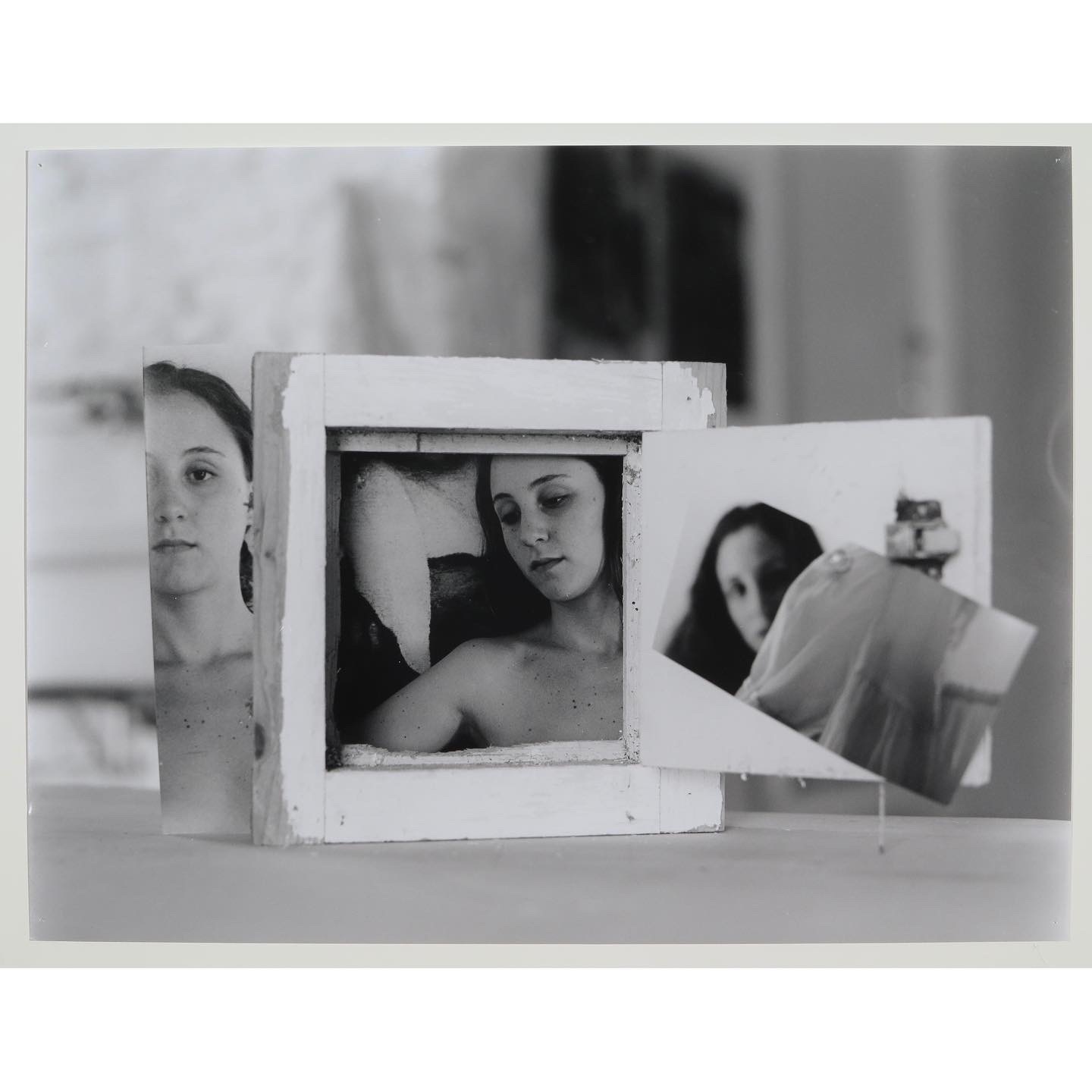
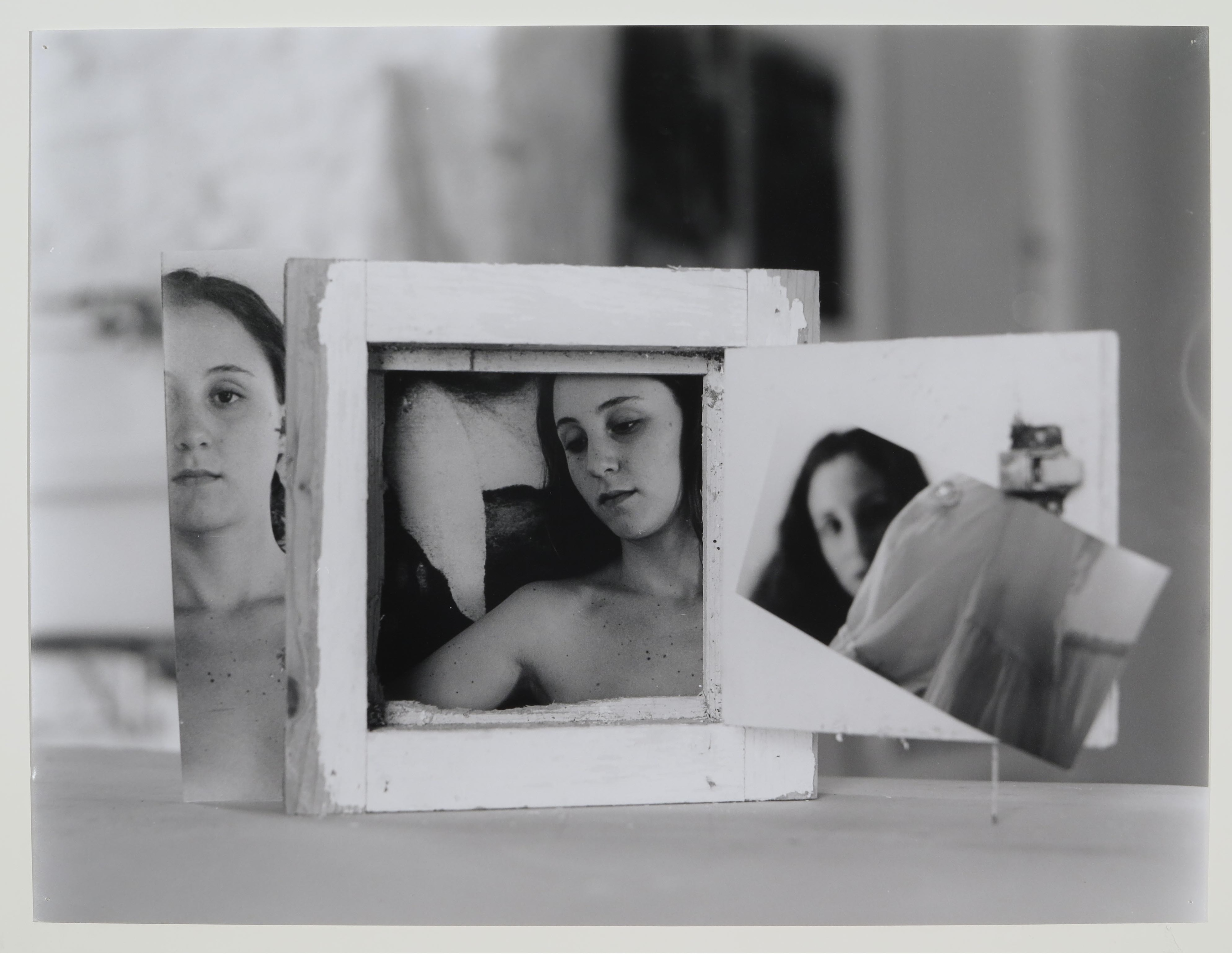
L to R: “Three Views of Eleonora,” 2011. 18 x 24 in / “A Geometric Investigation II,” 2009. 24 x 20 in / “Variation on Vermeer,” 2010. 24 x 20 in / “Vermeer and Sleeping Eleonora,” 2010. 59 x 41 1/2 in / George Woodman with Eleonora Picheca, 2011. Courtesy Eleonora Picheca. All gelatin silver prints. All works by George Woodman © Woodman Family Foundation / Artists Rights Society (ARS), New York
George Woodman. “Three Views of Eleonora,” 2011. 18 x 24 in. Gelatin silver print © Woodman Family Foundation / Artists Rights Society (ARS), New York
George Woodman's photographs of model Eleonora Picheca, 2008-2012
Thanks to Eleonora for sharing a photo of her and George laughing together (last slide). It reminded us of some of the beautiful photographs George took of her over the years when she sat for him in Italy (2008-2012).
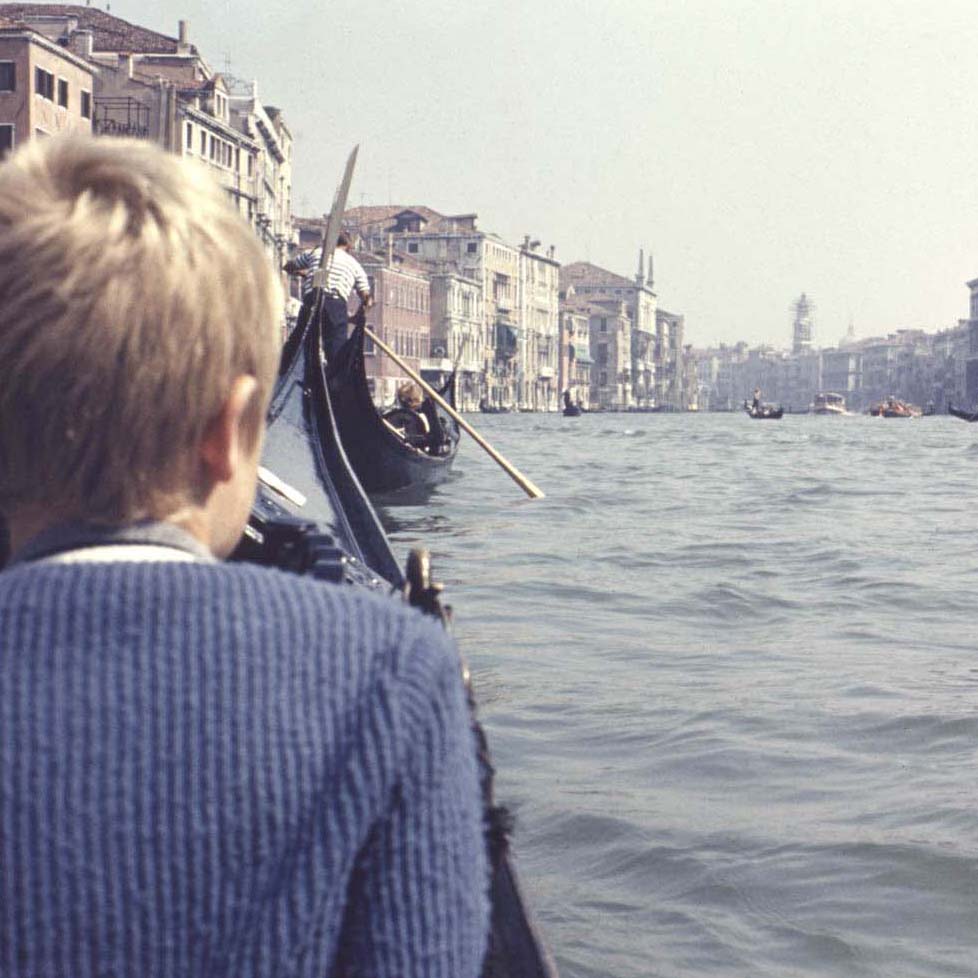

L to R: Charles Woodman, Venice, Italy, 1966 / Charles Woodman and Francesca Woodman, Venice, Italy, 1966 / Betty Woodman and Charles Woodman, Venice, Italy, 1966. Woodman Family Foundation Archives.
Charles Woodman, Venice, Italy, 1966. Woodman Family Foundation Archives.
The Woodmans in Venice, Italy, 1966
As this year’s Venice Biennale, “The Milk of Dreams,” nears its end, we’re reminded that over many decades Betty and George Woodman traveled to Venice to take in the Biennale. Their trip in 1966—pictured here—when the family spent the year in Italy, was likely Charlie and Francesca’s first of many visits there, to explore both the exhibition and this captivating city.
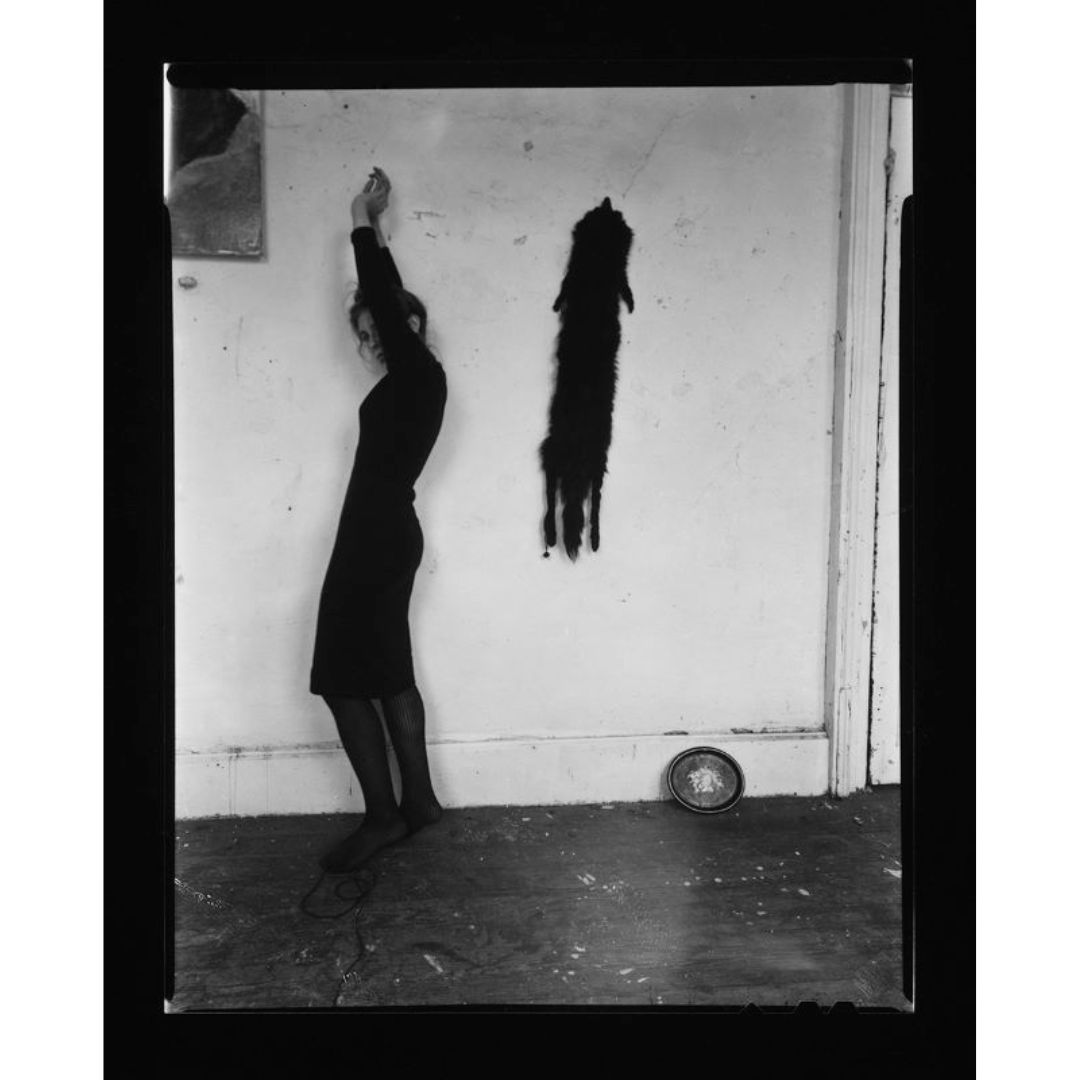
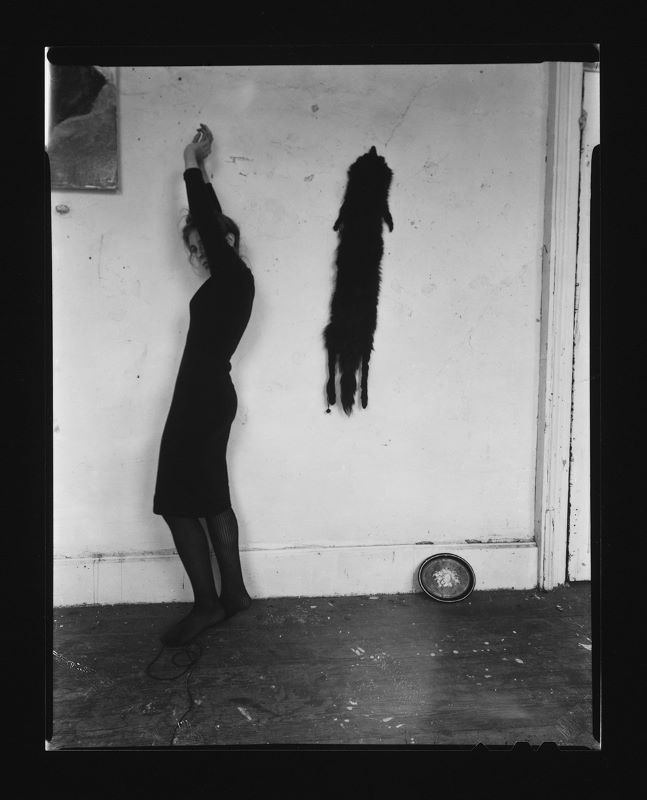
L to R: “Untitled,” c. 1979-80. 5 x 3 15/16 in. | Francesca Woodman's vintage fox fur from WFF Archives | “Untitled,” c. 1979-80. 7 1/2 x 4 3/4 in | “Untitled,” 1979, 5 13/16 x 5 13/16 in | “Untitled,” 1978, 34 1/2 x 40 1/2 in | “Untitled,” 1976. 5 3/4 x 5 3/4 in | “Untitled,” 5 7/8 x 5 7/8 in. All gelatin silver prints. All works by Francesca Woodman © Woodman Family Foundation / Artists Rights Society (ARS), New York
Francesca Woodman. “Untitled,” c. 1979-80. 5 x 3 15/16 in. Gelatin silver print © Woodman Family Foundation / Artists Rights Society (ARS), New York
Vintage fox fur from Francesca Woodman's archives used in her work, 1976-80
The Foundation’s archives include many of the dresses, shoes, scarves, gloves and other clothing that Francesca Woodman used in her photographs and in her daily life. This fox fur, probably picked up at a vintage shop or flea market like much that she wore, makes an appearance in many of her photographs.
L to R: Betty Woodman, Italy, c. 1965-66 / Betty Woodman, Charles Woodman, and Francesca Woodman, Italy, c. 1960s / Charles Woodman and friend, Italy, c. 1966 / Betty Woodman and friends, Italy, c. 1966 / Betty Woodman, Francesca Woodman, and friend, Antella, Italy, c. 1968 / Betty Woodman and friends, Antella, Italy, c. 1980 / Betty Woodman, Antella, Italy, c. 1995 / George Woodman, Antella, Italy, c. 1995 / Betty Woodman, George Woodman, and friends, Antella, Italy, c. 1995. Woodman Family Foundation Archives.
Betty Woodman, Italy, c. 1965-66. Woodman Family Foundation Archives.
Dining al fresco with the Woodman family, c. 1960s-1995
The Woodman family spent many summer days and evenings dining al fresco in Italy with family and friends throughout the years. Most of these snapshots were taken by George, who often had his camera in hand and documented their family life.
George Woodman, c. 1960s-1990s. Woodman Family Foundation Archives.
George Woodman, c. 1960s. Woodman Family Foundation Archives.
George Woodman's summer travels, c. 1960s-1990s
Here are a series of portraits of George Woodman, an avid world traveler. George soaked up endless inspiration for art making and life on the family's summer travels throughout the years.
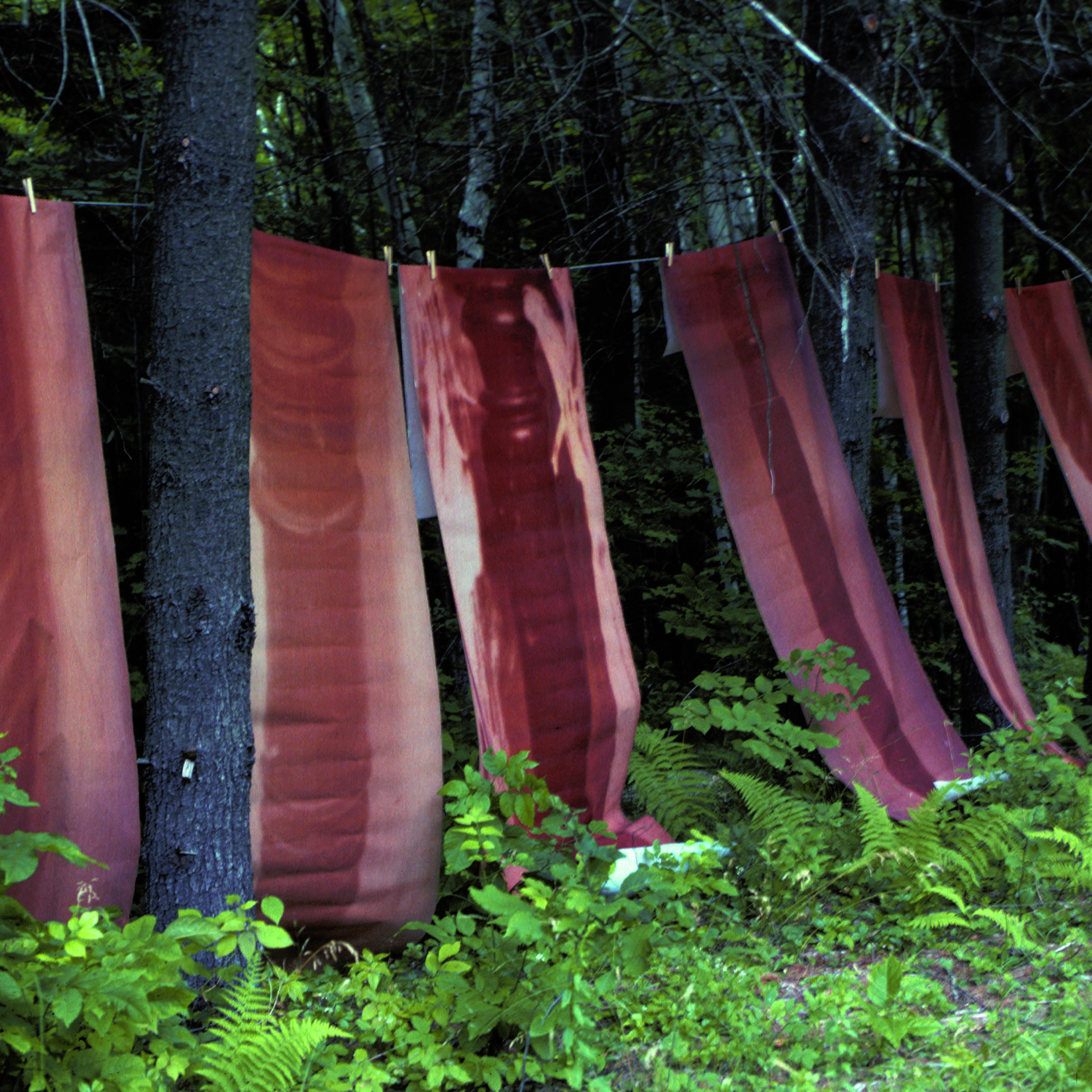
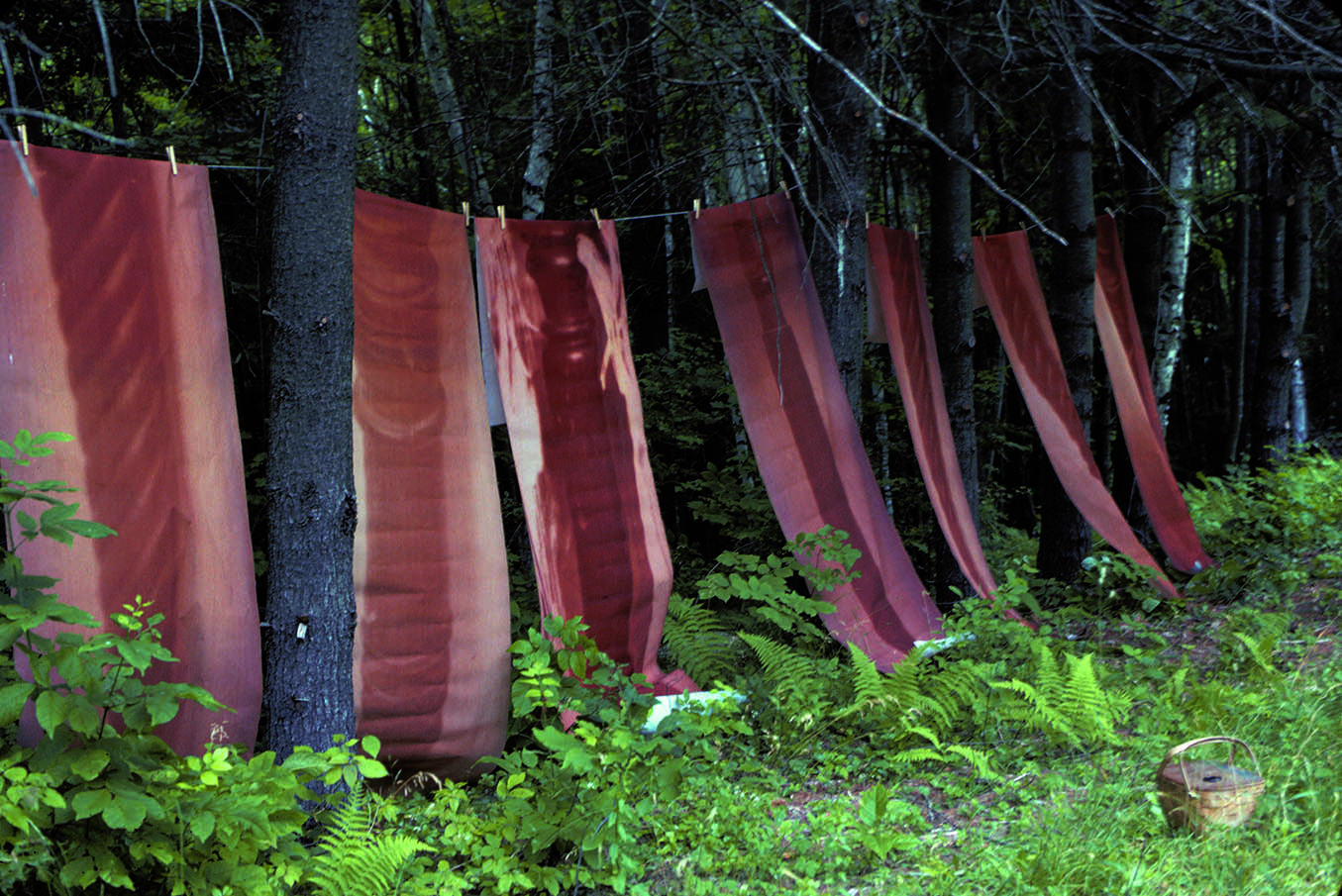
L to R: 1 & 3: Installation view, MacDowell Colony, Peterborough, New Hampshire, 1980 | "Study for Tree Piece,” c. 1980. 14 1/2 x 15 1/4 in. Diazotype / 4-5: “Untitled,” 1980. 2 13/16 x 9 15/16 in. Gelatin silver print. Letter on reverse of print | “Untitled,” 1980. 11 x 14 in. Gelatin silver print. All works by Francesca Woodman © Woodman Family Foundation / Artists Rights Society (ARS), New York
Francesca Woodman. Installation view, MacDowell Colony, Peterborough, New Hampshire, 1980. Woodman Family Foundation Archives.
Francesca Woodman, MacDowell Colony, Peterborough, New Hampshire, 1980
Francesca Woodman spent three weeks in July of 1980 on a fellowship at the MacDowell Colony, surrounded by other artists, as well as musicians, poets, novelists and the forests of rural New Hampshire. She arrived there from New York, already thinking about trees.
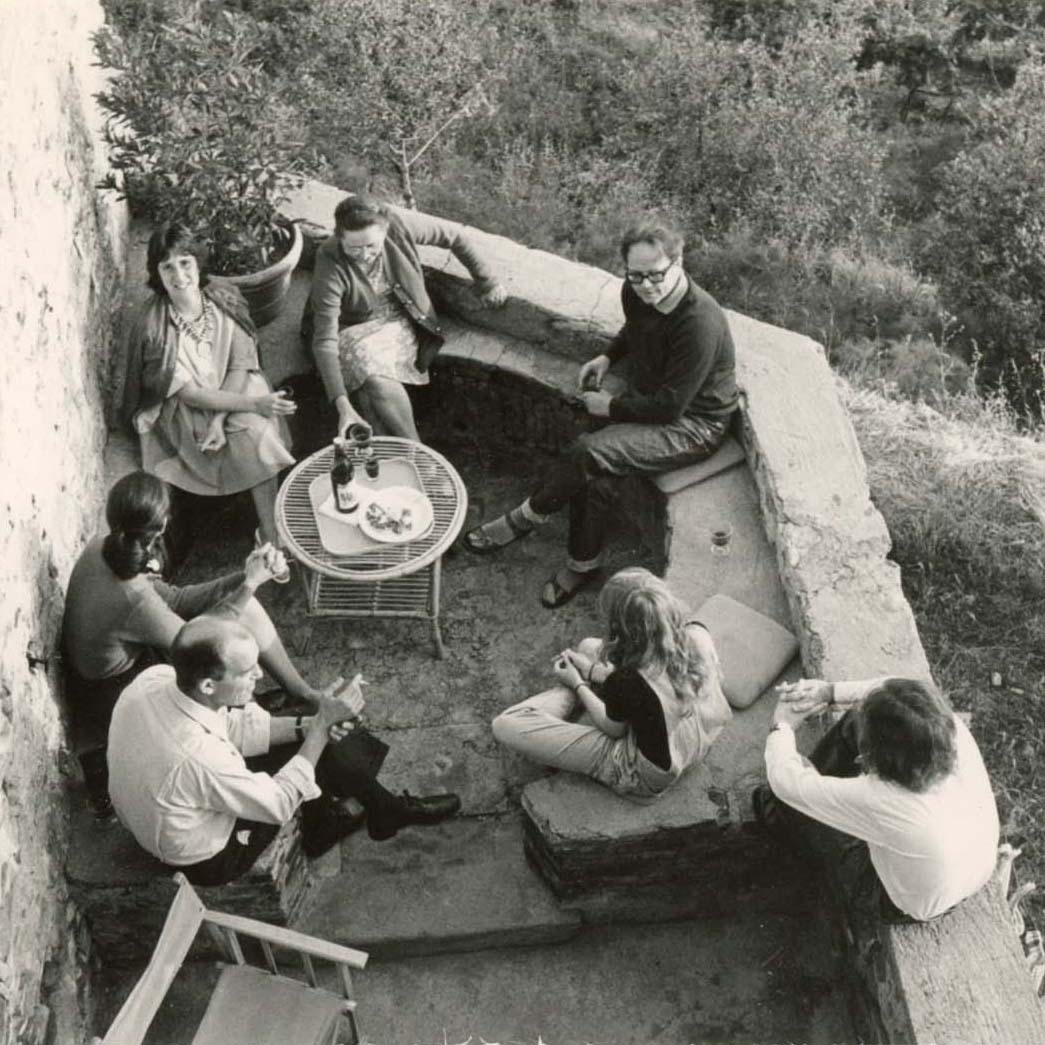
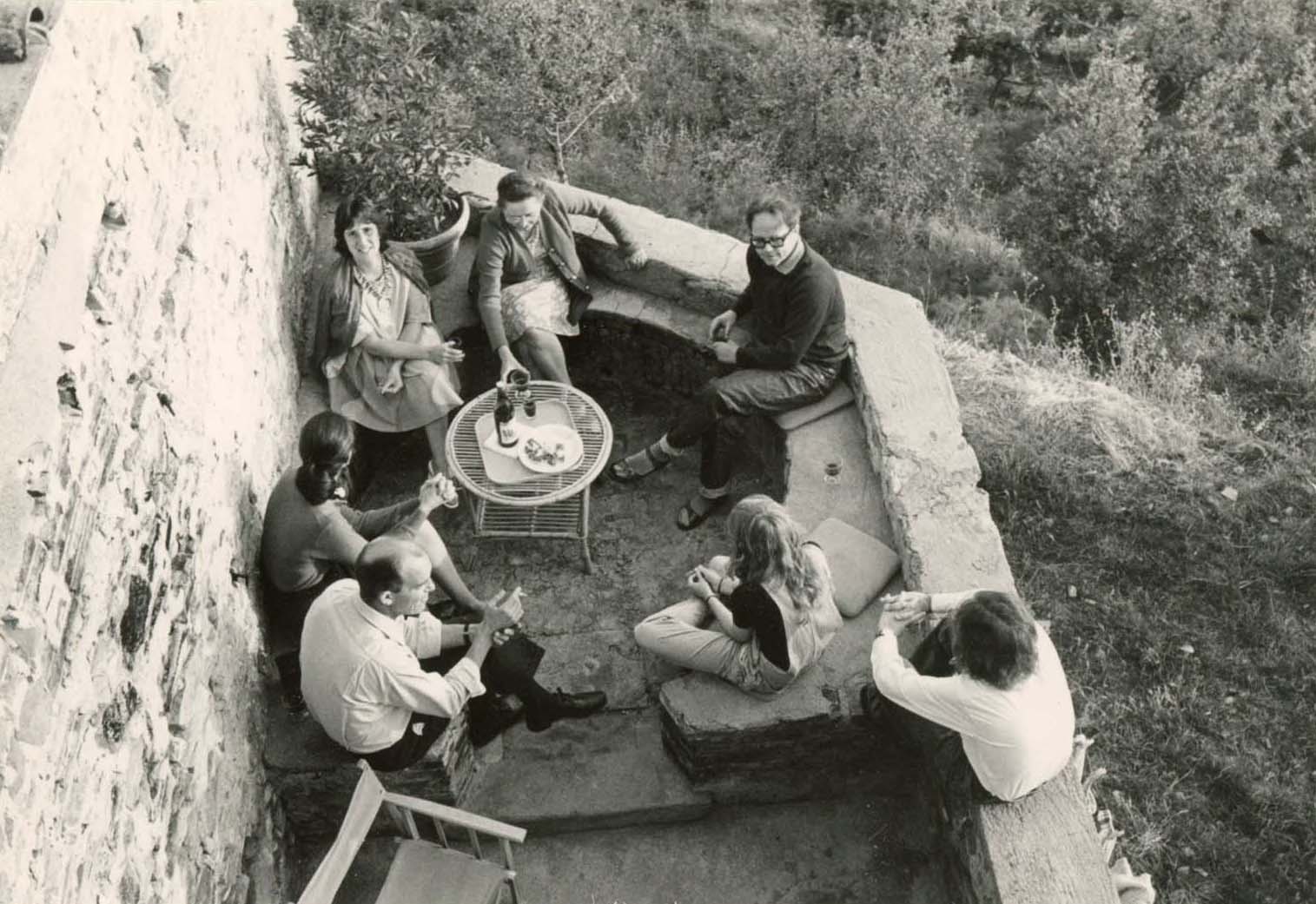
The Woodman family and friends throughout the years in Antella, Italy, c. 1960s-2010s. Woodman Family Foundation Archives.
The Woodman family and friends, Antella, Italy, c. 1960s. Woodman Family Foundation Archives.
The breakfast nook, Antella, Italy, c. 1960s-2010s
For over fifty years, the Woodman family has enjoyed many meals and conversations in the breakfast nook at their farmhouse in Antella, Italy. Built in a circular space that had originally housed a brick oven, the nook overlooks the hills of Tuscany and spectacular sunsets.
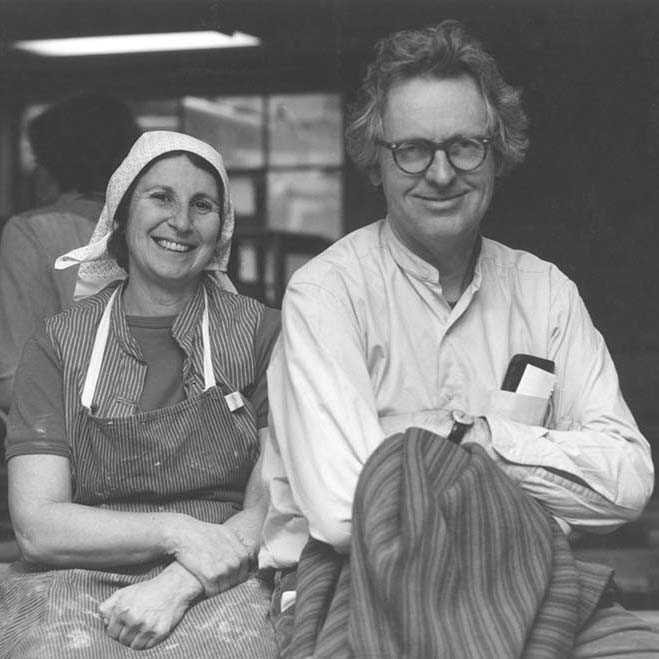

L to R: Betty Woodman and George Woodman, Boulder, Colorado, c. 1980s-90s / Betty Woodman and George Woodman featured in “Daily Camera,” February 14, 1993.
Betty Woodman and George Woodman featured in “Boulder Camera,” February 14, 1993.
Betty Woodman and George Woodman featured in "Daily Camera," February 14, 1993
Happy anniversary to George and Betty Woodman! They were married on this day in 1953. In this 1993 profile in the Daily Camera, “Boulder’s best known international couple least known in their hometown” reflects on their art and their shared commitment to it and each other.
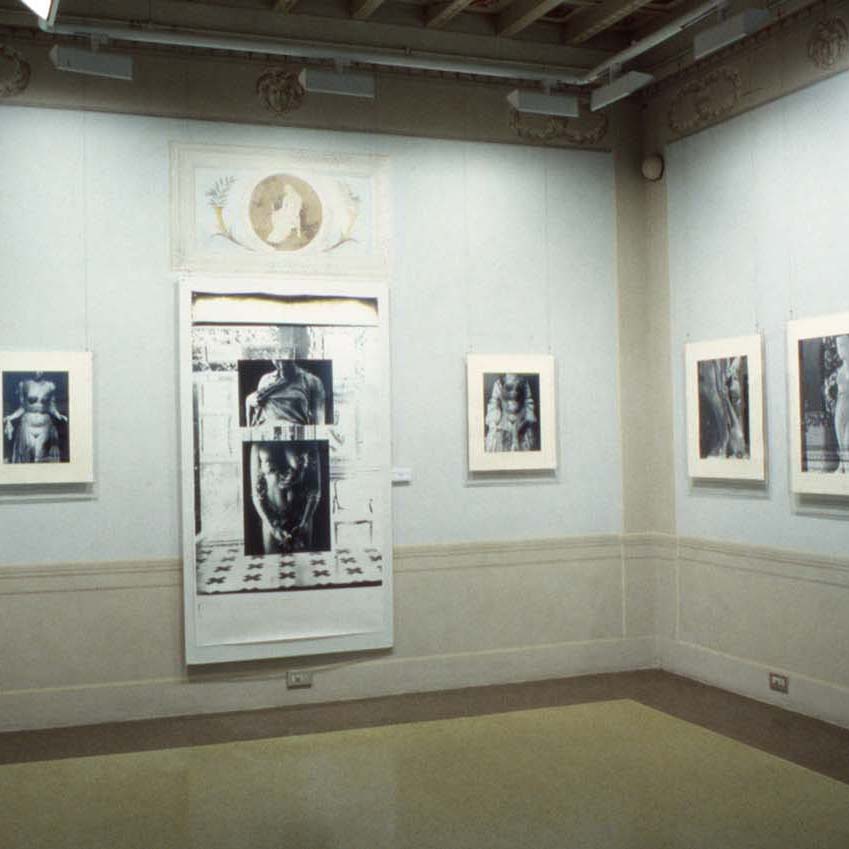

L to R: Installation views: "Pitti rivisatto,” Palazzo Pitti, Florence, Italy, 1997. Woodman Family Foundation Archives | 2: “Pitti, Medea, Roses,” c. 1988. 41 1/4 x 72 in / 4: “Untitled,” 1990. 41 1/4 x 78 in. | 6: “Untitled,” c. 1990s. 24 x 20 in. | 9: “Lovers within Venus,” 1990. 41 1/4 x 59 in. All gelatin silver prints. All works by George Woodman © Woodman Family Foundation / SIAE, Rome
Installation view, "Pitti rivisatto,” Palazzo Pitti, Florence, Italy, 1997. Woodman Family Foundation Archives.
George Woodman, “Pitti rivisatto," Palazzo Pitti, Florence, Italy, 1997
Twenty-five years ago this month, George Woodman’s solo exhibition, "Pitti rivisatto," opened at the Palazzo Pitti in Florence, and remained on view all summer long. His layered black and white photographs take this Renaissance palace as their subject, but also as an opportunity to reflect on time and the experiences carried within each viewer.
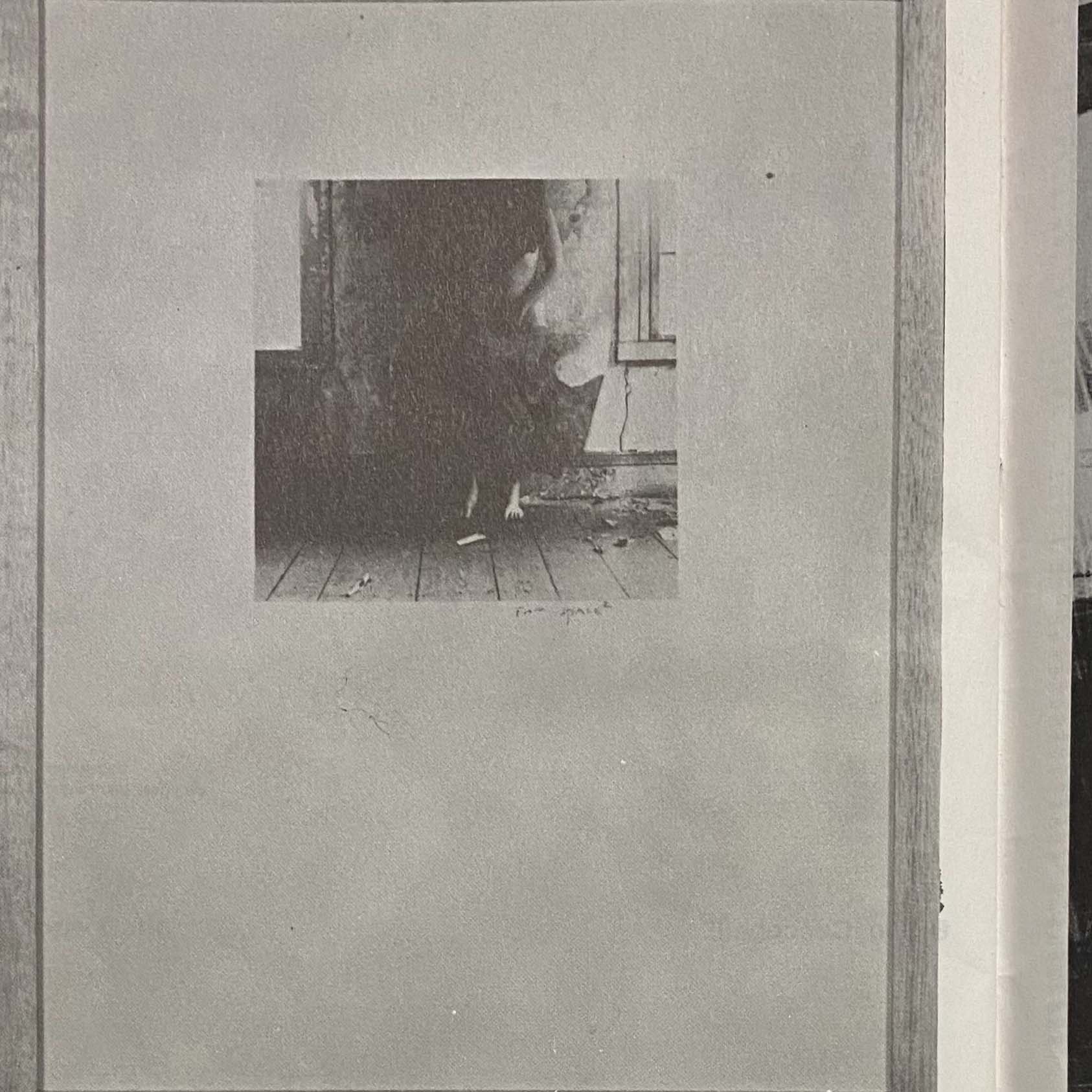

L to R: 1-2: "Segno: Notiziario di arte contemporanea," Issue 9, Summer 1978. Woodman Family Foundation Archives | Francesca Woodman. "From Space²” or "Space²", 1976, from the "Space²" series, 5 1/4 x 5 1/4 in. Gelatin silver print © Woodman Family Foundation / Artists Rights Society (ARS), New York
"Segno: Notiziario di arte contemporanea," Issue 9, summer 1978. Woodman Family Foundation Archives.
Francesca Woodman, Segno Magazine, 1978
In the summer of 1978, Francesca Woodman’s photograph "From Space²" or "Space²" was featured in the Italian contemporary art magazine “Segno.” In the accompanying text, she explained that her original idea for the image came from her desire to illustrate literary metaphors but evolved over a group of photographs into a kind of story following a figure who explores these metaphors.

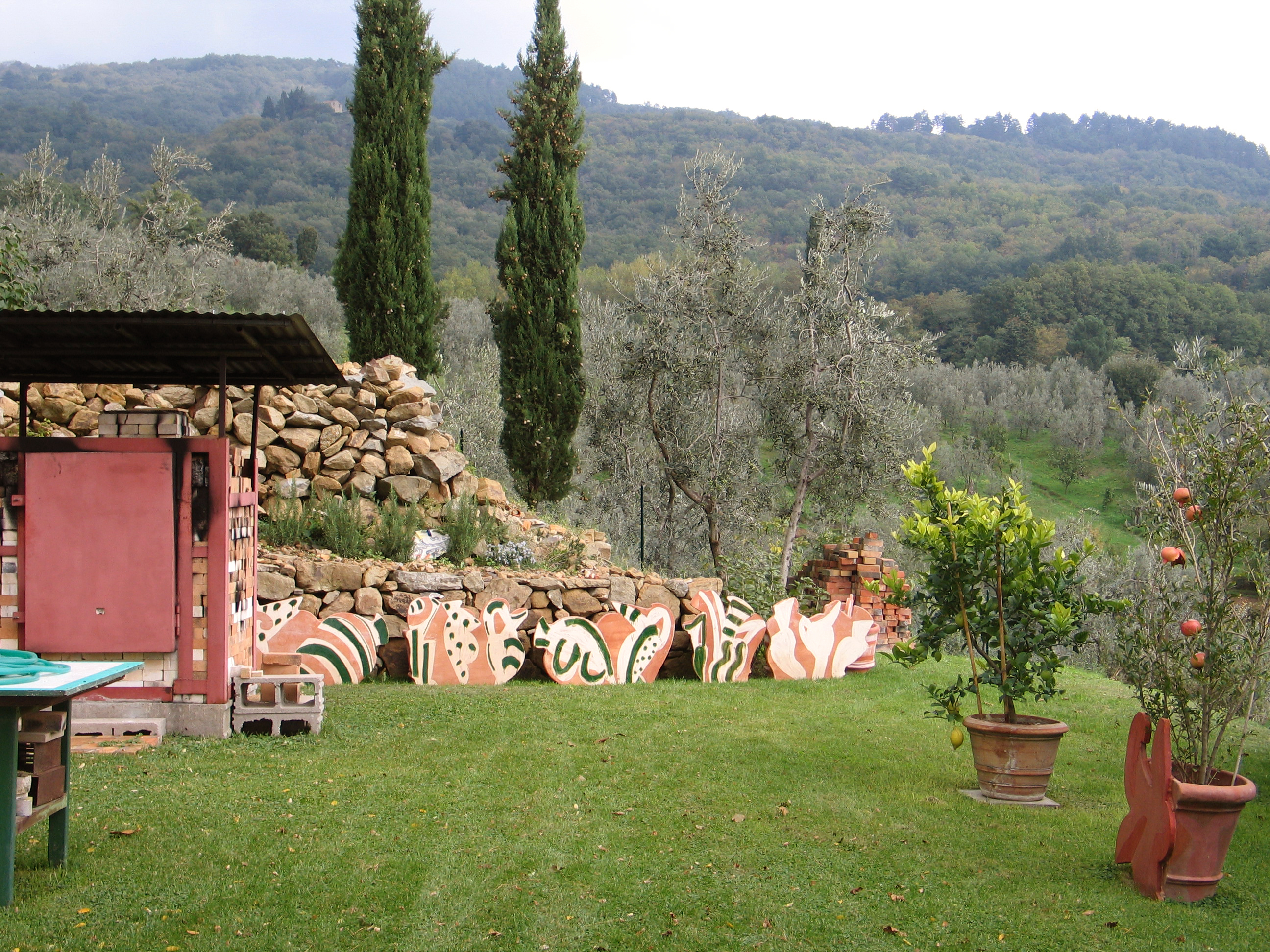
L to R: 1-6: Betty Woodman. “Impruneta Flower Pots,” c. 1998-2004. Variable dimensions. Terracotta. Views in Antella, Italy | Betty Woodman with Tullio Orlandi, Italy, c. 1998-2004. Woodman Family Foundation Archives.
Betty Woodman. “Impruneta Flower Pots,” c. 1998-2004. Variable dimensions. Terracotta. Views in Antella, Italy. Woodman Family Foundation Archives.
Betty Woodman, "Impruneta Flowers Pots," c. 1998-2004, Antella, Italy
Over summers spent in Antella, Italy, Betty Woodman often developed projects which could only be realized there. From 1998-2004, she collaborated with a pottery in Impruneta—a nearby town renowned for its terra cotta clay—enlivening their standard-issue garden planters with her vase-shaped façades and signature brushstrokes.

L to R: "War Sadness Escape," 1999. 42 x 39 in. | 2 & 4: Installation views, “Contrapposto & Other Stories,” Jeff Bailey Gallery, New York, 2014 | "Boboli: Fountain of Neptune,” 1997. 71 3/4 x and 41 1/4 in. All gelatin silver prints. All works by George Woodman © Woodman Family Foundation / Artists Rights Society (ARS), New York
George Woodman. “War Sadness Escape,” 1999. 42 x 39 in. Gelatin silver print © Woodman Family Foundation / Artists Rights Society (ARS), New York
George Woodman's camera obscura photographs in "Contrapposto & Other Stories," Jeff Bailey Gallery, New York, 2014
Summertime is here again, and each year it has brought with it a fresh crop of summer group shows around New York City. Here’s one from 2014: George Woodman’s camera obscura photographs were included in “Contrapposto & Other Stories,” curated by Katia Rosenthal at Jeff Bailey Gallery in Chelsea.
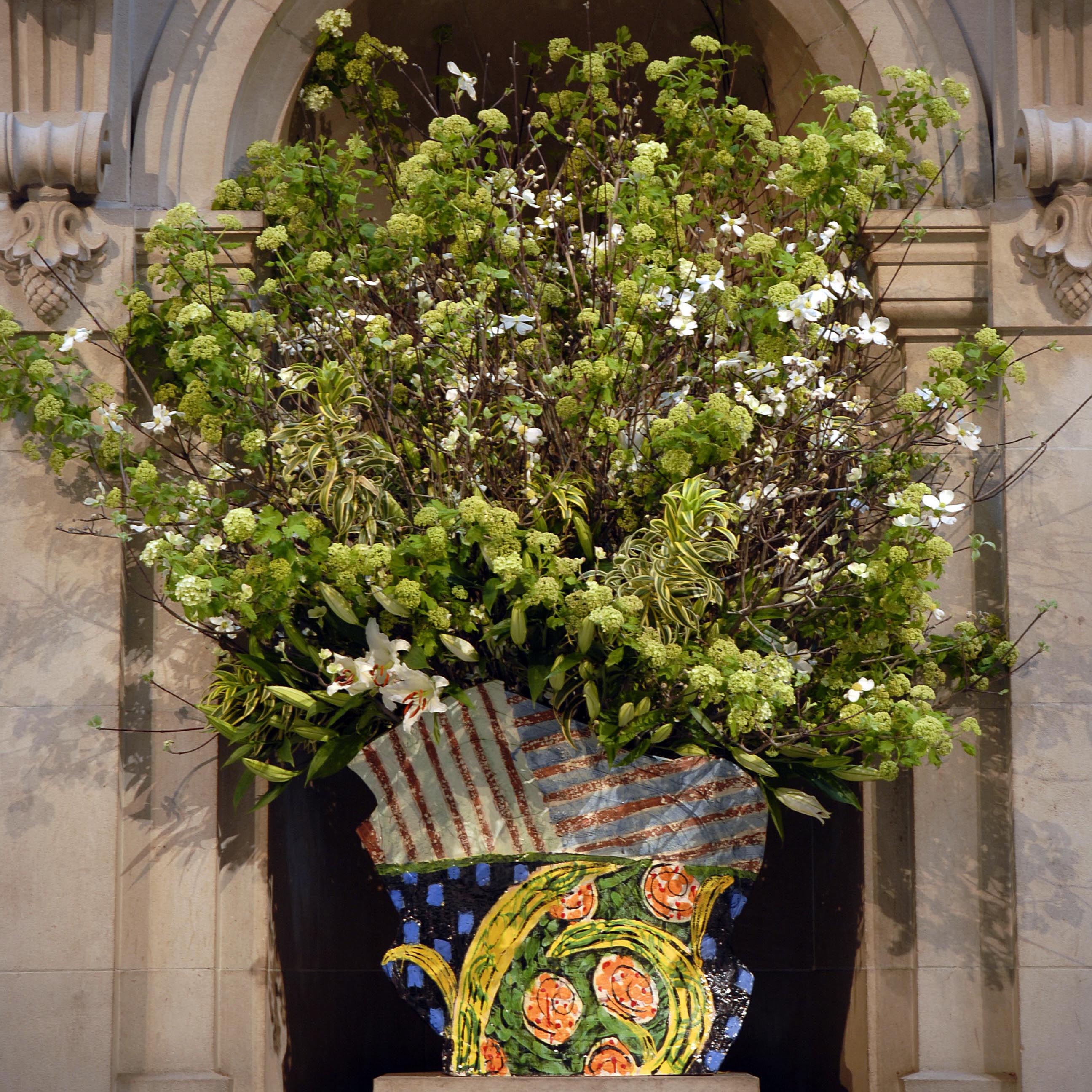
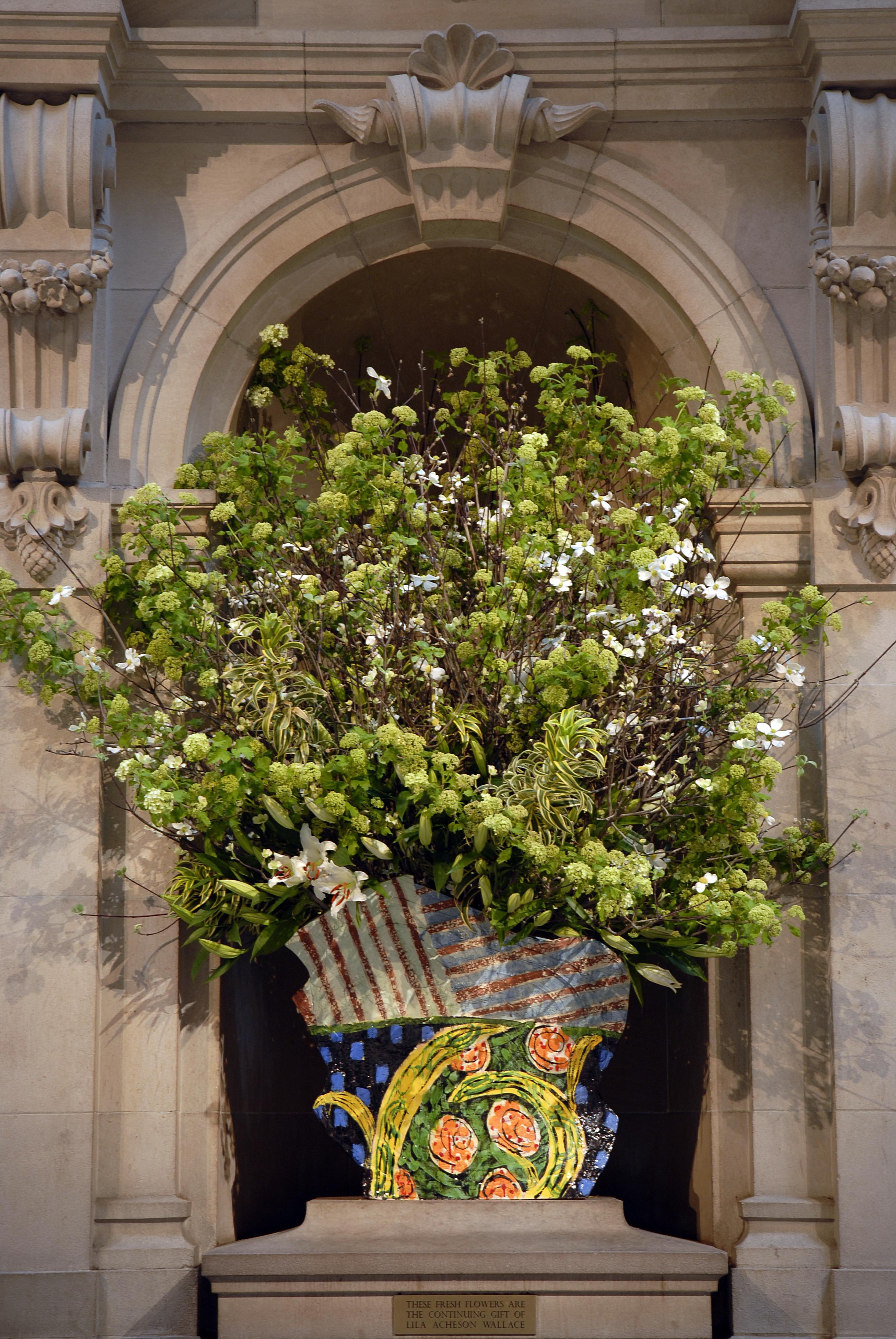
L to R: 1-2: Installation views of Betty Woodman's “Horizontal Garden” (2005), The Great Hall, The Metropolitan Museum of Art, 2006. 29 x 32 x 18 in. Glazed earthenware | Installation view of “The Art of Betty Woodman,” The Metropolitan Museum of Art, New York, NY, April 25—July 30, 2006. Photo: Eli Ping
Installation view of Betty Woodman's “Horizontal Garden” (2005), The Great Hall, The Metropolitan Museum of Art, 2006. 29 x 32 x 18 in. Glazed earthenware. Photo: Eli Ping.
Betty Woodman, Met Vases, 2006
Spring flowers always remind us of Betty Woodman, and particularly her vases in the Great Hall of the Metropolitan Museum of Art, which greeted visitors to the museum with their bold colors, overlapping patterns and allusions to vases and gardens, holding an ever-changing display of seasonal blooms. They were installed on the occasion of her 2006 retrospective there—the first time the museum dedicated such an exhibition to a living woman artist.
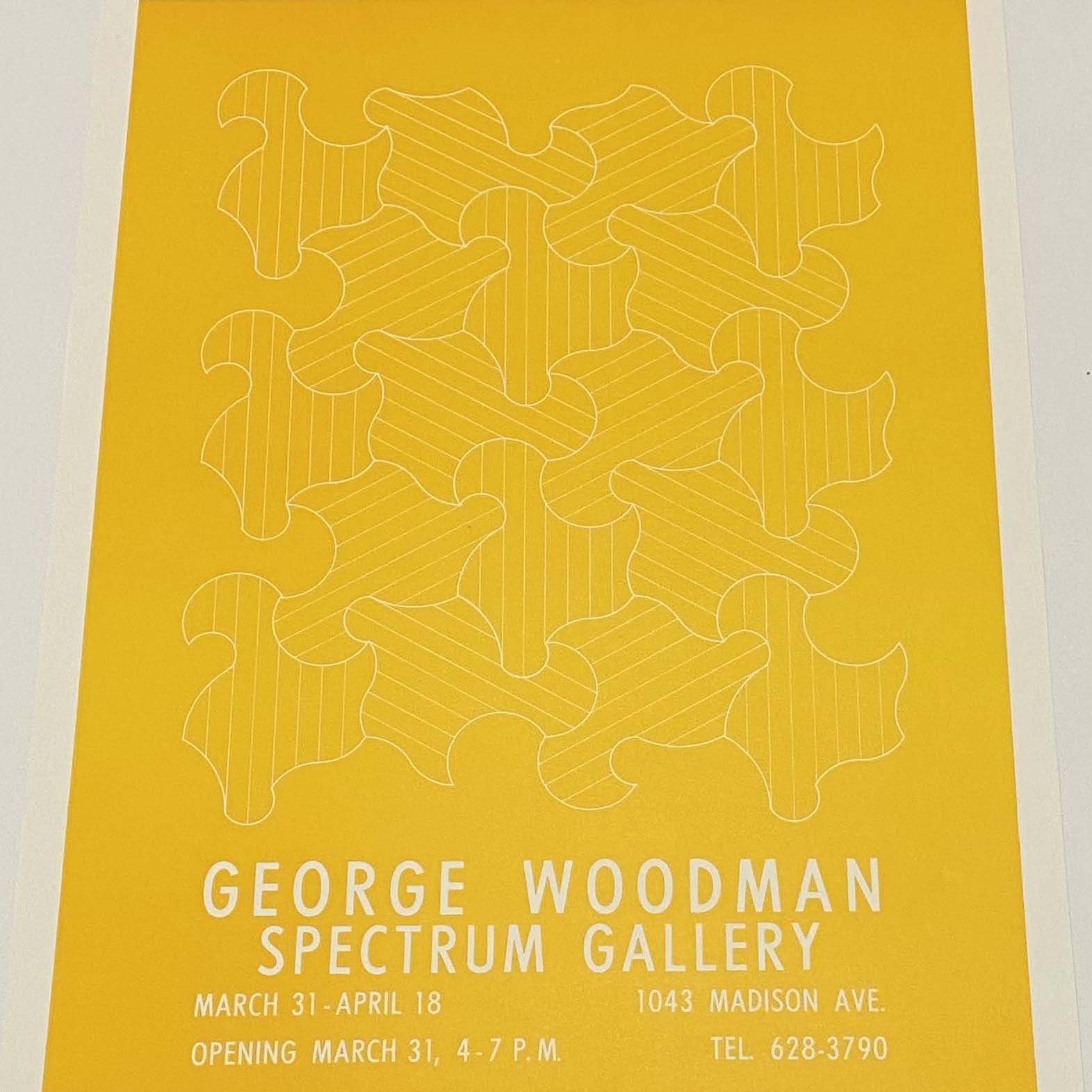

L to R: Exhibition poster for ‘George Woodman,’ Spectrum Gallery, 1970. Woodman Family Foundation Archives | “Untitled,” c. 1968-69, 30 x 22 1/4 in. Screenprint on paper | “Untitled,” 1975, 60 x 60 in. Acrylic on canvas. All works by George Woodman © Woodman Family Foundation / Artists Rights Society (ARS), New York
Exhibition poster for ‘George Woodman,’ Spectrum Gallery, 1970. Woodman Family Foundation Archives.
George Woodman, Spectrum Gallery, 1970
Fifty-two years ago this week would have been your last chance to see George Woodman’s solo exhibition at Spectrum Gallery in New York City. Woodman’s canvases and prints during this period were characterized by fields of interlocking, repetitive shapes, which, as Robert Berlind later described: “may be seen as a reprise of the transition earlier in the century from a still-descriptive cubism to a “purer” non-referentiality. These paintings are equally in keeping with the contemporaneous interests of Op Art and made a crucial contribution to the Criss-Cross movement which flourished in the 70’s in Boulder and had an impact on the New York scene.”
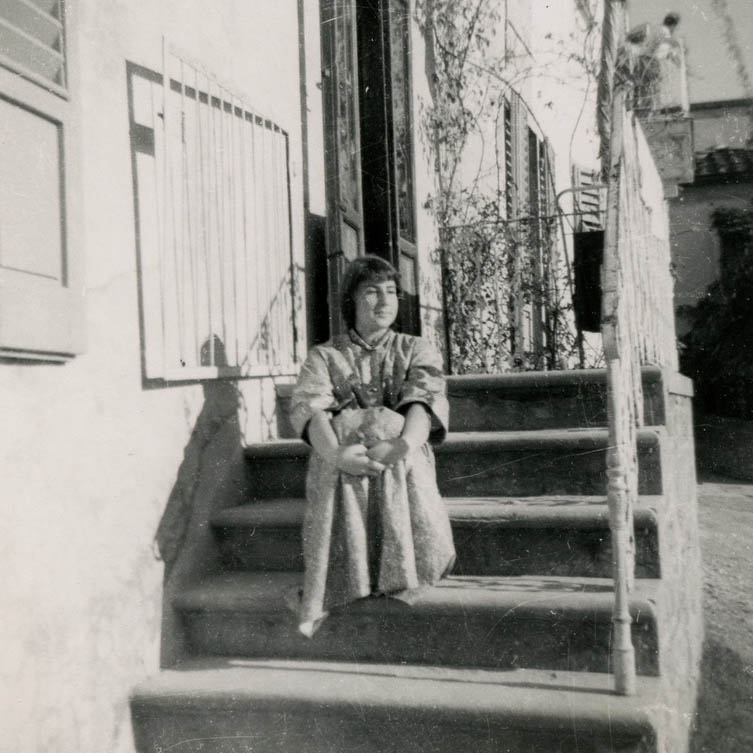
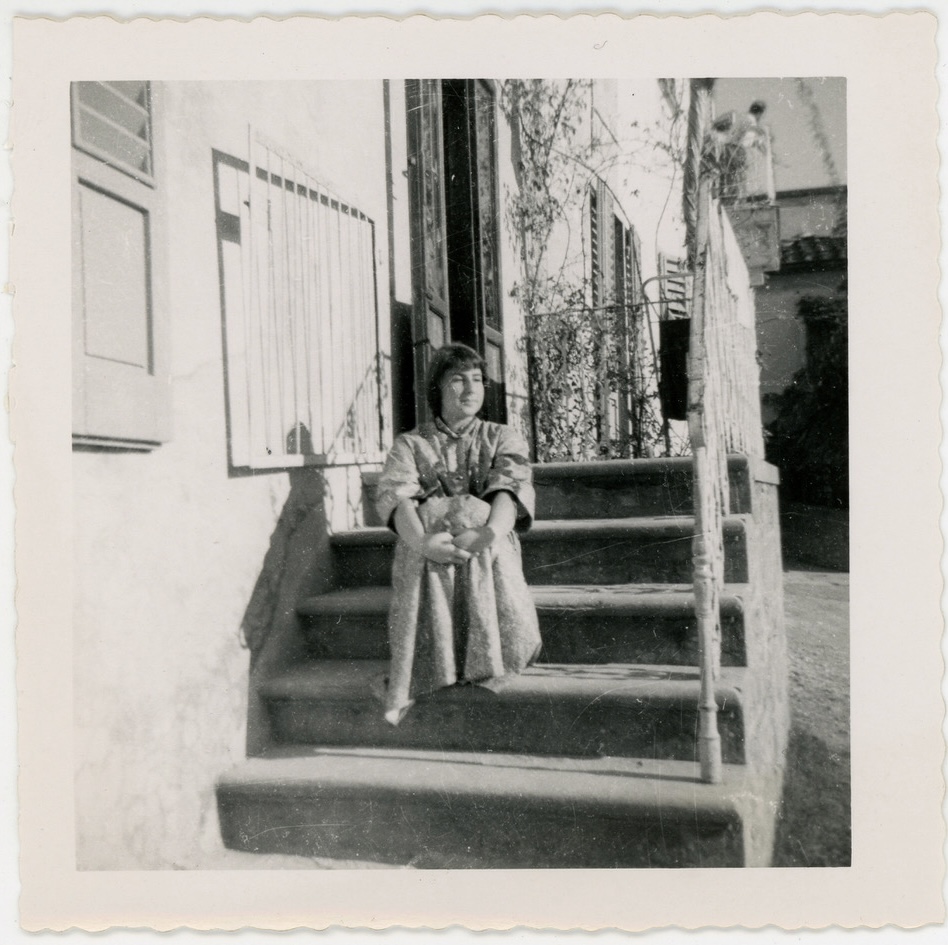
L to R: 1-4: All from Betty Woodman’s first trip to Fiesole, near Florence, Italy, 1951-52 / Soggiorno degli Stranieri in Italia ("Foreigner's Stay in Italy”) for Betty Woodman, 1951. Woodman Family Foundation Archives.
Betty Woodman’s first trip to Fiesole, near Florence, Italy, 1951-52. Woodman Family Foundation Archives.
Betty Woodman's trip to Fiesole, Italy, 1951-52
Betty Woodman first traveled to Italy in 1951, on the suggestion of her friends Grace and John Tagliabue who invited her to join them there. She spent the year in Fiesole, renting a room on a hillside overlooking Florence and its Duomo and working in a pottery studio owned by painter Giorgio Ferrero and sculptor Lionello Fallacara.
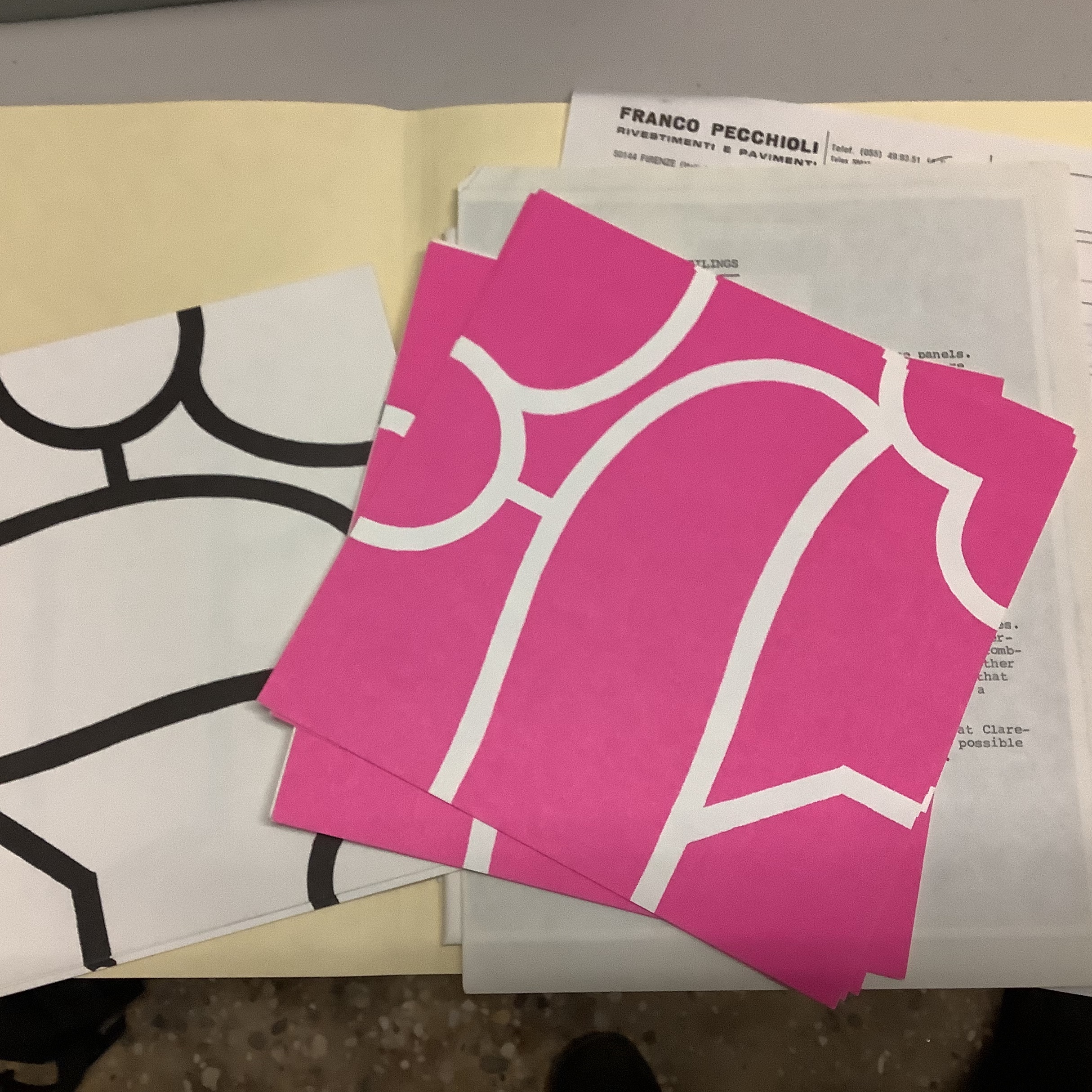
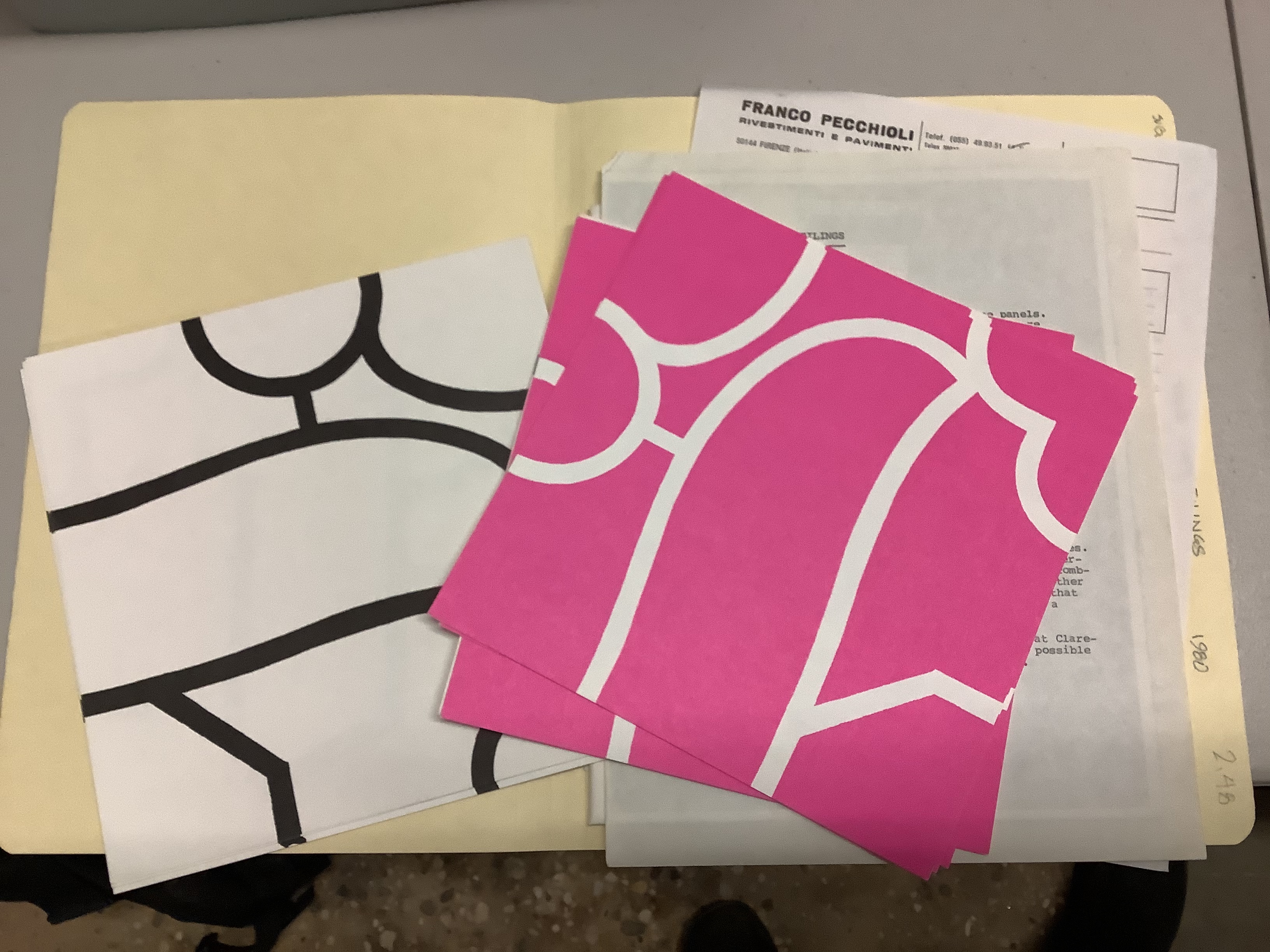
L to R: 1-3: Processing George Woodman’s paper tiles in WFF archive, 2022 / 4-5: George Woodman’s paper tile installation, Denver Art Museum, 1980 / 6-7: George Woodman’s paper tile installation, unknown location, 1981. Woodman Family Foundation Archives.
Processing George Woodman’s paper tiles in WFF archive, 2022. Woodman Family Foundation Archives.
George Woodman's paper tiles, 1980-81
Although the Woodman Family Foundation archives are starting to take shape, there is still much more material to process before we are ready to open them up to scholars and researchers. Currently, we are processing George Woodman’s paper tiles and related plans, descriptions and documentation so that we can better understand this key aspect of his practice, which took his work with pattern off the canvas and into space and situation.
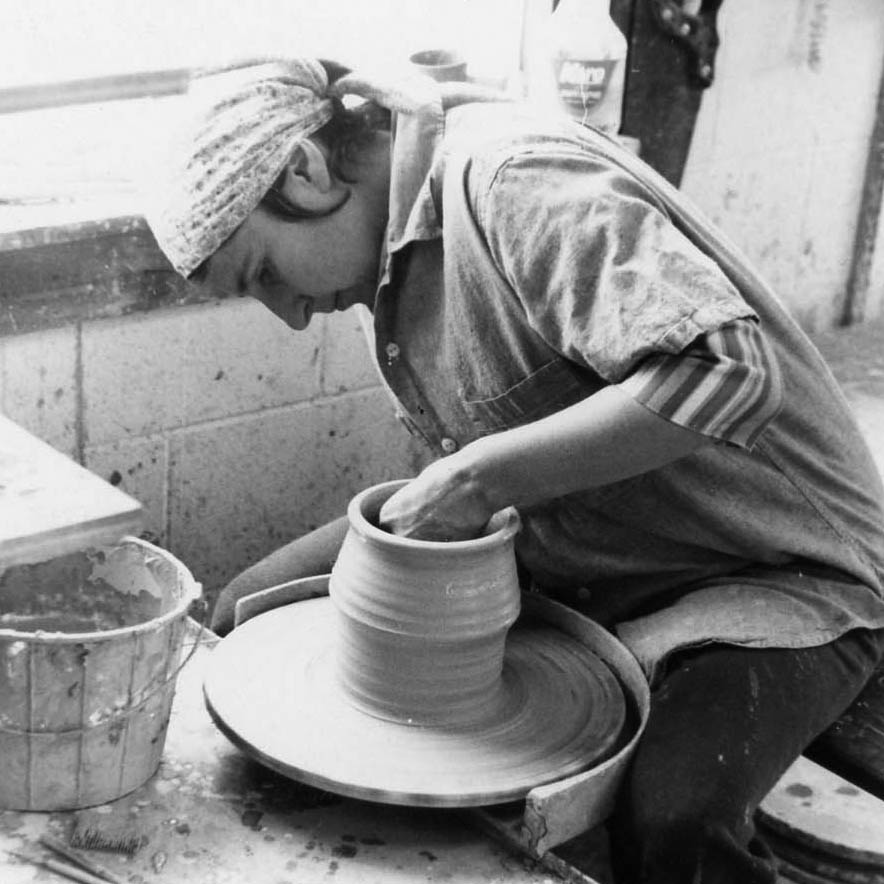
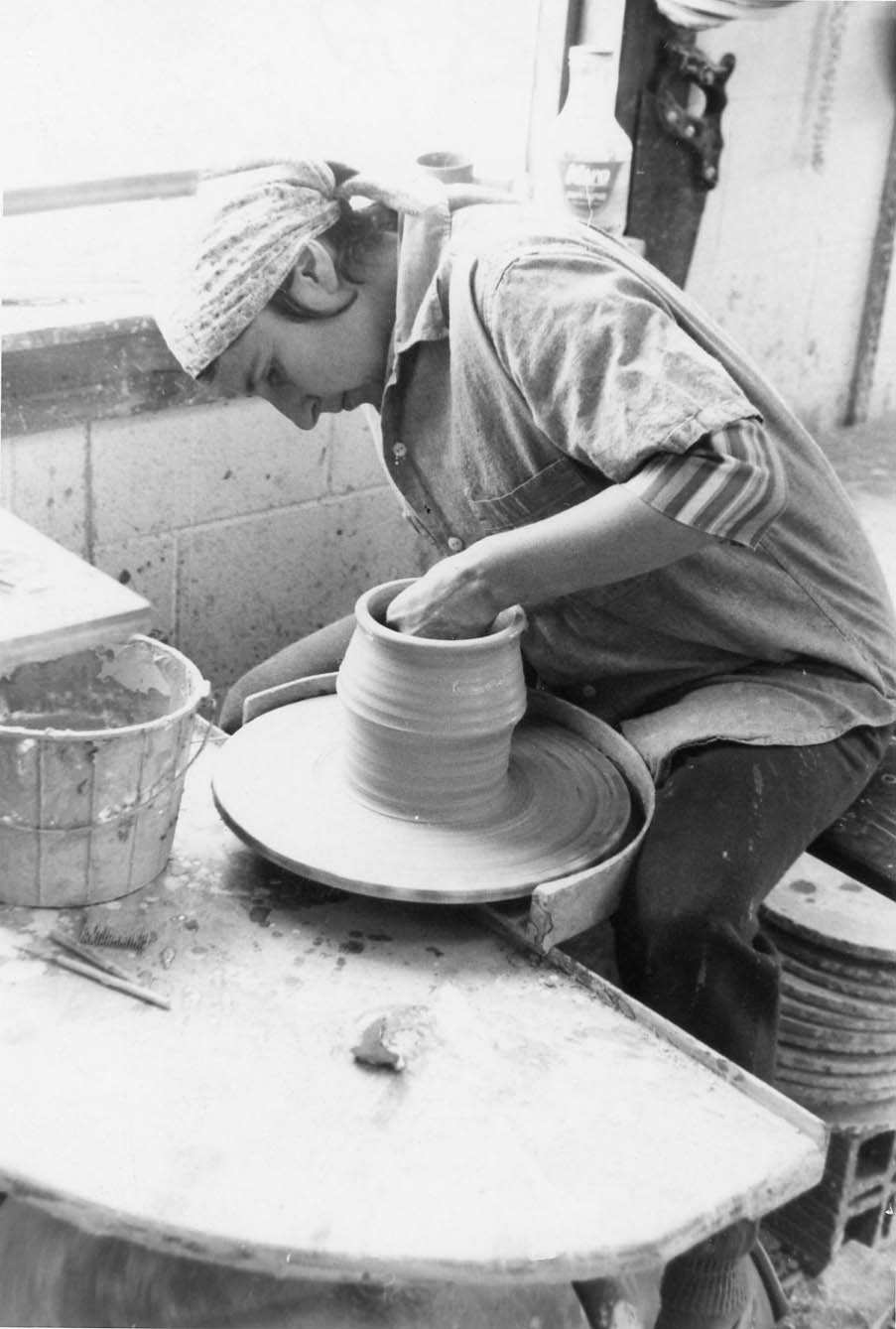
L to R: Betty Woodman working in her studio, Boulder, Colorado, c. 1960s / Betty Woodman’s functional ceramics notebook, c. 1966 / Betty Woodman with pots from kiln, Boulder, Colorado, c. 1960s. Woodman Family Foundation Archives.
Betty Woodman working in her studio, Boulder, Colorado, c. 1960s. Woodman Family Foundation Archives.
Betty Woodman's functional ceramics, 1960s
In the 1960s, Betty Woodman worked primarily in stoneware at her studio in Boulder, Colorado. At that time, she focused on producing functional ceramics, keeping careful notes about each piece.
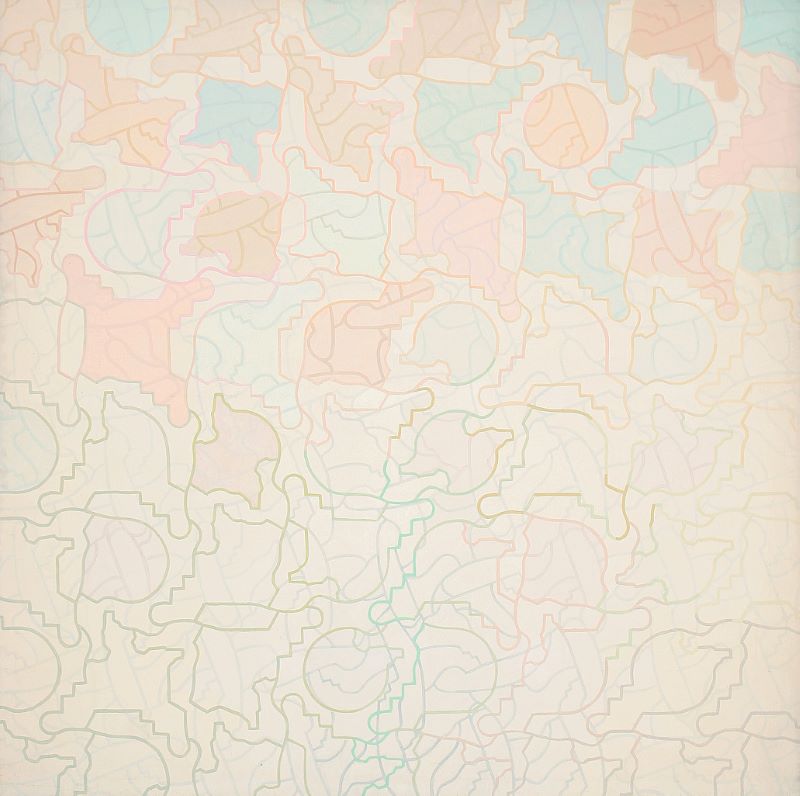
L to R: “Canon," 1980, 66 x 66 in. Acrylic on canvas / 2-6: Spreads from the exhibition catalogue for “19 Artists—Emergent Americans,” The Solomon R. Guggenheim Museum, New York / "La Grande Fontaine du Printemps," 1980, 85 x 84 in. Acrylic on canvas / "Tessellation Sky,” 1975. 54 1/2 x 54 1/2 in. Acrylic on canvas. Collection The Solomon R. Guggenheim Museum. All works by George Woodman © Woodman Family Foundation / Artists Rights Society (ARS), New York
George Woodman. “Canon," 1980, 66 x 66 in. Acrylic on canvas © Woodman Family Foundation / Artists Rights Society (ARS), New York
George Woodman, "19 Artists—Emergent Americans," The Solomon R. Guggenheim Museum, New York, New York, 1981
Forty-one years ago, "19 Artists—Emergent Americans" was presented at the Solomon R. Guggenheim Museum in New York featuring seven paintings by George Woodman, among work by eighteen of his contemporaries including Barbara Kruger, Guy de Cointet, and Manny Farber. The exhibition reflected curator Peter Frank’s desire to present the artists’ work as a series of small retrospectives. “What I have sought to assemble at the Guggenheim Museum is the skilled and confident visual articulation of engrossing ideas by individuals who have not been sufficiently recognized for their accomplishment,” he wrote.
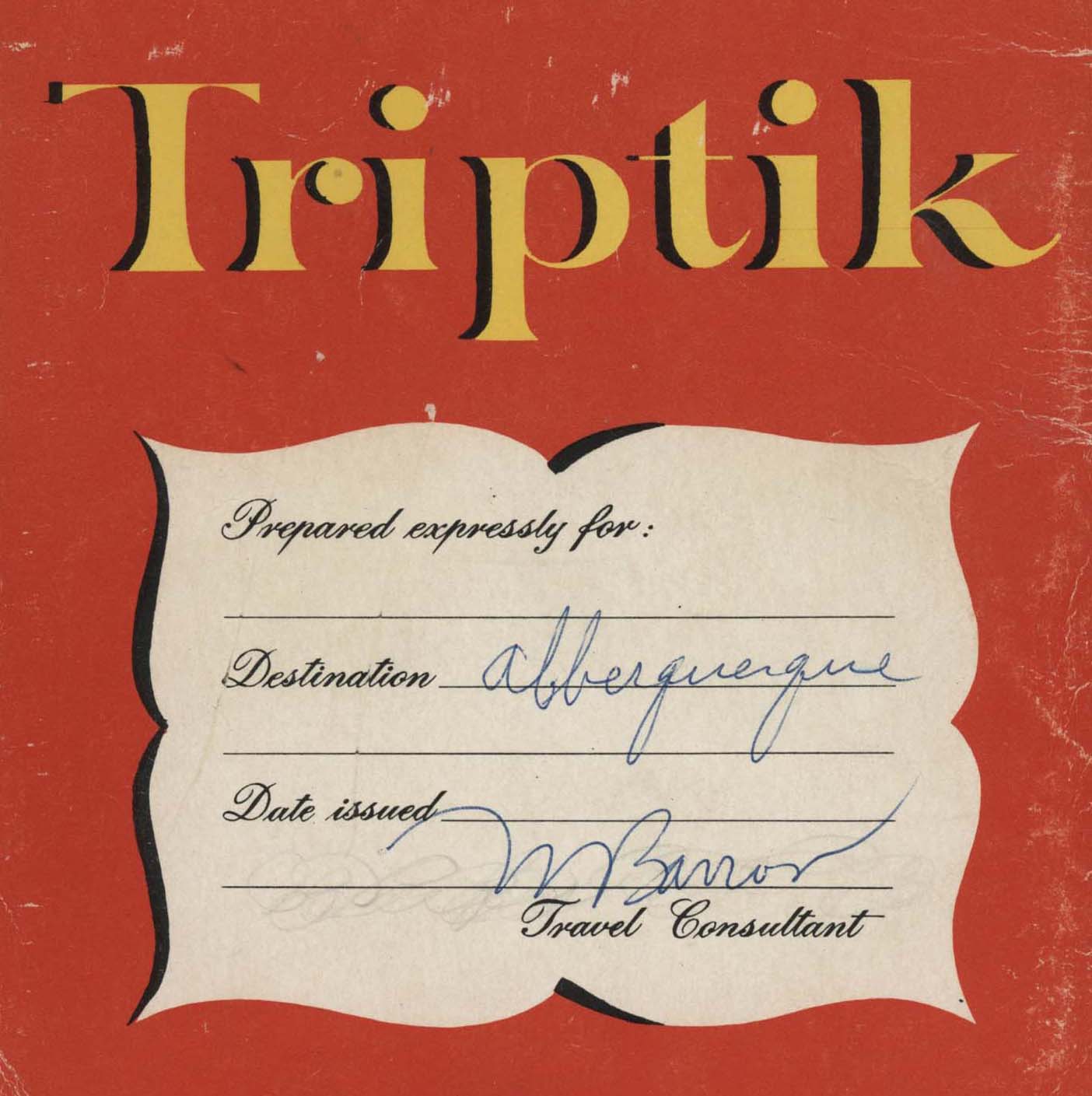
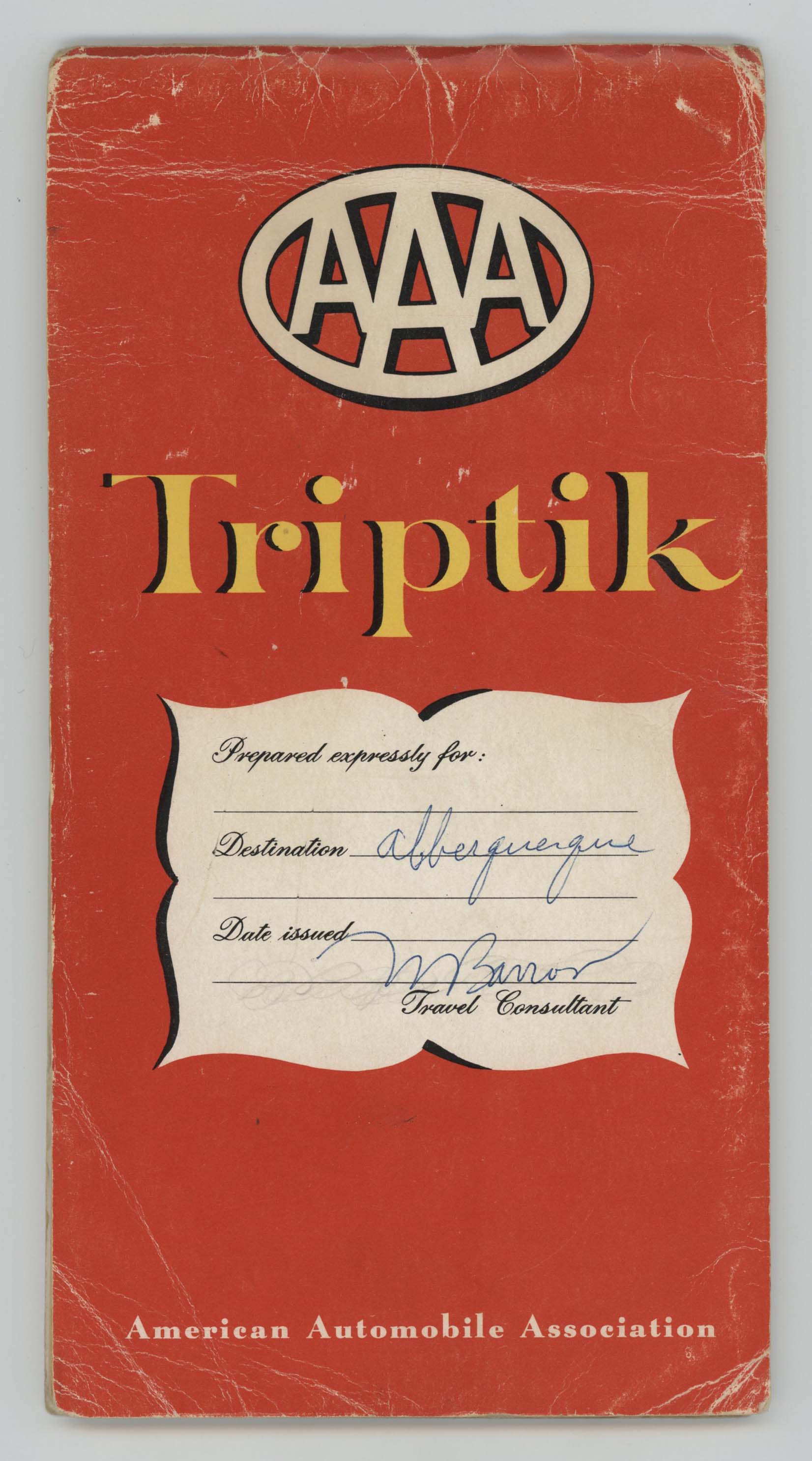
L to R: 1-5: George Woodman’s AAA Triptik map from Boston, MA to Albuquerque, NM, 1954. Woodman Family Foundation Archives | George Woodman. “Untitled,” 1955. 26 x 34 in. Oil on canvas © Woodman Family Foundation / Artists Rights Society (ARS), New York
George Woodman’s AAA Triptik map from Boston, MA to Albuquerque, NM, 1954. Woodman Family Foundation Archives
George Woodman's trip from Boston, Massachusetts to Albuquerque, New Mexico
In the summer of 1954, recent college graduate George Woodman set out from Boston towards Albuquerque, New Mexico. He had a degree in philosophy, and a desire to study painting in a more concentrated way than he had been able to do as an undergraduate student supplementing his Harvard education with art courses at the School of the Museum of Fine Arts Boston. He and Betty Woodman—who had been married just a year—followed this set of Triptik maps across the country, carefully tracking miles and expenses along the way until they arrived at the University of New Mexico.
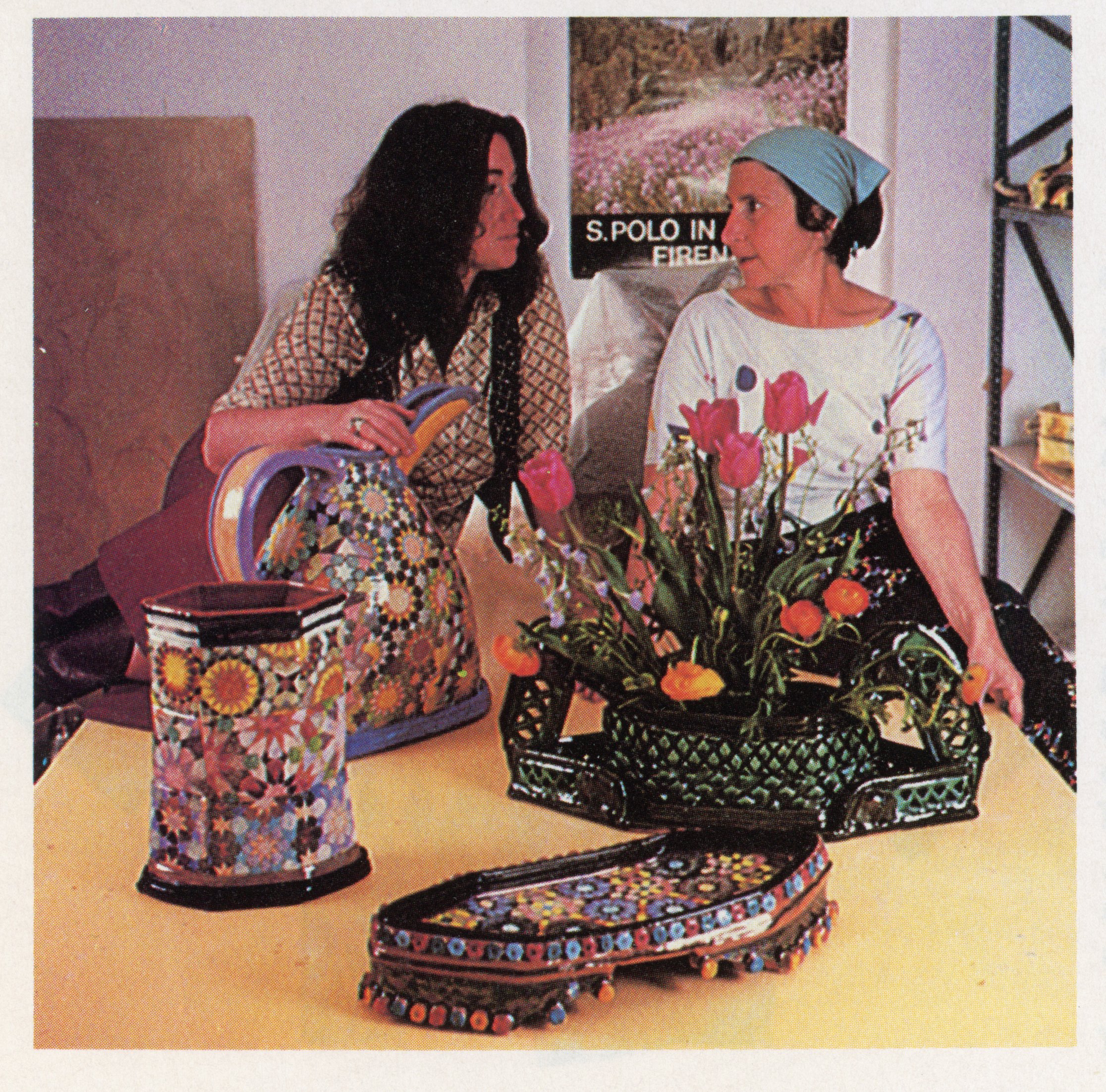
L to R: Betty Woodman with Joyce Kozloff, 1981. Photo: Sylvia Plachy / 2-4: Betty Woodman, collaboration with Joyce Kozloff. “Cups," (3 of 12), 1980. 5 in. diameter / "Chrysanthemum Vase," 1980. 14 in / “Purple Toucan Pitcher,” 1980. 17 in. All glazed earthenware / 5-7: Betty Woodman, collaboration with Cynthia Carlson. Installation views, "An Interior Exchanged,” ArtisanSpace, Fashion Institute of Technology, New York, 1982. Dimensions variable. All paint and glazed ceramic.
Betty Woodman with Joyce Kozloff, 1981. Photo: Sylvia Plachy. Woodman Family Foundation Archives.
Betty Woodman, collaborations with Joyce Kozloff and Cynthia Carlson
In the early 1980s, as Betty Woodman moved into a New York City loft with her husband, George Woodman, and began to shift her functional practice towards ceramic sculpture, she became friends with many artists deeply involved with the Pattern and Decoration movement. She collaborated with two of them: Joyce Kozloff and Cynthia Carlson. With Kozloff, Woodman made ceramic forms—whether cups and saucers, pitchers or trays—which Kozloff then decorated with rich patterns inspired by Islamic tiles and motifs. The resulting works, which dissolve the line between craft and art, were shown in exhibitions at Tibor de Nagy Gallery and the Queens Museum in 1981.

Cover and pages from “The Further Adventures of Pinocchio,” published in 2004. Photographs by George Woodman. Poetry by Edwin Frank. Woodman Family Foundation Archives.
“The Further Adventures of Pinocchio,” published in 2004. Woodman Family Foundation Archives.
A collaborative poem and picture tale by George Woodman and Edwin Frank, "The Further Adventures of Pinocchio," 2004
Around 2003, George Woodman began incorporating a green wooden Pinocchio into the assemblages of toys, props and images he used to construct his photographs. Pinocchio is an iconic figure in Italian literature and culture, popularized by the classic children’s novel “The Adventures of Pinocchio,” written by Florentine author Carlo Collodi in the late 19th century. Woodman was interested in Pinocchio as the protagonist in his own picture stories.
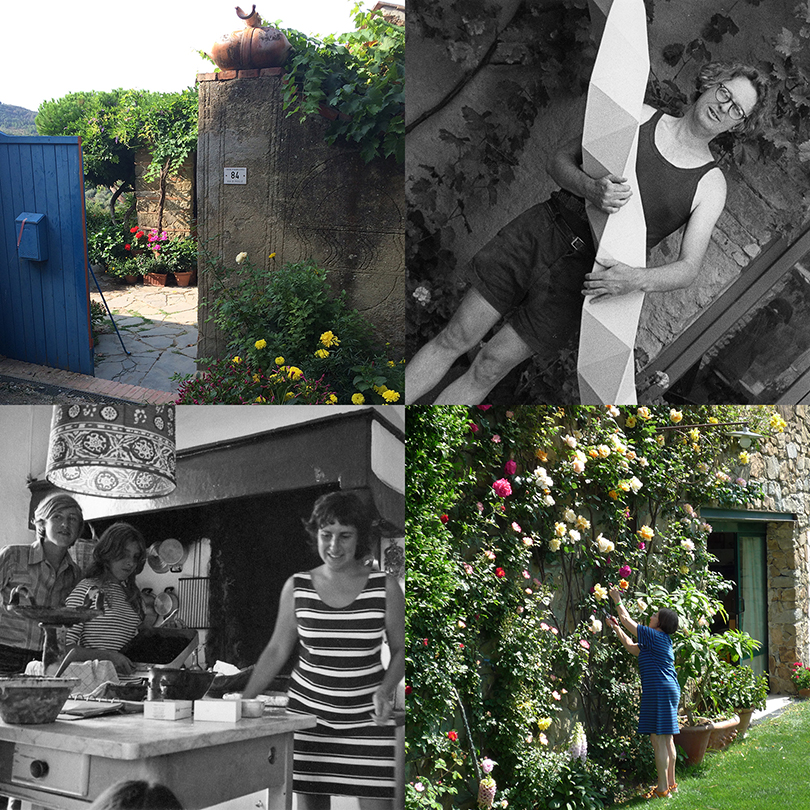

L to R: Entrance to the Woodman family’s farmhouse adorned with a Pillow Pitcher by Betty atop a wall of George’s “sgraffito,” 2017 / View of the olive groves from Betty’s studio, 2004 / Betty cutting well-tended roses growing against the wall next to her studio, 2008 / Betty making flower arrangements with roses, dahlias and gerbera daisies from her garden, 2006 / Betty putting fresh flowers in a group of her “Vase and Stand” works, 1984 / Betty, a young family friend, and Francesca, c. late 1960s / Table set for dinner, 2016, photo by Brigid McCaffrey / Generous bowls and baskets full of figs, plums, peaches, grapes, and tomatoes, 2016 / Betty, Charlie and Francesca cooking together, c. early 1970s / George at his studio door, 2006 / A view out from the same door, 2008 / Francesca and Betty holding their bunnies, c. 1968 / Charlie on his motorino, c. late 1960s / Betty and friend with Betty’s triptych “June in Italy” (2001), c. 2001 / George with his sculpture, c. early 1970s / he Woodman family’s patio with potted geraniums and the olive grove in view, c. 1990s / Morning glories climbing George’s “sgrafitto” wall, c. 1990s. Woodman Family Foundation Archives.
L to R: Entrance to the Woodman family’s farmhouse adorned with a Pillow Pitcher by Betty atop a wall of George’s “sgraffito,” 2017. Woodman Family Foundation Archives.
AUGUST IN ANTELLA
Beginning in the summer of 1968, the Woodman Family spent every summer at their stone farmhouse in Antella, Italy, just outside of Florence. As children, Charlie and Francesca joined their parents and later visited on their own, soaking in Italian culture and influences. Betty and George made some of their most important artistic breakthroughs there—a place George once described as "an artist residency for two.” All summer long, their garden produced abundant food and flowers—the tomatoes were particularly good in August, happily shared with frequent visitors.
George Woodman. “Untitled,” c. 1970. 96 x 134 in. Acrylic on canvas © Woodman Family Foundation / Artists Rights Society (ARS), New York
George Woodman, "Untitled," c. 1970
Last week was an exciting one at the Woodman Family Foundation. Upon their long-awaited return to New York, we were treated to a room full of George Woodman’s paintings. And wow we were bowled over by how fresh and contemporary these paintings feel, despite the fact that they were made some 50 years ago. We were struck by the subtle and shifting interplay of color and pattern and the raw intelligence of George's approach, which are slowly revealed over the course of a lingering look. What a pleasure to see these ambitious and original works in person.
All images related to Betty Woodman’s “Bronze Bench #3,” 2003. 57 x 62 x 16 in. Bronze, patina. From L to R: clay models for bronze benches outside Betty’s studio in Antella, Italy / Benches in progress at the Fonderia with Betty’s full-scale drawing / Applying the patina according to Betty’s drawing / The finished bench arrives at Betty’s studio in Antella / Installation view in the courtyard of the Palazzo Pitti, Museo delle Porcellane, Florence, Italy, 2010 / Installation view, “Betty Woodman: In the Garden,” Greenwood Gardens, Short Hills, New Jersey, 2016 / Betty outside of her studio in Antella. Woodman Family Foundation Archives.
Clay models for Betty Woodman's bronze benches outside Betty’s studio in Antella, Italy, c. 2003. Woodman Family Foundation Archives.
Betty Woodman's functional bronze sculptures
On occasion, Betty Woodman translated her abiding interest in the subject of function into materials other than clay, always pushing the possibilities of a particular medium. In 1999, she began an ongoing collaboration with Fonderia Artistica Belfiore in Pietrasanta, Italy, an idea which came from a conversation with her longtime gallerist, Max Protetch and was in part inspired by fellow gallery artist Scott Burton’s sculptural furniture, as well as the formal Italian gardens she had spent decades exploring.
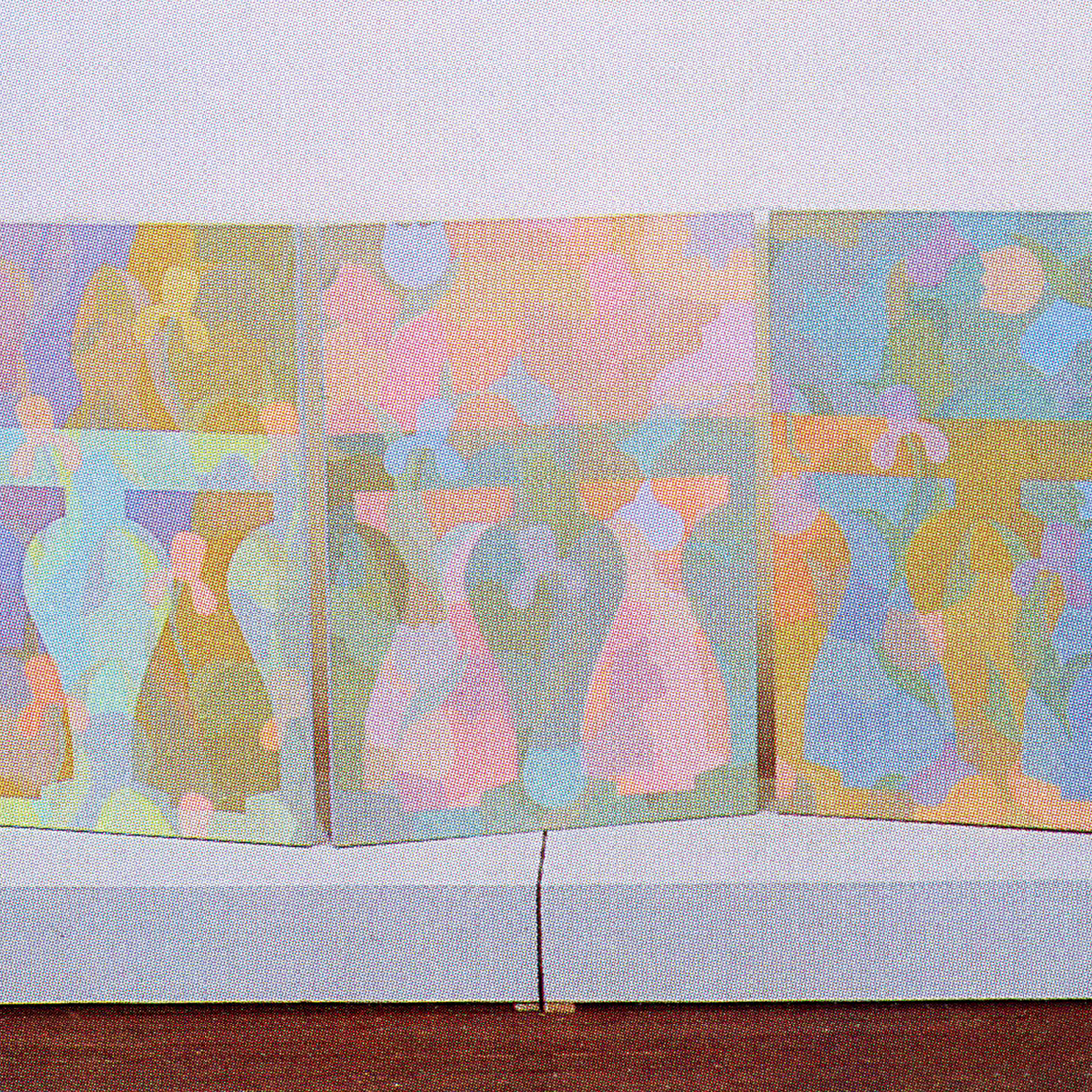
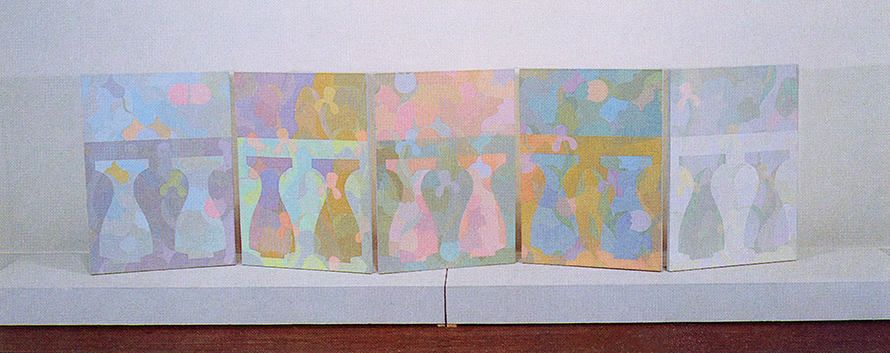
L to R: Installation view, “Low Balustrade Screen” or "Garden Balustrade Screen" (1981) at Haber-Theodore Gallery, New York, 1982 / George Woodman. "Low Balustrade Screen" or "Garden Balustrade Screen," 1981. 151 1/2 x 42 in. Acrylic on canvas, five panels with hinges / Brochure for exhibition “Partitions” at Pratt Manhattan Center Gallery, New York, 1982. Woodman Family Foundation Archives.
Installation view, George Woodman, “Low Balustrade Screen” (1981) at Haber-Theodore Gallery, New York, 1982. Woodman Family Foundation Archives.
George Woodman in "Partitions" at Pratt Manhattan Gallery, New York, 1982
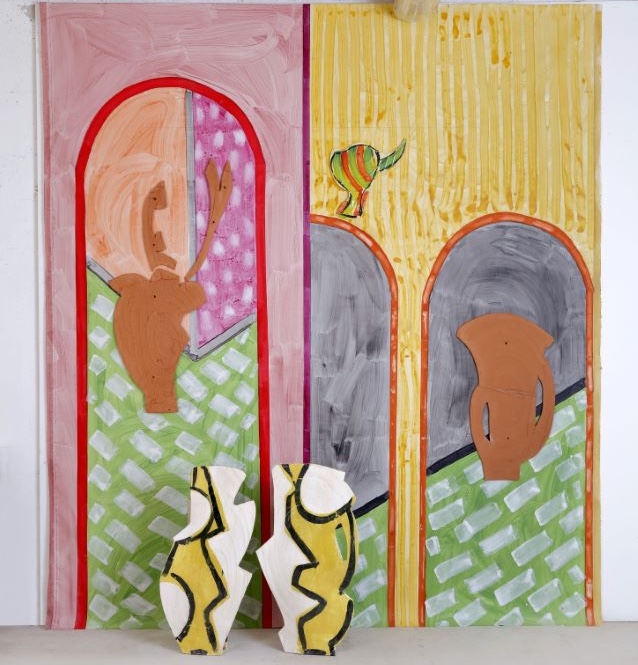
In the fall of 1982, the exhibition “Partitions” at Pratt Manhattan Center Gallery featured the work of 15 artists—including George Woodman—concerned with contemporary interpretations of screens. As hybrid sculptural, decorative, functional objects, partitions and interest in them were a kind of corollary to the burgeoning Pattern and Decoration Movement, and described by critic John Perreault, who wrote the exhibition’s essay, as “ubiquitous,” “a phenomenon,” and “a challenge to some preconceptions about art."
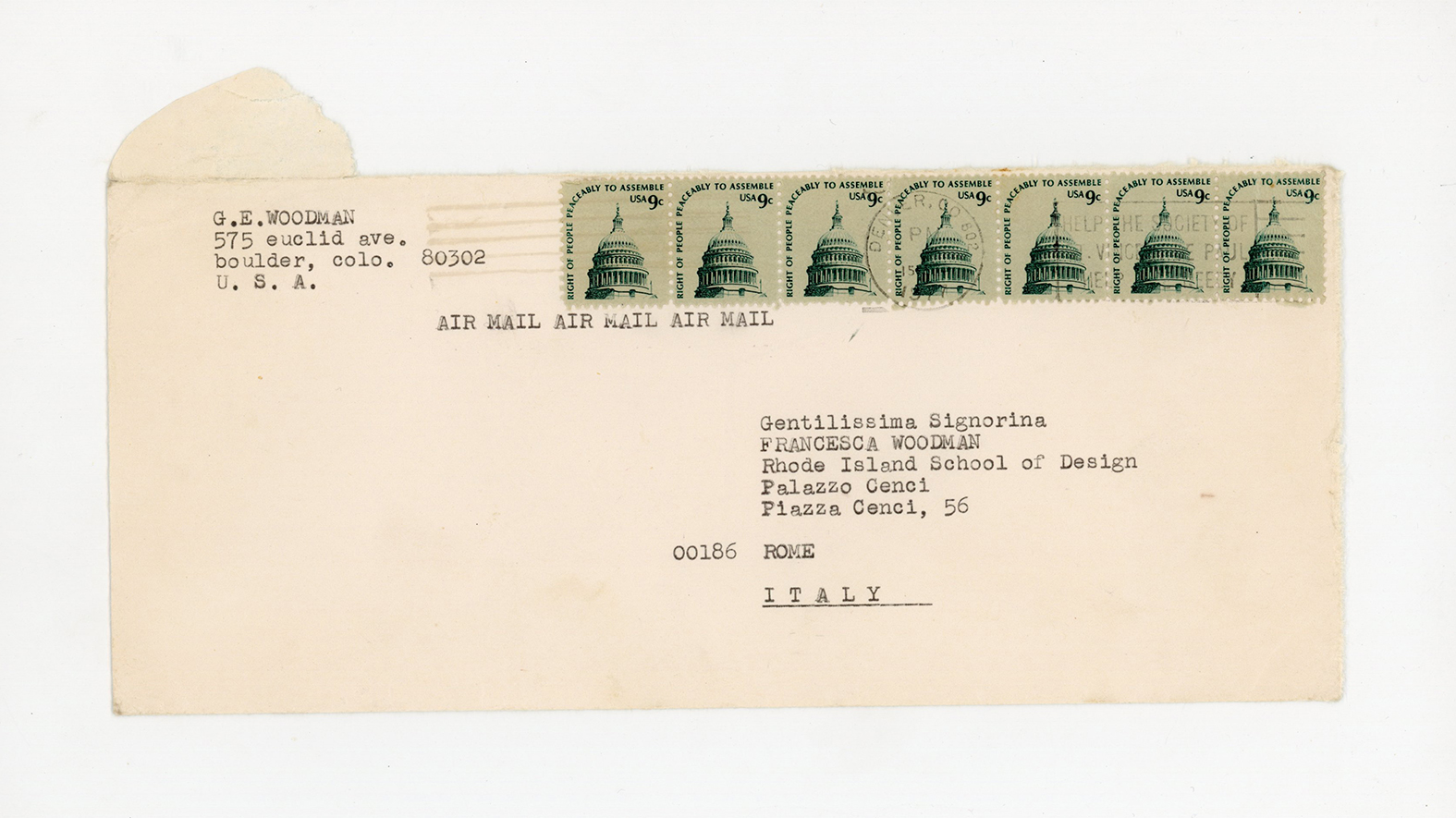
Letter from George Woodman to Francesca Woodman, September 4, 1977. Woodman Family Foundation Archives.
A letter from George Woodman to Francesca Woodman, September 4, 1977
September of 1977 marked the start of new academic year for each of the Woodmans and the pursuit of teaching or studies in four different locations around the US and Europe. Francesca Woodman had just begun her fruitful year in Rome with the RISD European Honors Program, after spending some time in Antella. In a letter sent to her from Boulder, George Woodman recaps summer travels and reports on the rest of the family’s activities.

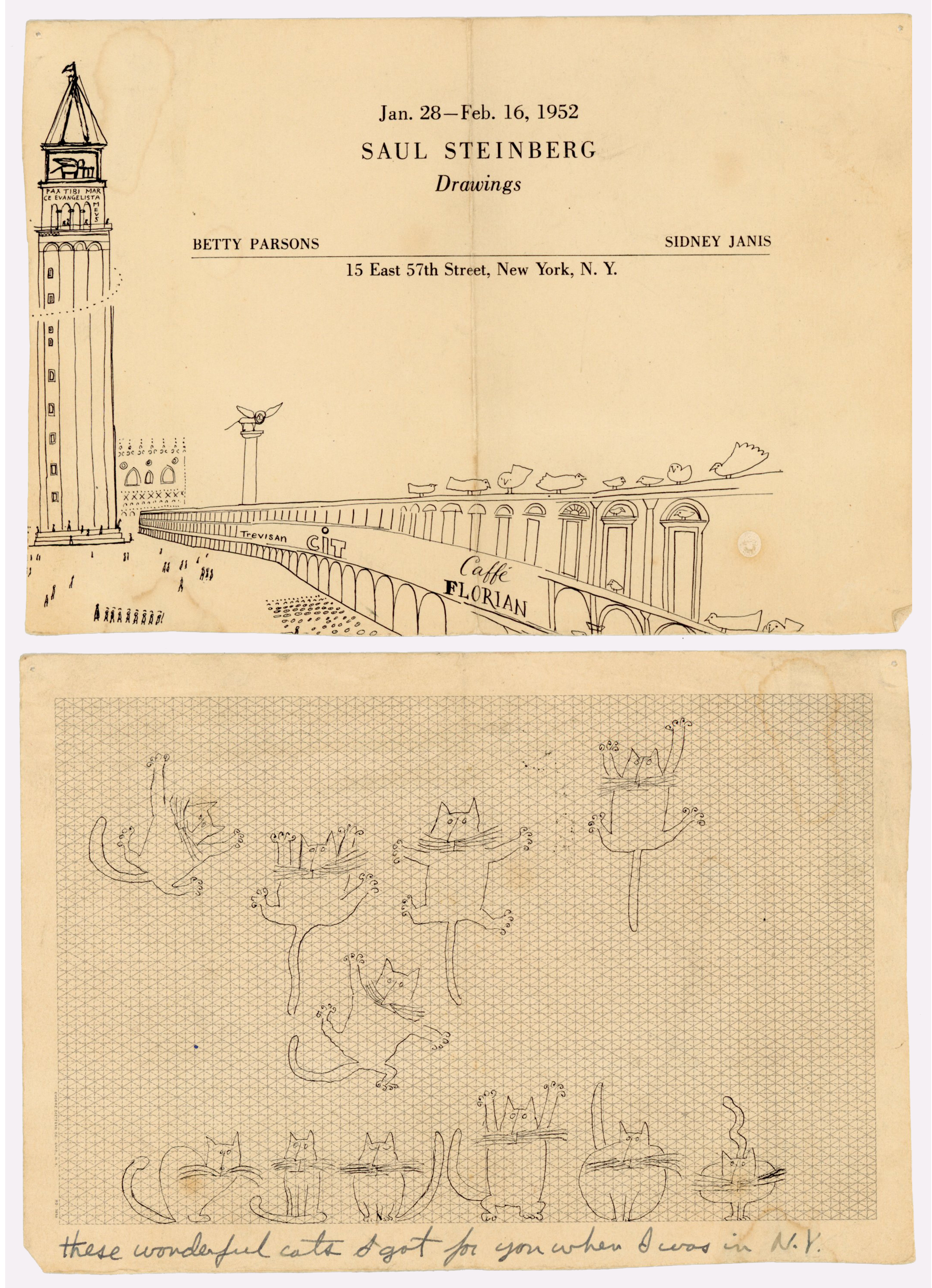
Saul Steinberg show announcement from George Woodman to Betty Woodman, 1952; front and back. Woodman Family Foundation Archives
Saul Steinberg show announcement from George Woodman to Betty Woodman, 1952. Woodman Family Foundation Archives.
Saul Steinberg show announcement from George Woodman to Betty Woodman, 1952
George Woodman and Betty Abrahams wrote each other regularly beginning soon after they met in 1951—while Betty was at home in Newton, MA and later in Fiesole, Italy and George at home in Concord, NH or at school at Harvard in Cambridge, MA—until they married in 1953.
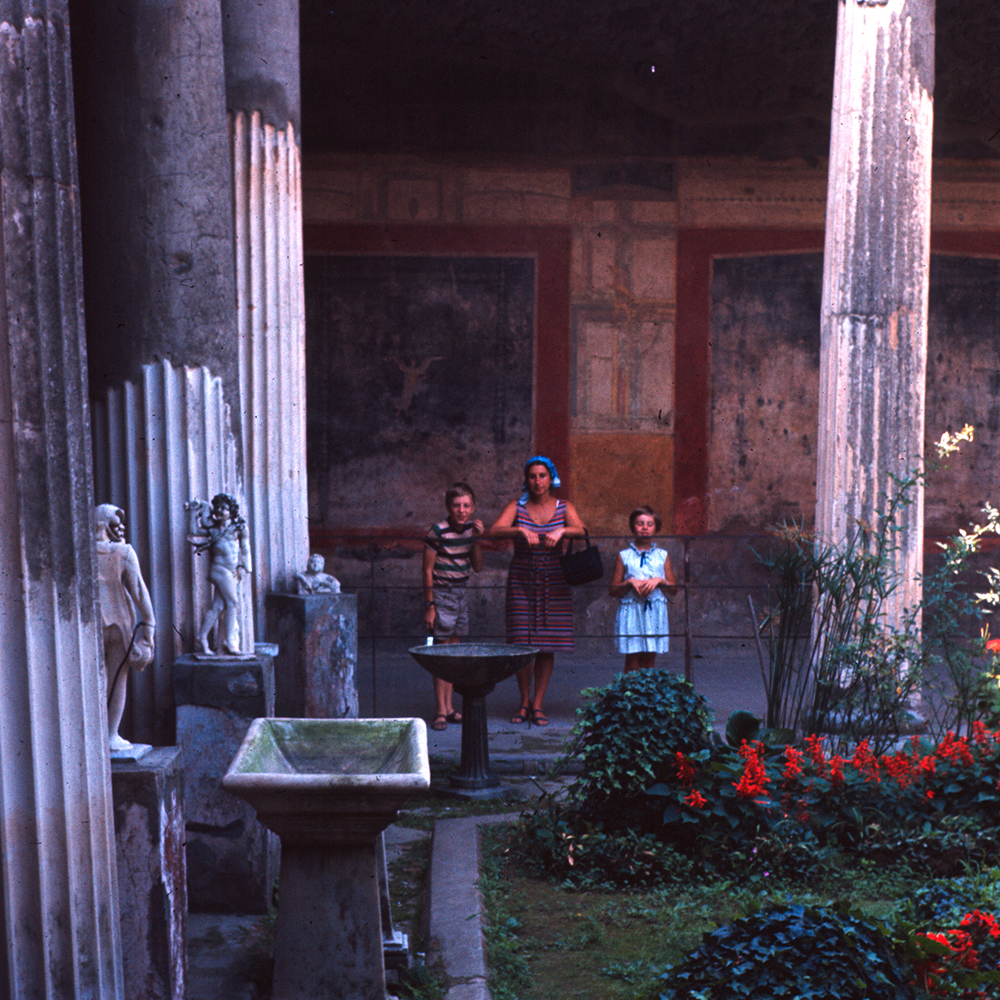
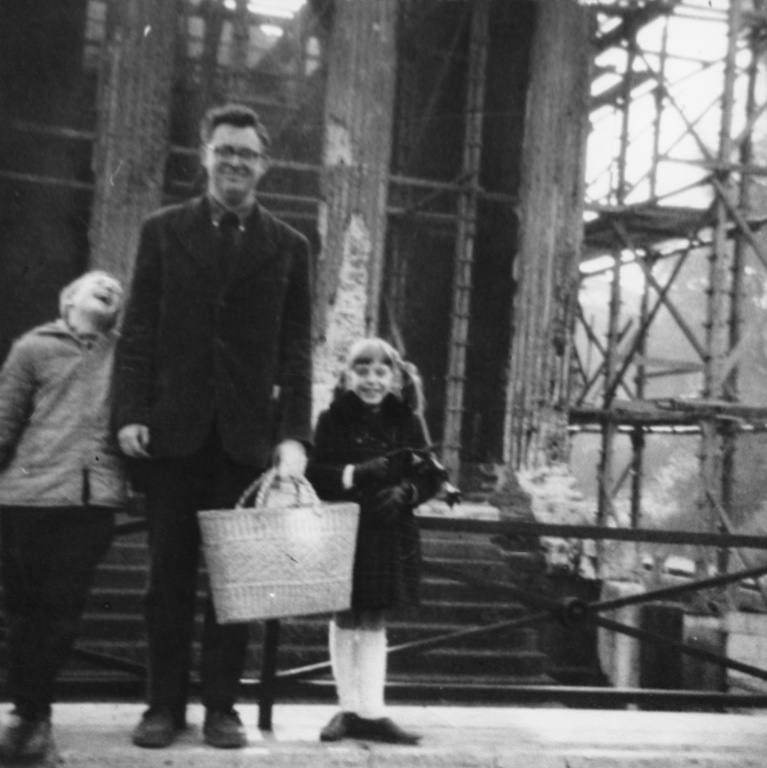
Family photographs of the Woodman’s sightseeing in Italy, circa 1959-60 and 1965-66. Woodman Family Foundation Archives.
George, Charles and Francesca Woodman in Rome, Italy, 1966. Woodman Family Foundation Archives.
The Woodman family explores Italy, circa 1959-60 and 1965-66
The Woodman family’s lifelong love of Italy began in 1951 with Betty’s yearlong apprenticeship in Fiesole. After marrying in 1953, Betty and George took their young children, Charles and Francesca, for extended stays in 1959-60 and again in 1965-66.
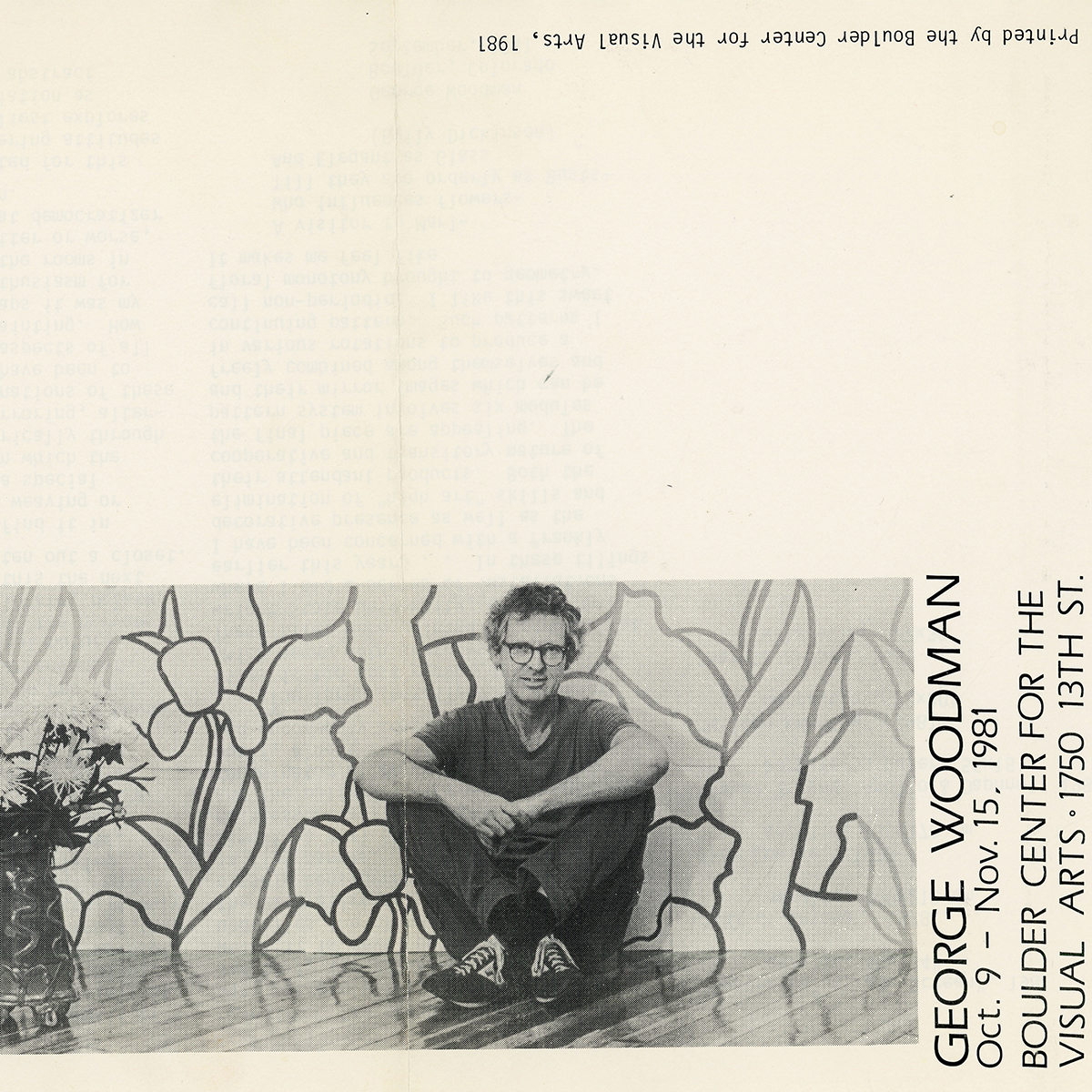
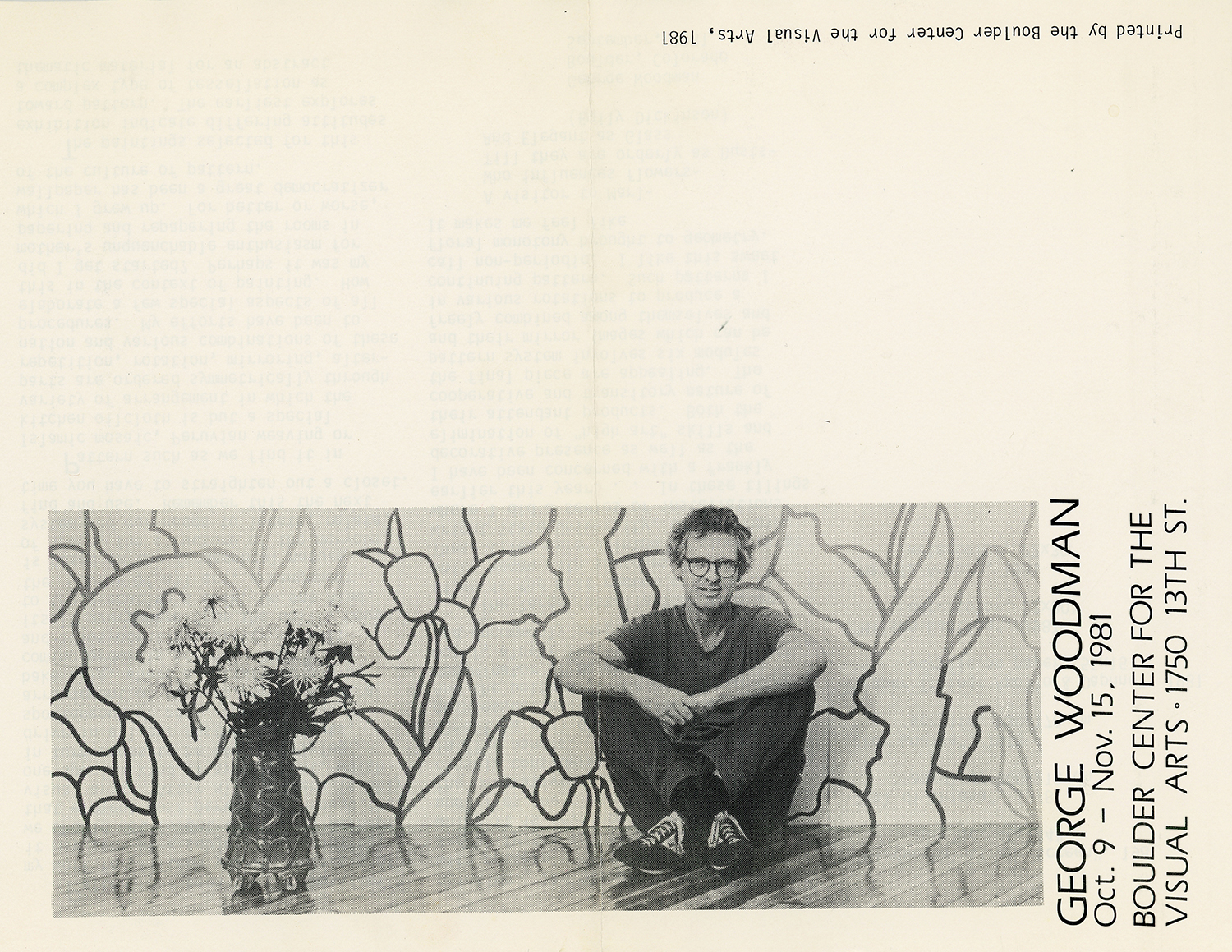
L to R: George Woodman’s exhibition brochure, Boulder Center for the Visual Arts, Boulder, CO, Fall 1981 | Reviews in the Daily Camera and Rocky Mountain News, October 1981. Woodman Family Foundation Archives.
George Woodman’s exhibition brochure, Boulder Center for the Visual Arts, Boulder, Colorado, Fall 1981. Woodman Family Foundation Archives.
George Woodman at the Boulder Center for the Visual Arts, Boulder, Colorado, Fall 1981
George Woodman’s exhibition at the Boulder Center for the Visual Arts in the fall of 1981 was a survey of his various approaches to pattern over 15 years, ranging from his complex tessellations, to the use of pattern to unify a surface, to a rigorous examination of the decorative, and finally to the all-encompassing perceptual experience of his room-scaled paper tile installations.
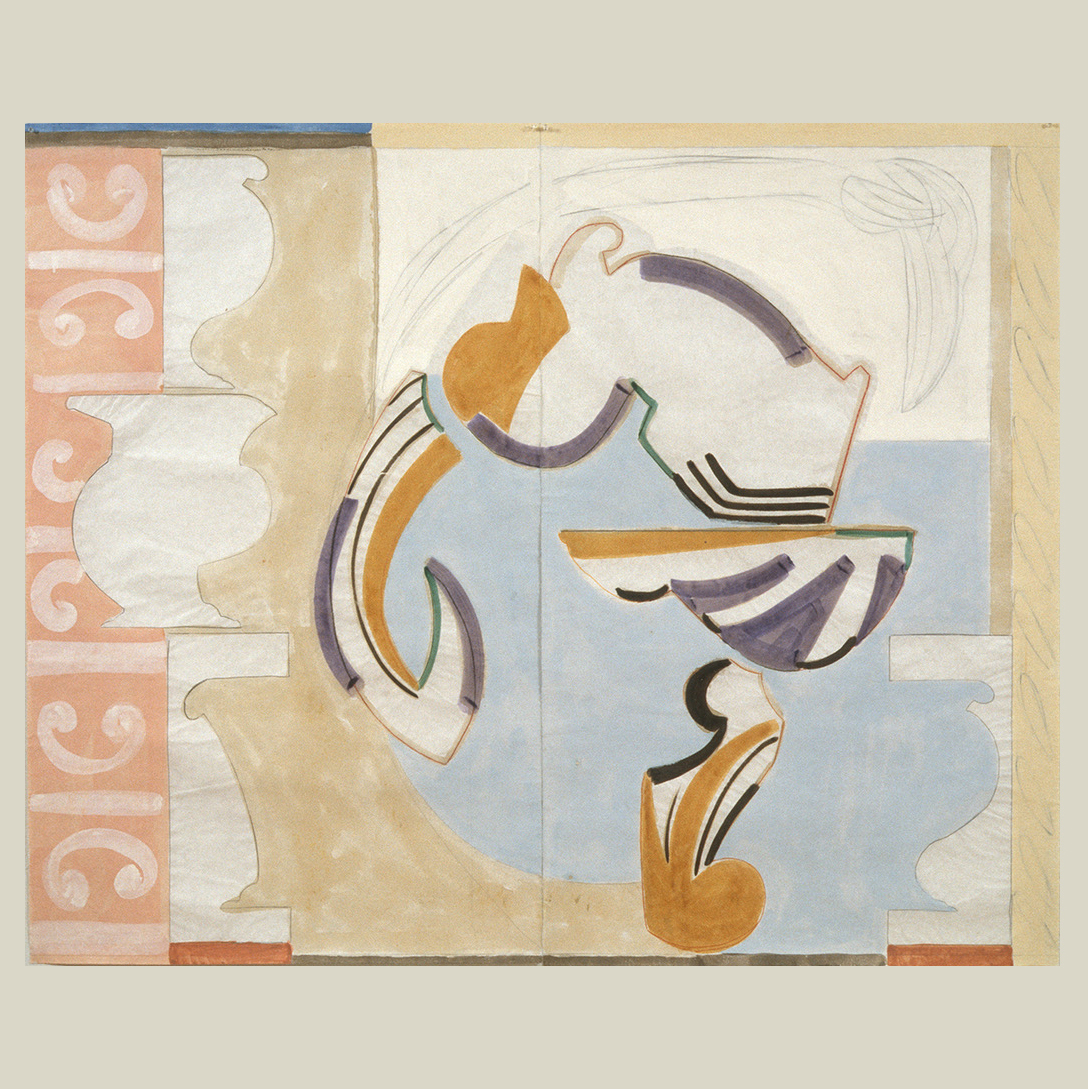
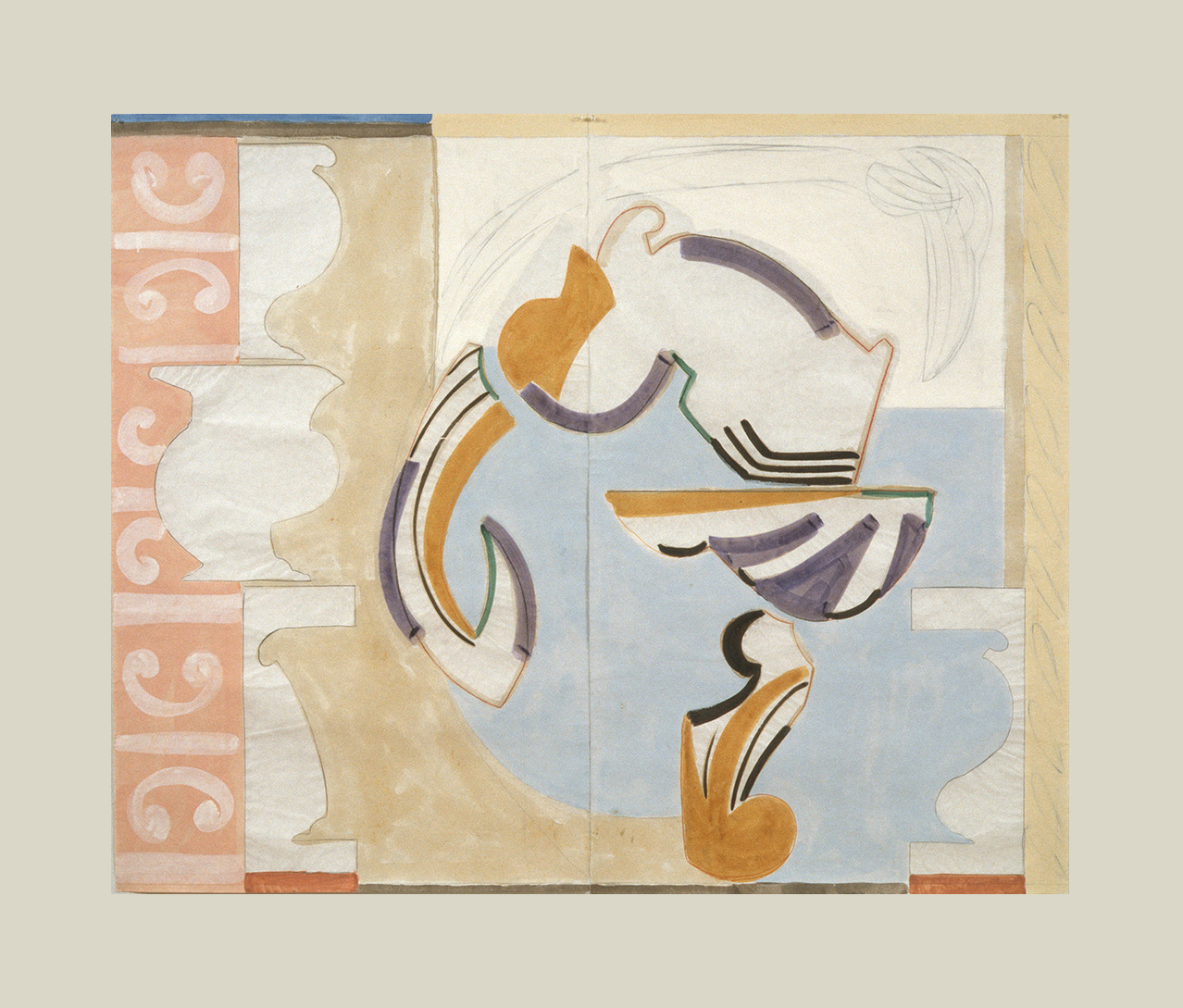
L to R: Betty Woodman. “Bellagio drawing #15,” 1995. 59.5 x 74.5 inches. Terra sigilatta, graphite, wax on thai mulberry paper / Album of snapshots Betty took while a resident at the Bellagio Study Center, Italy / Betty Woodman. “Bellagio drawing #17,” 1995. 37 x 88 inches. Terra sigilatta, graphite, wax on thai mulberry paper / Installation view "Betty Woodman,” Stedelijk Museum, Amsterdam, 1996.
Betty Woodman. “Bellagio drawing #15,” 1995. 59.5 x 74.5 inches. Terra sigilatta, graphite, wax on thai mulberry paper.
Betty Woodman's residency at the Bellagio Study Center, Italy, 1995
Betty Woodman’s month-long residency at the Bellagio Study Center in 1995 on a Rockefeller Foundation Fellowship provided her the time and space to begin a formally complex, mixed-media “drawing” practice which continued for the rest of her life, later influencing her iconic painted canvas and ceramic wall works.
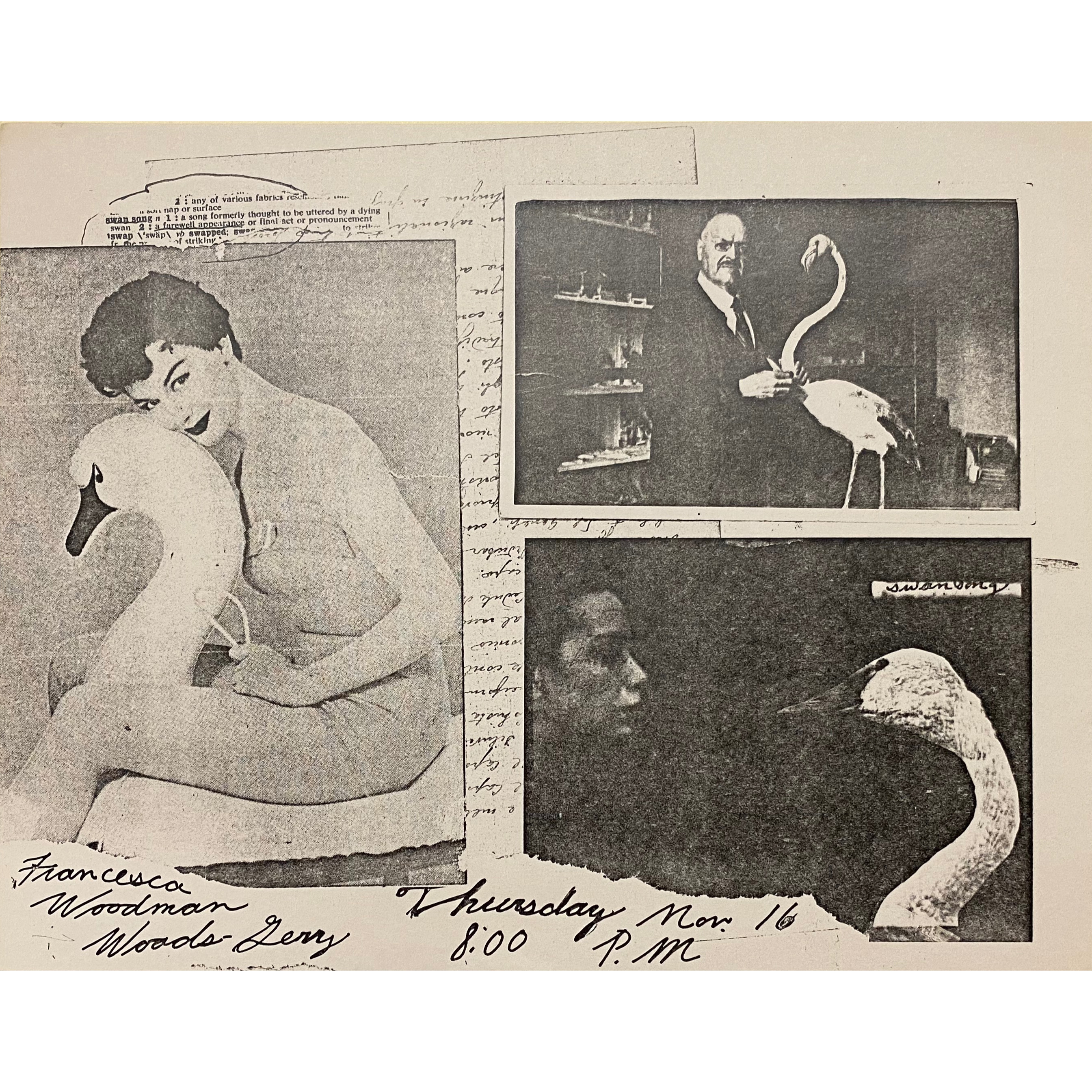

L to R: "Untitled," 1978 | Invitation by Francesca Woodman | Installation views, Woods-Gerry Gallery, RISD, 1978 / Review by David K. Miller, 1978. Woodman Family Foundation Archives
Invitation by Francesca Woodman, 1978 © Woodman Family Foundation / Artists Rights Society (ARS), New York
Francesca Woodman's BFA graduate exhibition at Woods-Gerry Hall Gallery, RISD, 1978
Francesca Woodman’s graduate exhibition as a student at the Rhode Island School of Design was held at the school’s Woods-Gerry Gallery in November 1978. She considered it a “swan song” to her time there as shown in her photocopied invitation. She reported on the opening in a letter to her friend Edith Schloss: “you would have enjoyed it i bought all these bird whistles that one fills with water and they warble in n.y. do you remember them from when you used to live there? anyway the room was very echoey with these things and i actually enjoyed the opening.”
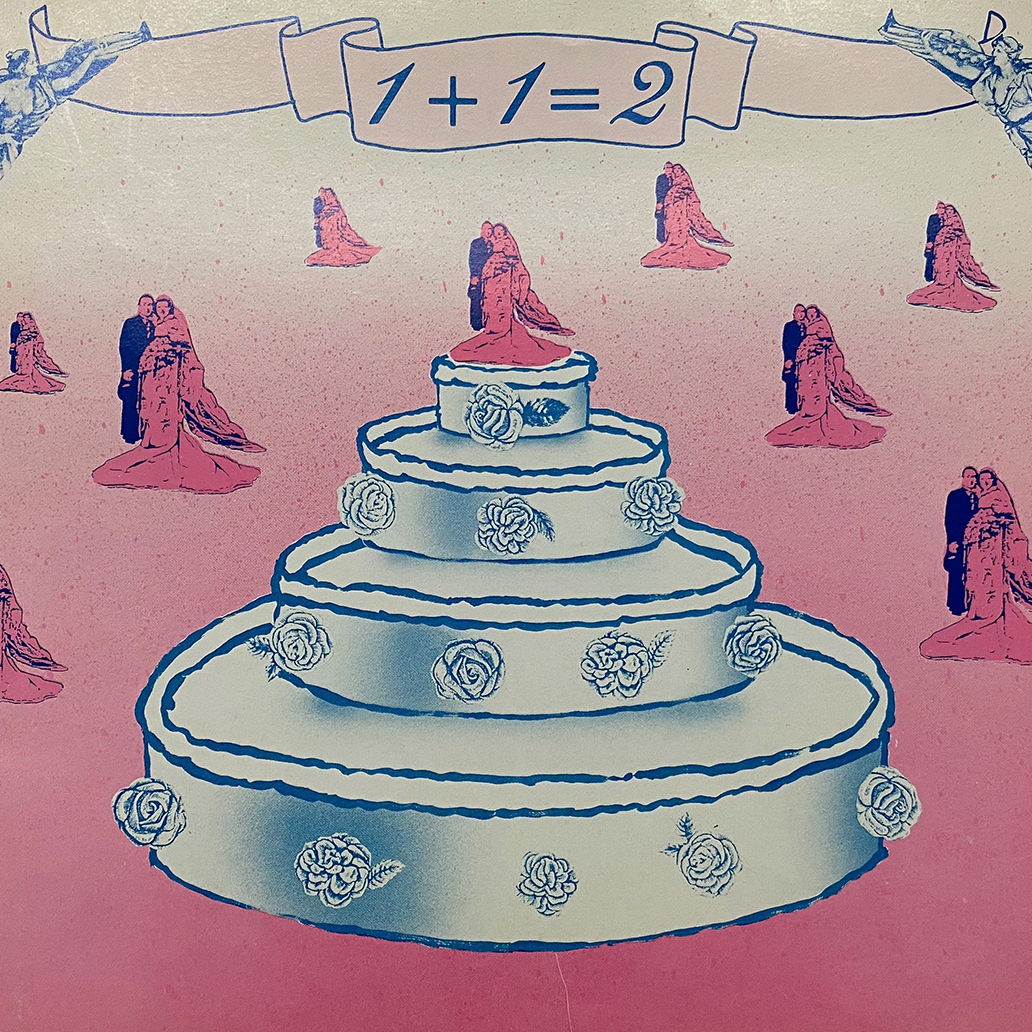
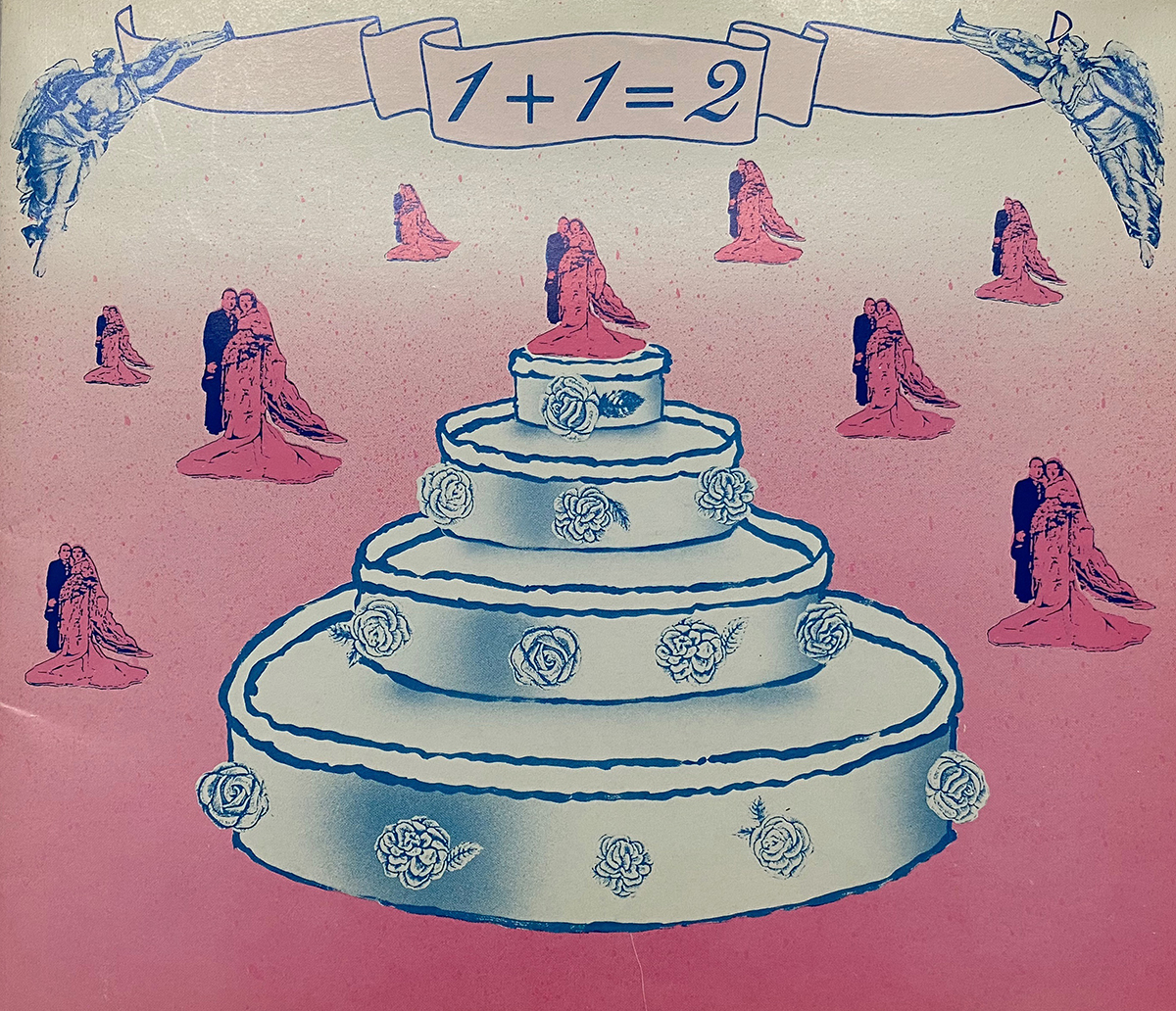
L to R: “1+1=2” exhibition catalogue, 1984 | Review of “1+1=2” show in “The New York Times,” February 17, 1984. Woodman Family Foundation Archives.
"1+1=2" exhibition catalogue, 1984. Woodman Family Foundation Archives.
Betty and George Woodman in "1+1=2" exhibition at Bernice Steinbaum Gallery, 1984
In 1984, following a series of exhibitions at PS1 dedicated to “Art Couples,” art historian and critic Donald Kuspit organized "1 + 1 = 2" at Bernice Steinbaum Gallery in Manhattan. The exhibition paired the work of 31 artist couples and acknowledged a long-overdue cultural shift in recognizing women artists as peers to their male counterparts. Betty Woodman and George Woodman—included in the exhibition and married for more than thirty years at that point—often credited their mutual respect for and support of each other as artists as the bedrock of their marriage.
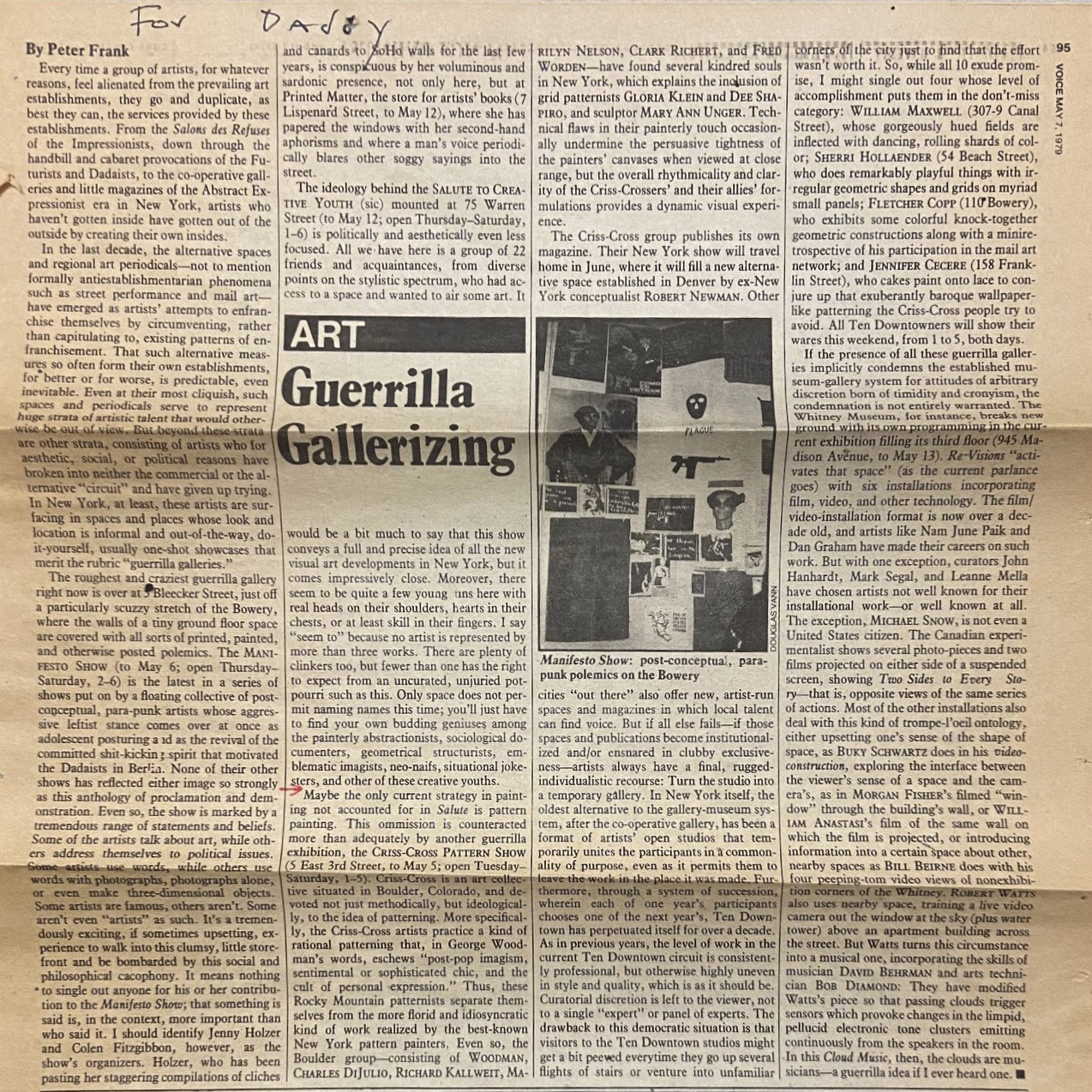

L to R: “Guerilla Gallerizing” review by Peter Frank in “The Village Voice,” May 7, 1979 | George Woodman. "Untitled," c. 1975-77. 67 x 67 in. Acrylic on canvas © Woodman Family Foundation / Artists Rights Society (ARS), New York. Woodman Family Foundation Archives
"Guerilla Gallerizing” review by Peter Frank in “The Village Voice,” May 7, 1979. Woodman Family Foundation Archives.
George Woodman review by Peter Frank in "The Village Voice," May 7, 1979
In May of 1979, George Woodman received this review from “The Village Voice” in the mail, clipped and sent to him by his daughter Francesca. It was addressed in her hand “For Daddy,” and pointed out where his work is discussed.
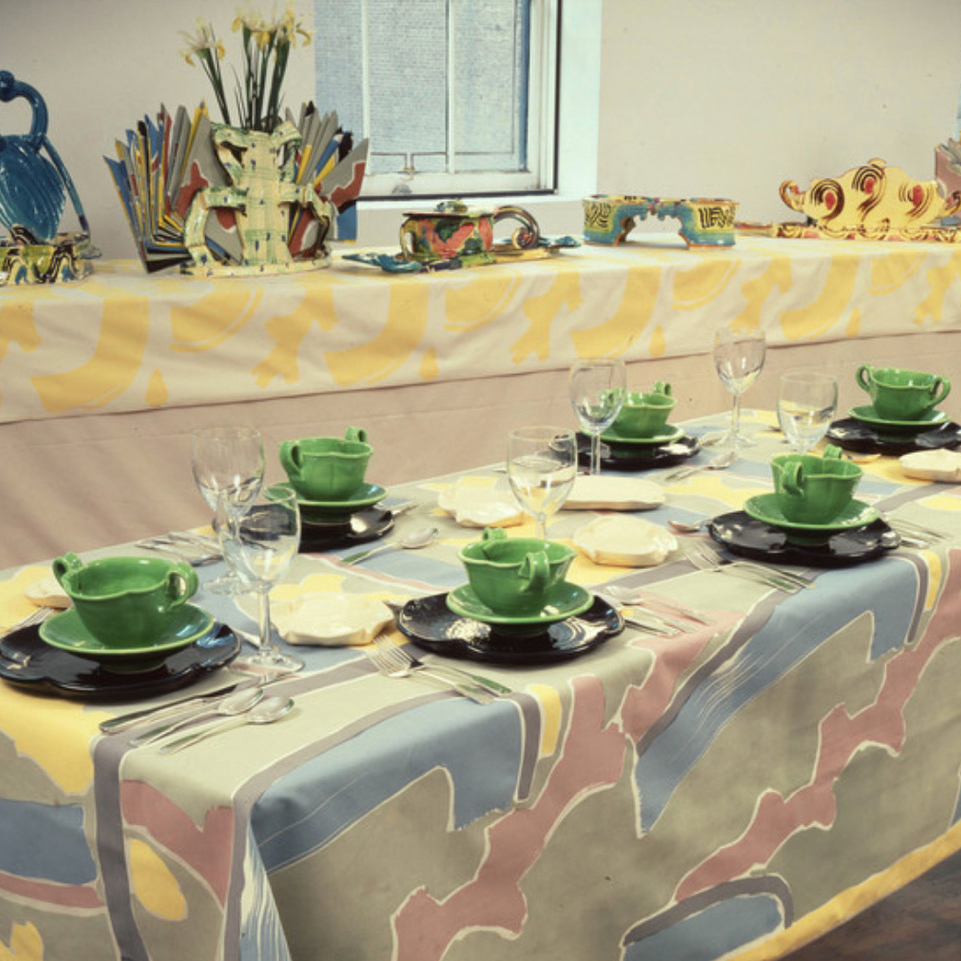
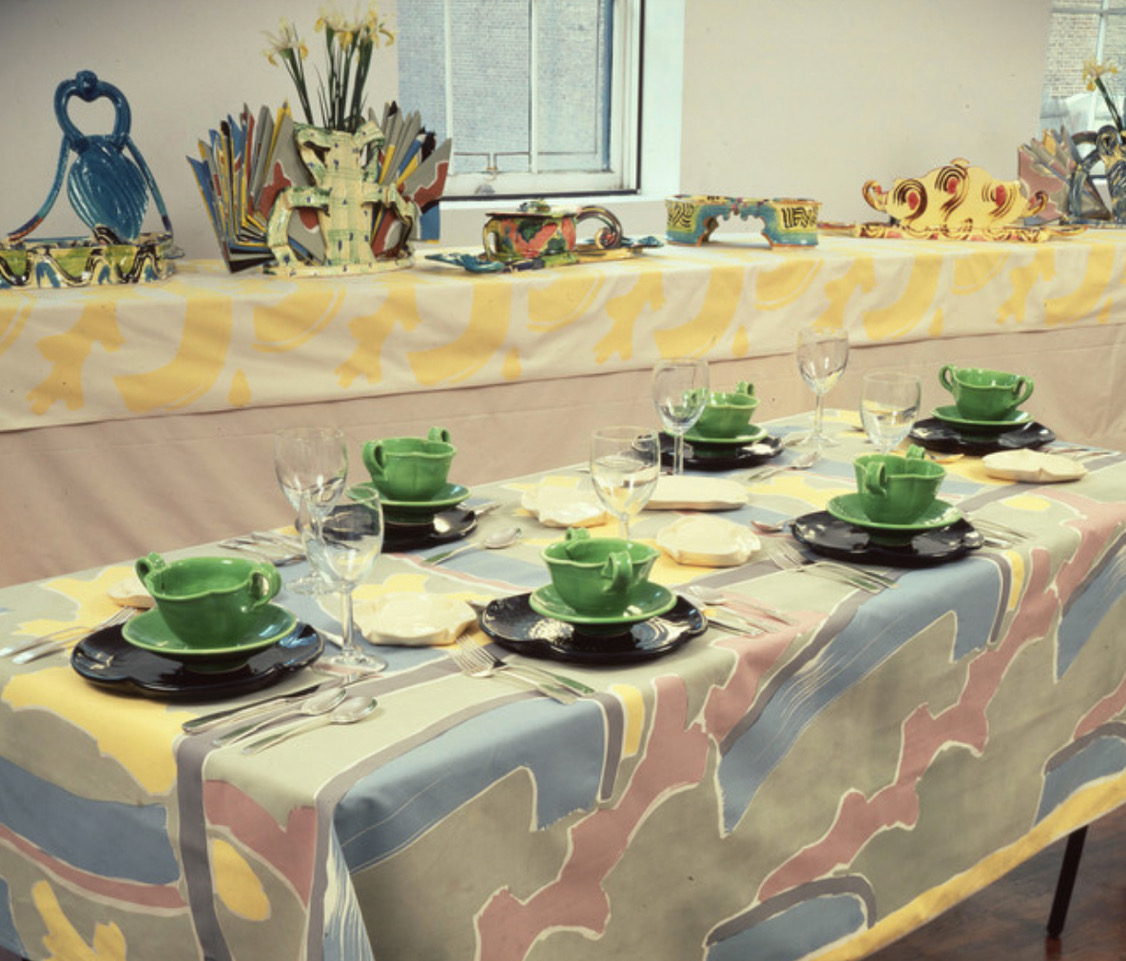
Betty Woodman. Presenting Food, 1985. Installation views at the Fabric Workshop, New York. First image courtesy Fabric Workshop and Museum.
Betty Woodman. "Presenting Food," 1985. Installation view at the Fabric Workshop, New York. Courtesy Fabric Workshop and Museum.
Betty Woodman's "Presenting Food" at The Fabric Workshop and Museum, Philadelphia, Pennsylvania, 1985
“Presenting Food,” 1985, marked Betty Woodman’s second project with the Fabric Workshop and Museum and a farewell to her work as a functional potter. For this dinner-performance event, held at the museum’s New York City gallery space, Woodman responded to chef Daniel Mattroce’s menu with her signature ceramic dinnerware and serving dishes, accompanied by fabrics she designed and printed at FWM’s Philadelphia studios. Woodman later recounted: “These are my last functional pieces, ‘presented’ like the food in an almost operatic finale.”
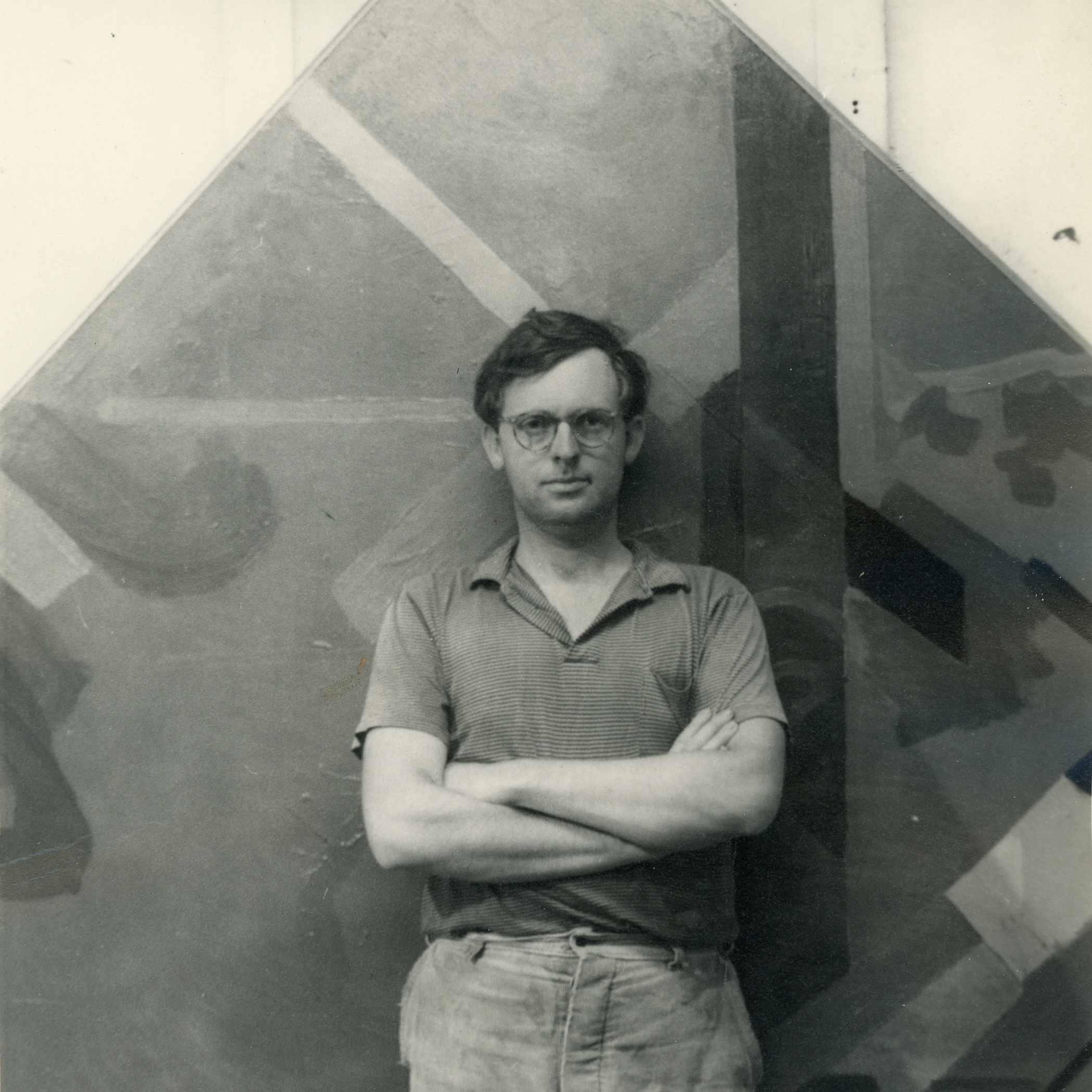
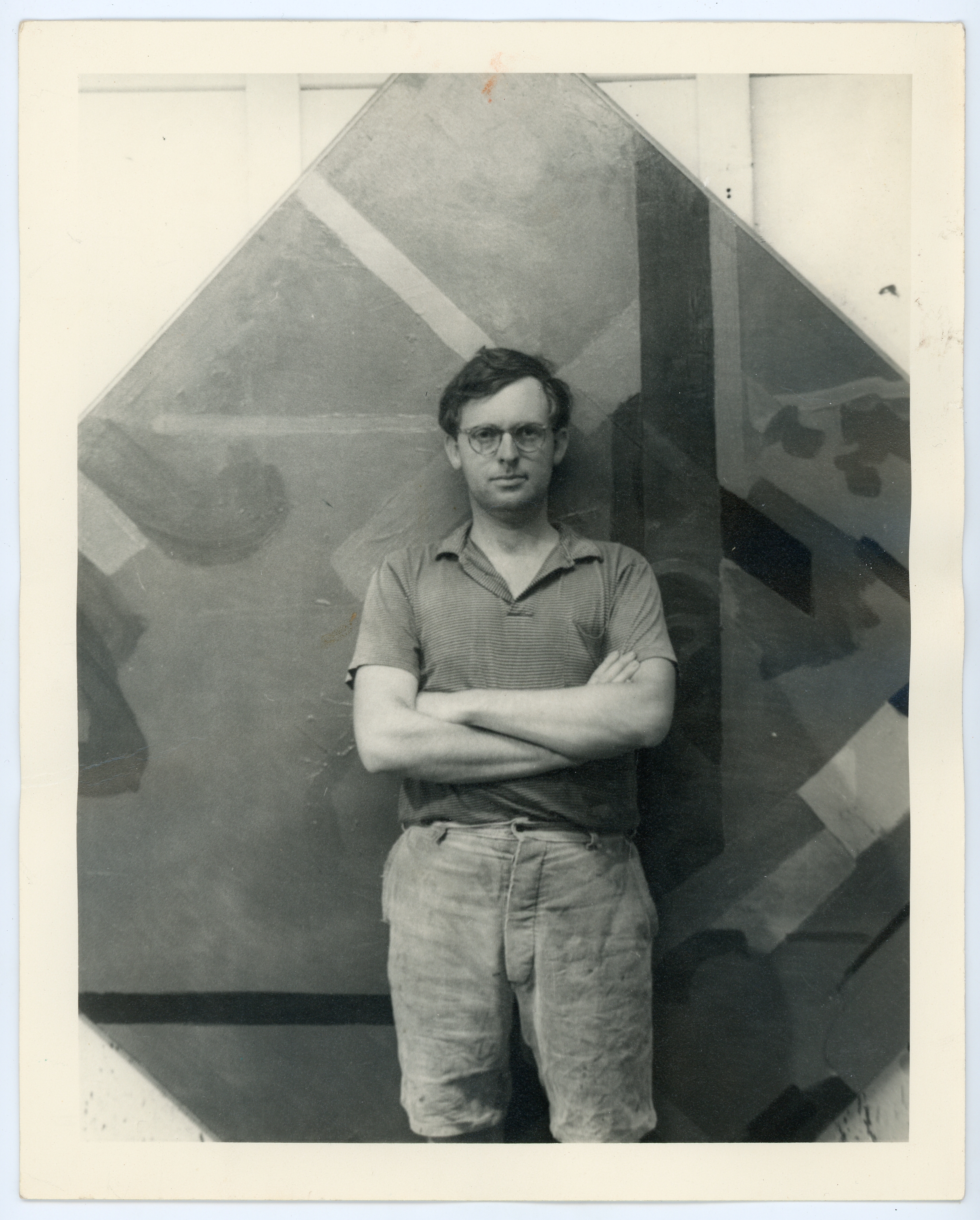
L to R: George Woodman with one of his early landscape paintings, c. 1962 | "Untitled," c. 1963. 70 x 70 in. Oil on canvas / "Untitled," c. 1961-62. 61 x 51 in. Oil on canvas | Artist statement, c. 1962. All works by George Woodman
George Woodman with one of his early landscape paintings, c 1962. Woodman Family Foundation Archives.
George Woodman’s early 1960s landscape paintings
George Woodman’s landscape paintings from the early 1960s were influenced by modernists from Cézanne to Diebenkorn and profoundly impacted by his year-long stay in Italy. “The landscape in Italy is not the same. Italy is not a natural object. The earth is shaped. The hillsides are terraced… I painted many more Italian landscapes in Boulder than I ever did in Italy."
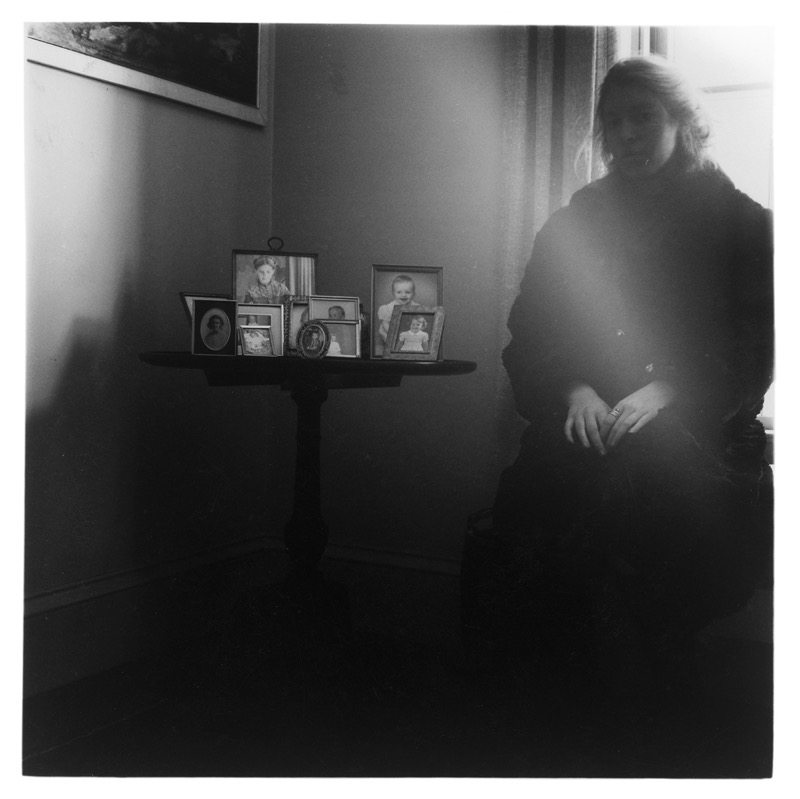
L to R: Front and back of letter from Francesca to George and Betty, April 1977 / Letter from George to Francesca, April 17, 1977. Woodman Family Foundation Archives.
Front of letter from Francesca to George and Betty, April 1977. Woodman Family Foundation Archives.
Letters exchanged between Francesca Woodman and George Woodman, April 1977
Francesca Woodman often used the backs of her photographs to write letters to family and friends, addressing, stamping and dropping her prints directly into the mailbox. In this exchange between her and George from April 1977, they discuss her first forays into fashion photography and other news from Providence and Boulder.
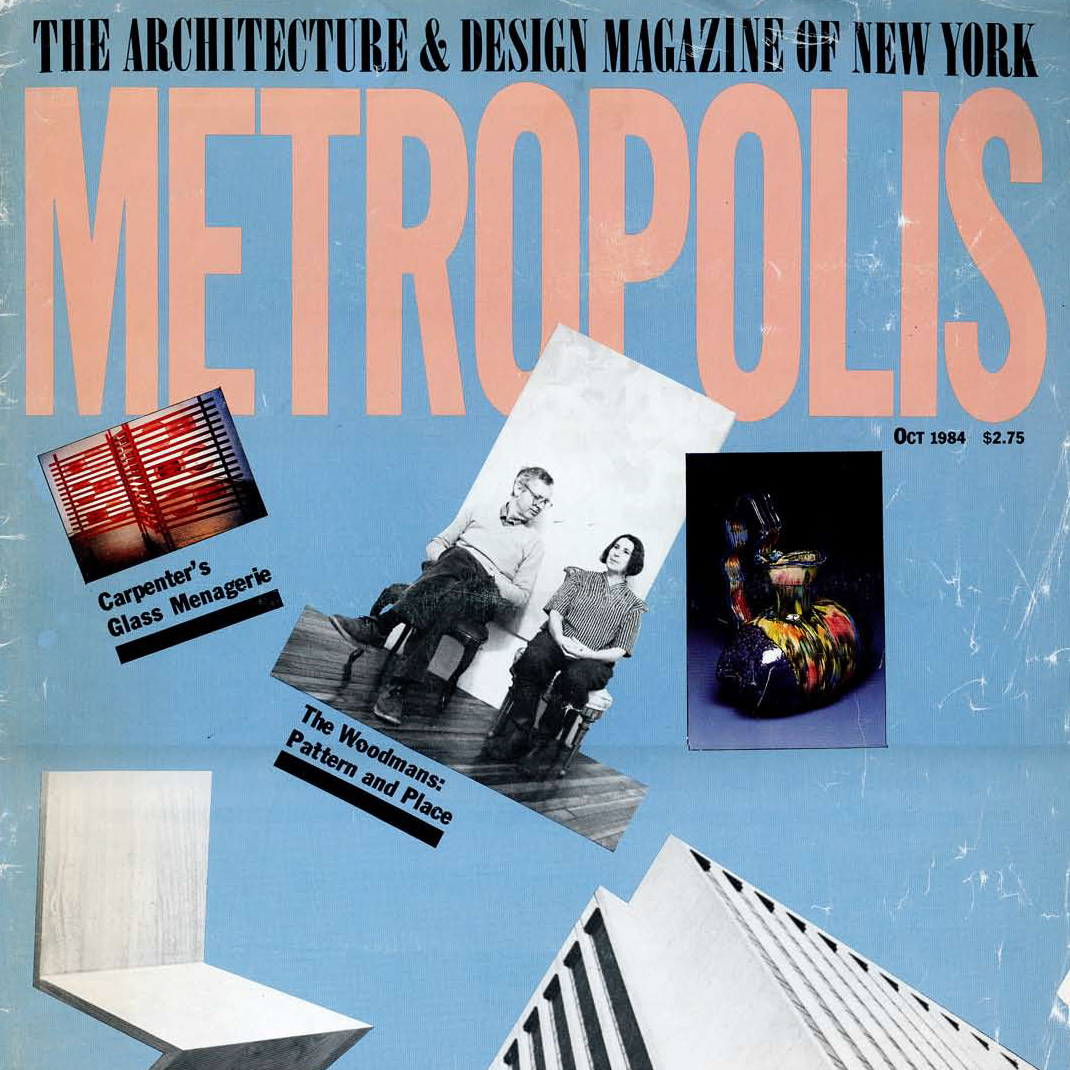
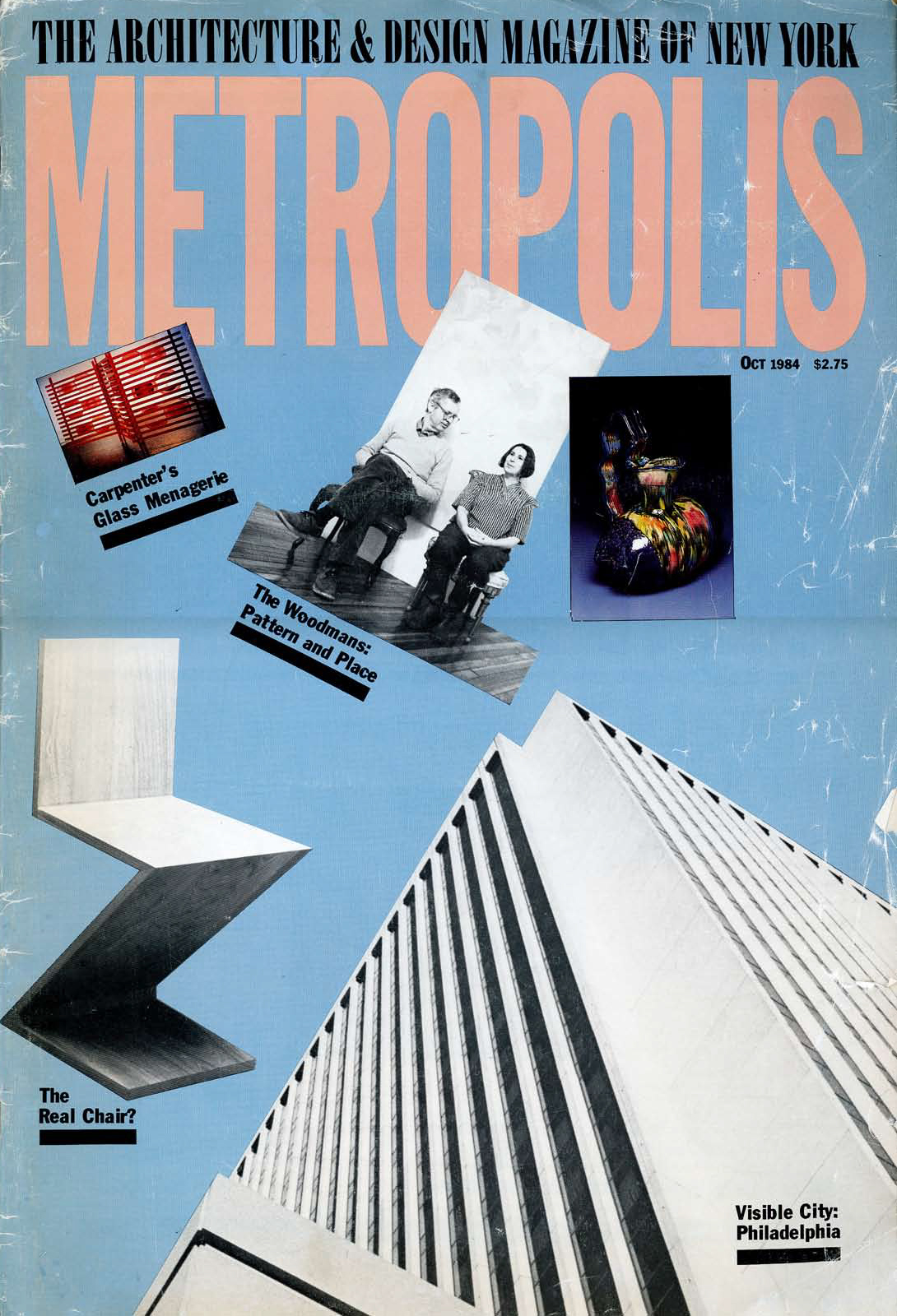
From “Pattern and Place,” by Gini Sikes, Metropolis, October 1984; pp. 17-19, 26.
Metropolis Magazine, October 1984. Woodman Family Foundation Archives.
Betty and George Woodman in Metropolis Magazine, October 1984
After acquiring a loft in New York City in 1980, Betty and George began to split their time between homes and studios in Manhattan, Boulder, Colorado and Antella, Italy—a way of living that became vital to their work. A 1984 feature on the couple in the magazine Metropolis chronicles their dynamic lives, relationship and art.
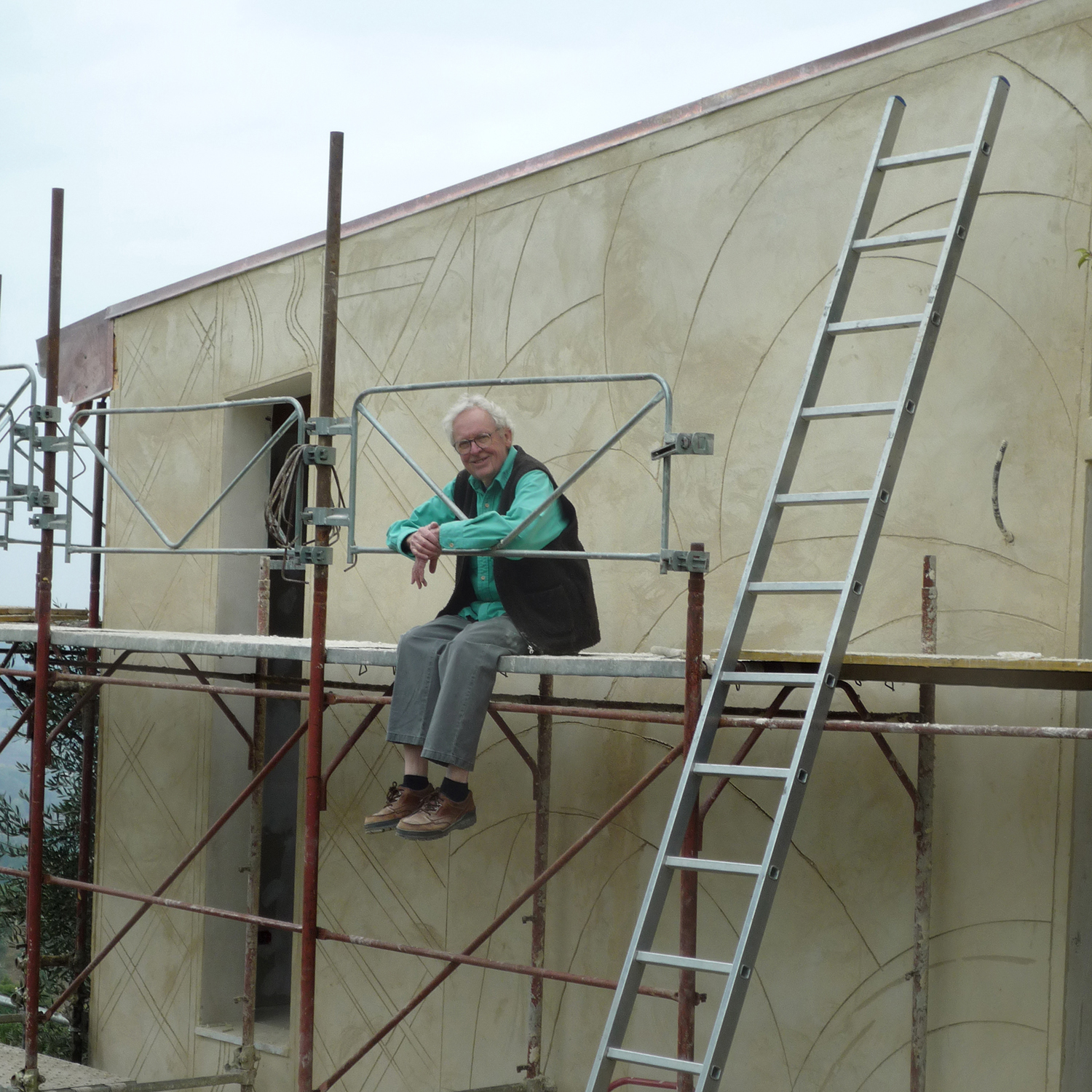
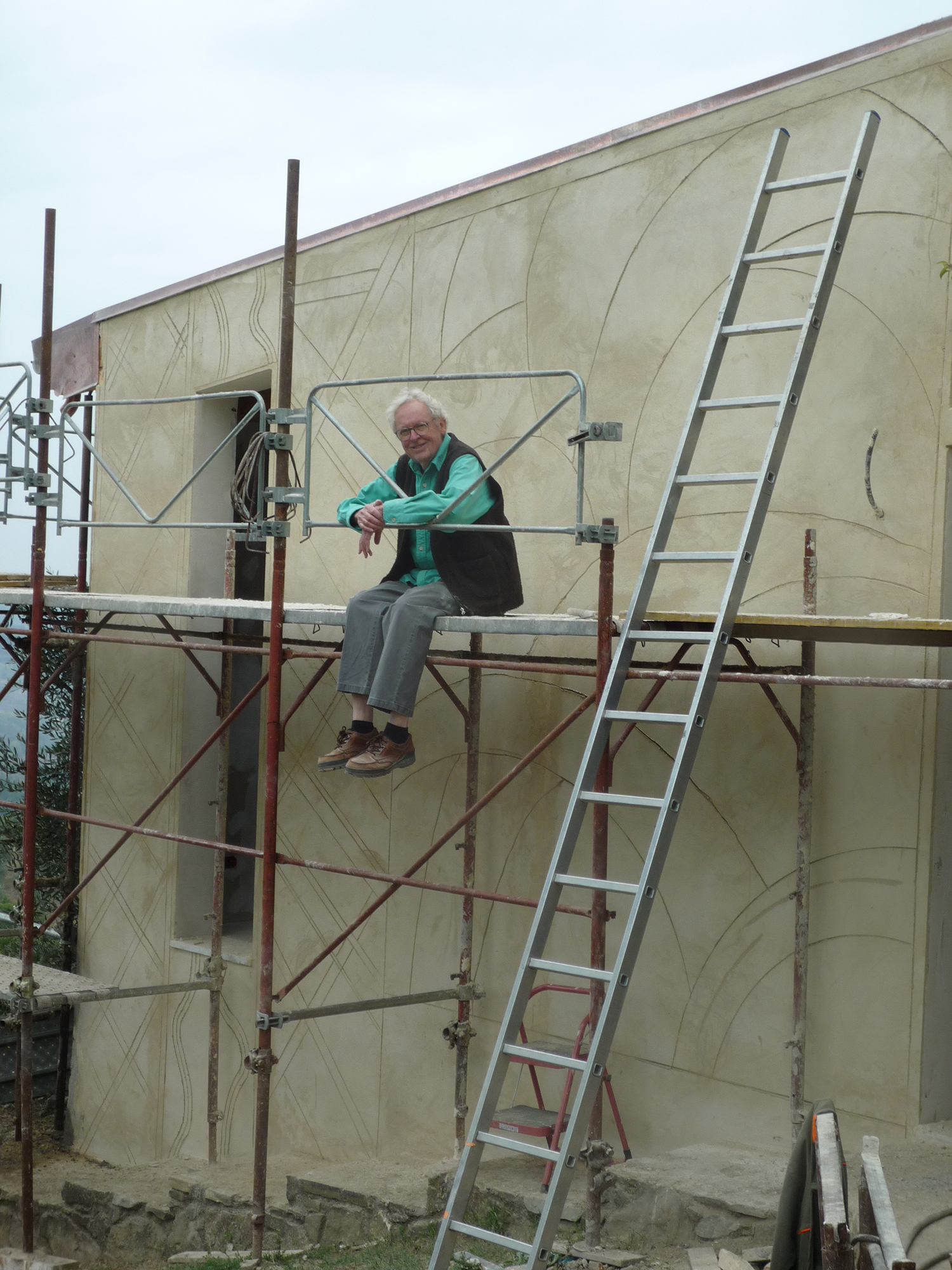
George Woodman’s studio in Antella, Italy. Images 1-5: Studio under construction, 2008. Image 6: Inside George’s studio, c. 2016. Image 7: George in his studio, 2009, photo by Stefano Porcinai.
George Woodman’s studio in Antella, Italy. Woodman Family Foundation Archives.
George Woodman’s renovated studio in Antella, Italy, 2008
A former wine cellar underneath the family's stone farmhouse in Antella, Italy was transformed in to a new photography and painting studio for George Woodman, with surrounding views of the Tuscan countryside.
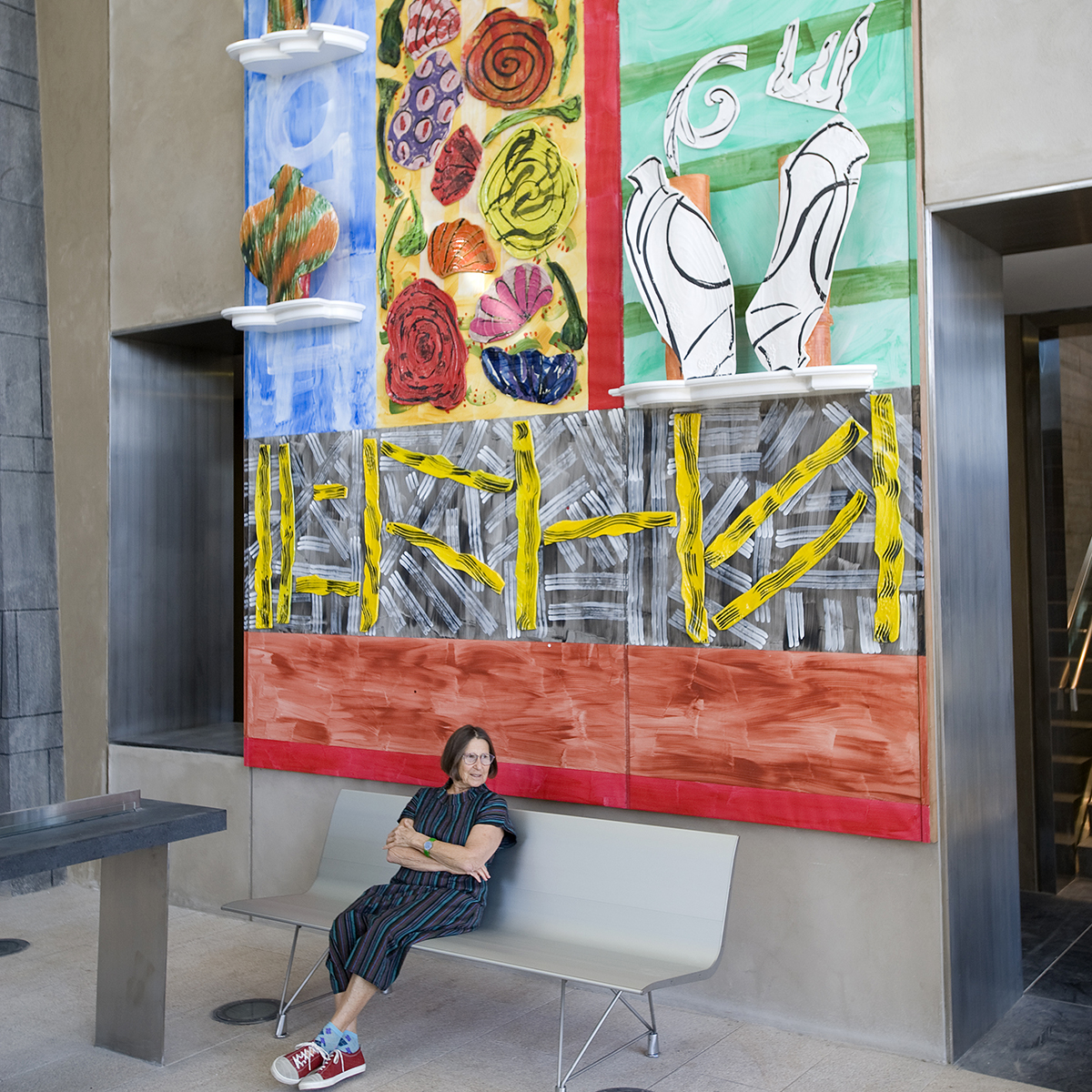

All images related to "Chinese Pleasure," 2007-2008, 27 x 12 x 1 feet, glazed earthenware, terra sigillatta, canvas. Images L to R: Betty Woodman / Proposal materials / Views of installation.
Betty Woodman with Chinese Pleasure (2007-2008) at the American Embassy in Beijing, 2008. Woodman Family Foundation Archives.
Betty Woodman’s permanent installation Chinese Pleasure at the United States Embassy in Beijing, China, 2007-2008
Betty Woodman’s "Chinese Pleasure" (2007-2008) was commissioned by the U.S. Department of State Art in Embassies Program for the United States Embassy in Beijing. Woodman was inspired by and freely borrowed from visual influences all over the world and throughout art history, here incorporating three distinct moments in the history of Chinese art, ranging from Sichuan bronzes to popular culture into this dramatic installation.
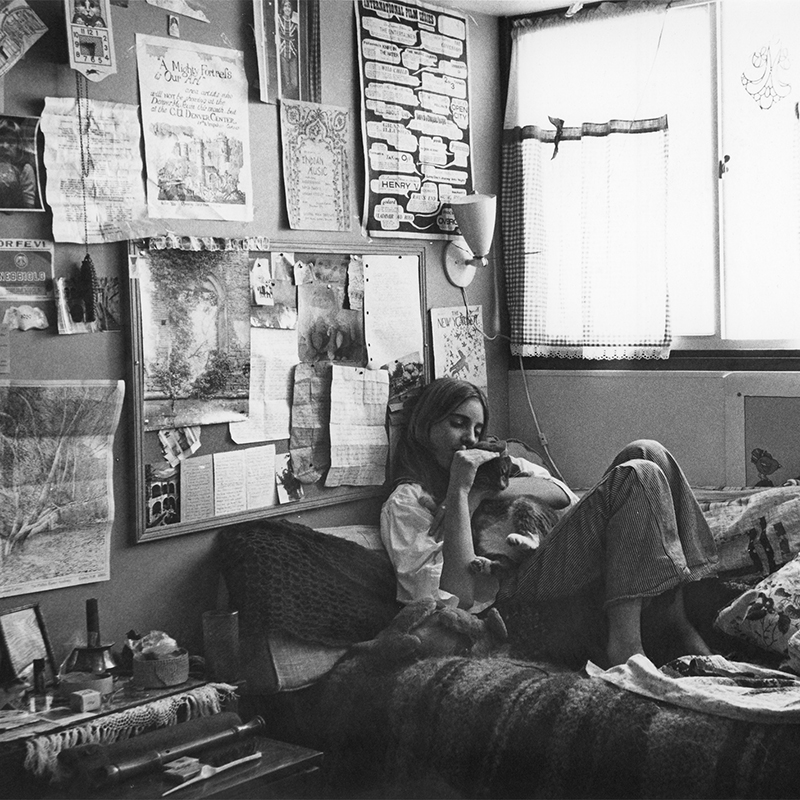
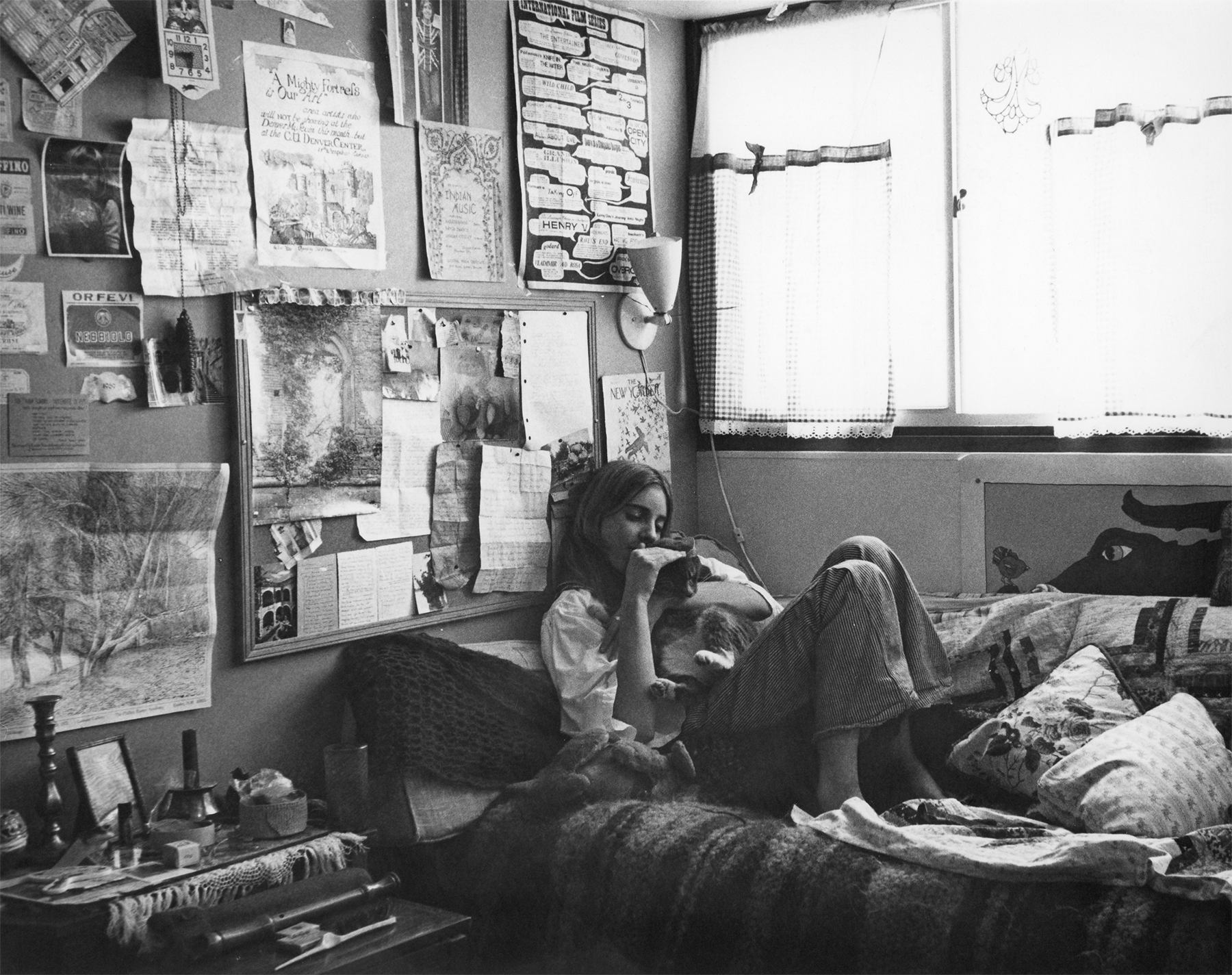
L to R: Francesca Woodman in her dorm room at Abbot Academy, Andover, MA, c. 1972-73. Academic and Advisor Reports from Wendy Snyder MacNeil, Abbot Academy, 1972-1973.
Francesca Woodman in her dorm room at Abbot Academy, Andover, Massachusetts, c. 1972-73. Woodman Family Foundation Archives.
Francesca Woodman at Abbott Academy, 1972-1973
From 1972-1973, Francesca Woodman studied at Abbot Academy, one of the few high schools in the US at the time to offer a concentrated art program. It was there that Francesca met Wendy Snyder MacNeil, her earliest, highly influential teacher who introduced her to the creative and expressive capabilities of photography.
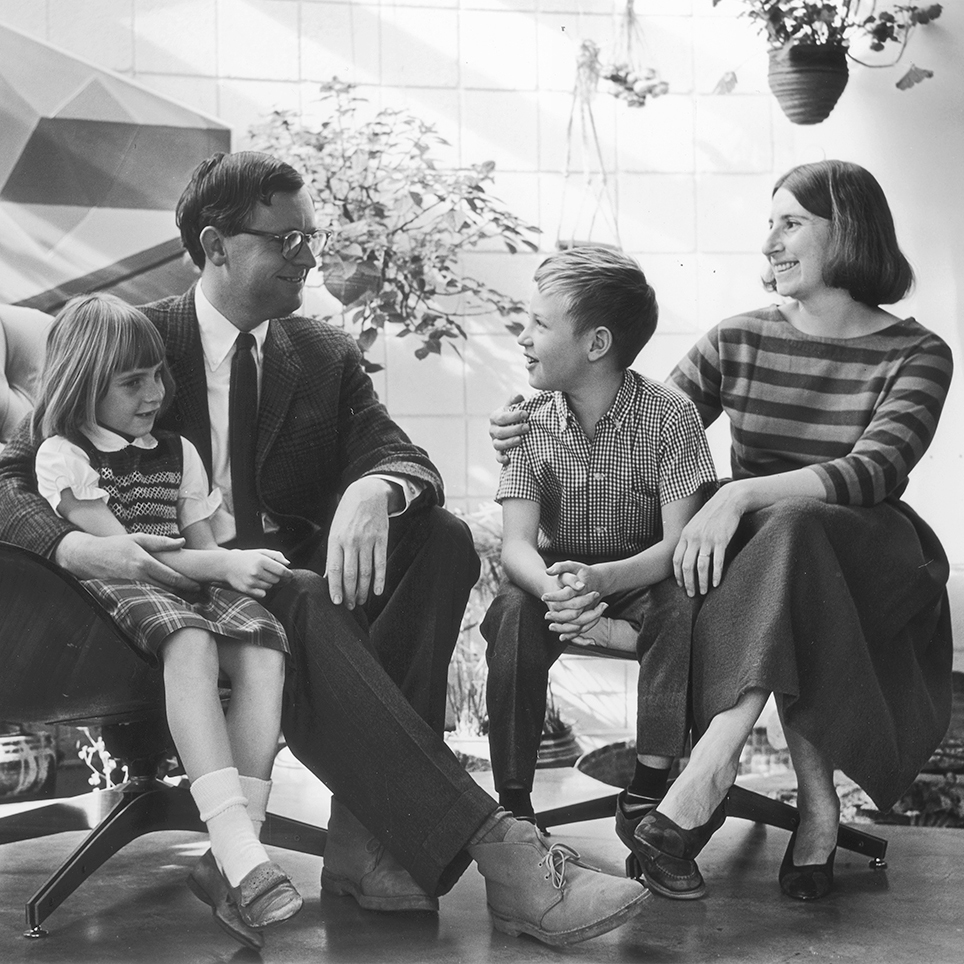
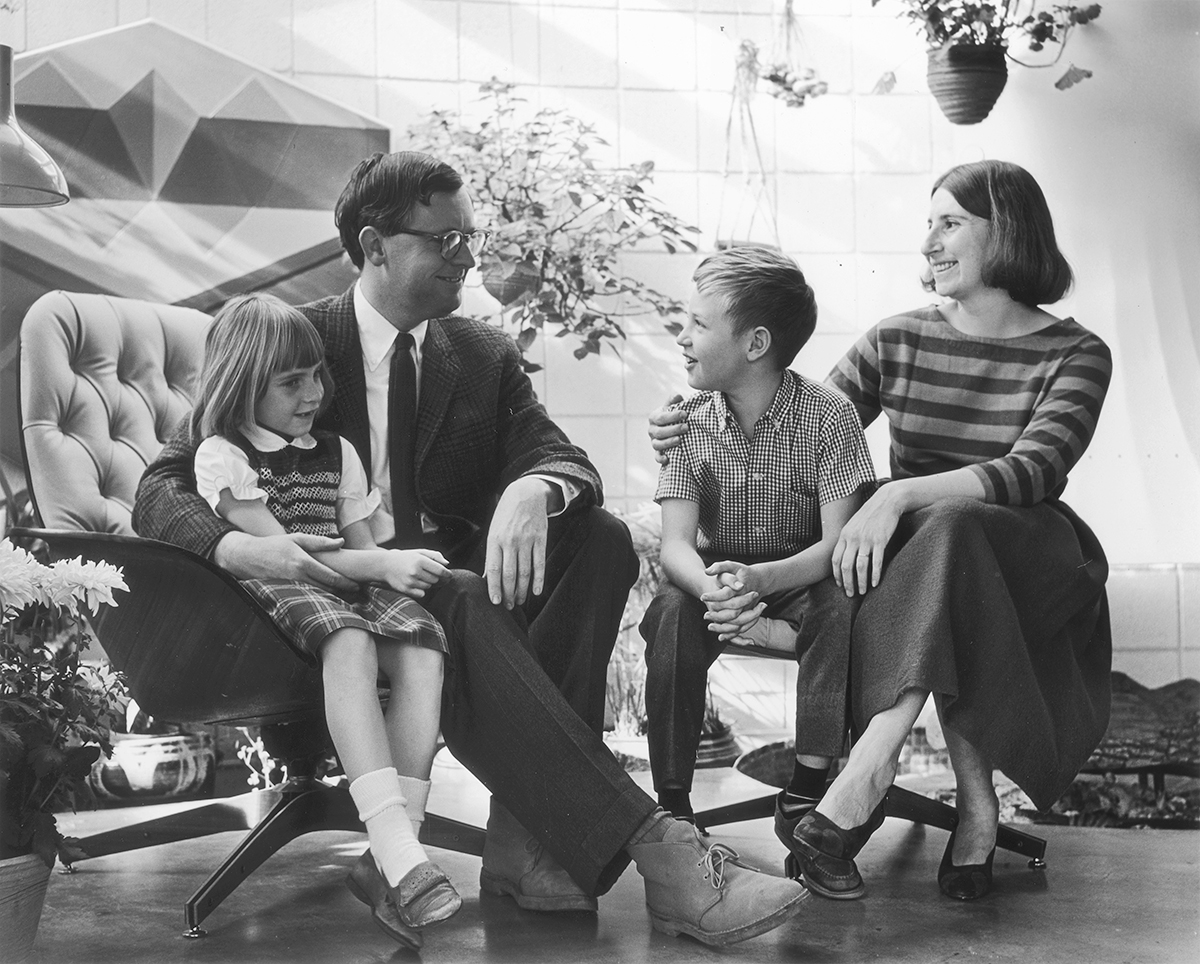
L to R: The Woodman family at home in Boulder, Colorado, circa 1963 / Sirotkin House, designed by Tician Papachristou, 1959, Boulder, Colorado, courtesy M. Gerwing Architects / Images 3-7: Interior and exterior views of the Woodman family home in the Sirotkin House, circa 1960s / Baskets in Betty’s studio before one of her twice-yearly sales.
The Woodman family at home in Boulder, Colorado, c. 1963. Woodman Family Foundation Archives.
The Woodmans in Boulder, Colorado, 1960s
In 1960, after returning to Boulder, Colorado, from their first year together in Italy, the Woodman family moved into the Sirotkin House. One of more than a dozen modernist homes in Boulder by architect Tician Papachristou, the house was designed for the original owner as a pair with the house next door.

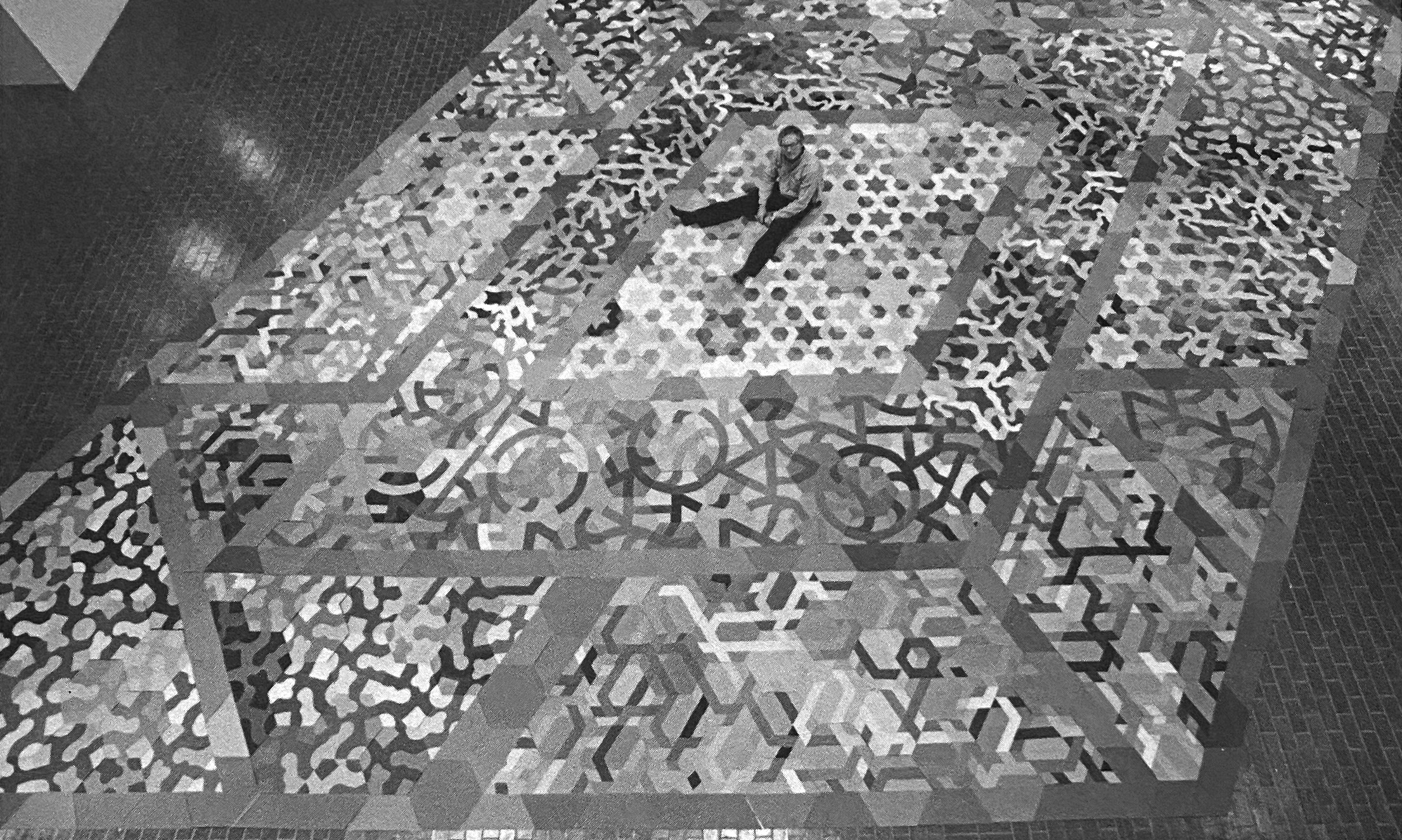
All images related to George Woodman, The Rochester Carpet, 1984, Bevier Gallery, RIT, Rochester, NY. L to R: Installation view with the artist / Installation view / Students sorting patterns before painting / Pages from the artist's instructions / article in the Times-Union, Rochester, NY, December 6, 1984.
Installation view, George Woodman, "The Rochester Carpet," 1984, Bevier Gallery, RIT, Rochester, NY. Woodman Family Foundation Archives.
George Woodman’s paper tile installation at Rochester Institute of Technology, December 1984
George Woodman’s "The Rochester Carpet" was a sprawling, patterned mosaic temporarily covering the floor of the Bevier Gallery at Rochester Institute of Technology in December of 1984. This site-specific work was just one of the artist’s ambitious and encompassing tile projects, extending his earlier practice as an abstract painter by employing complex systems of pattern and color across public spaces.
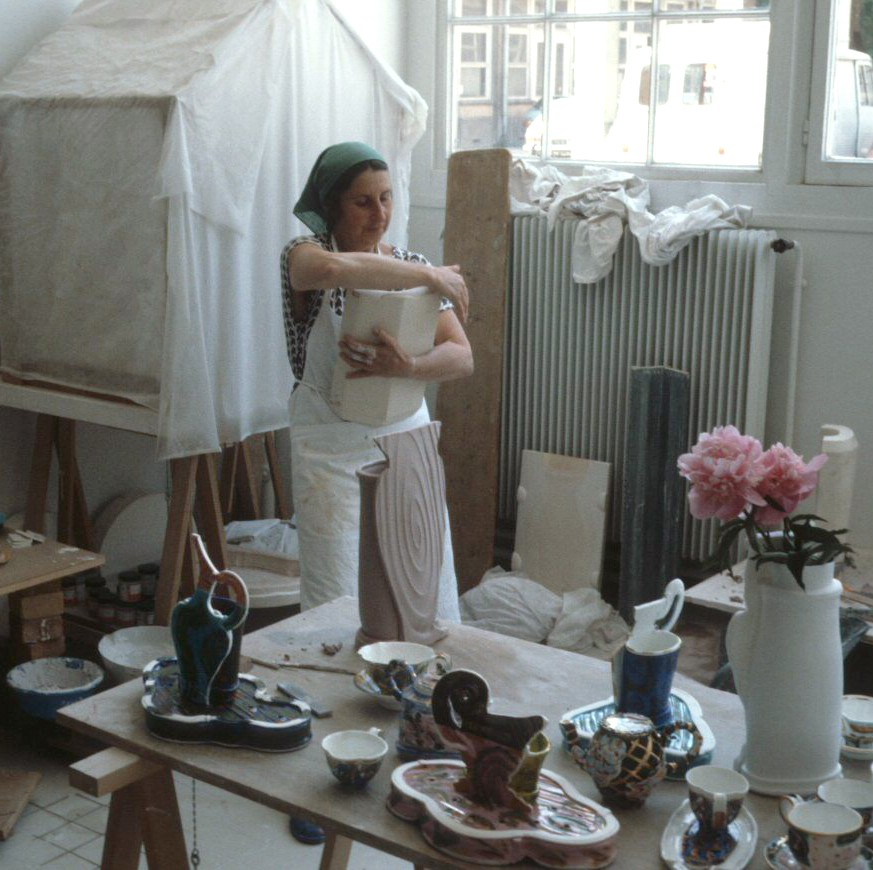
L to R: Betty Woodman working at the Manufacture nationale de Sèvres, France, c. 1987 / Installation views, Betty Woodman: L’allegra vitalità delle porcellane, Palazzo Pitti, Museo delle Porcelane, Florence, Italy, 2010 / Betty Woodman. Puccini, 1989. 6 x 13.2 x 8.274 in. Glazed porcelain / Betty Woodman. Beccafumi, 2002. 8.9 x 7.9 x 8.2 in. Glazed porcelain © Woodman Family Foundation / Artists Rights Society (ARS), New York
Betty Woodman working at the Manufacture nationale de Sèvres, France, c. 1987. Woodman Family Foundation Archives.
Betty Woodman's Sèvres porcelain, 1987
In 1987, Betty Woodman began her work at the Manufacture nationale de Sèvres, as an artist invited by the French Ministry of Culture. Over the course of more than twenty years, she made a series of sculptural vases and cups and saucers in brilliantly decorated porcelain, later shown at the Palazzo Pitti in her adopted home city of Florence.
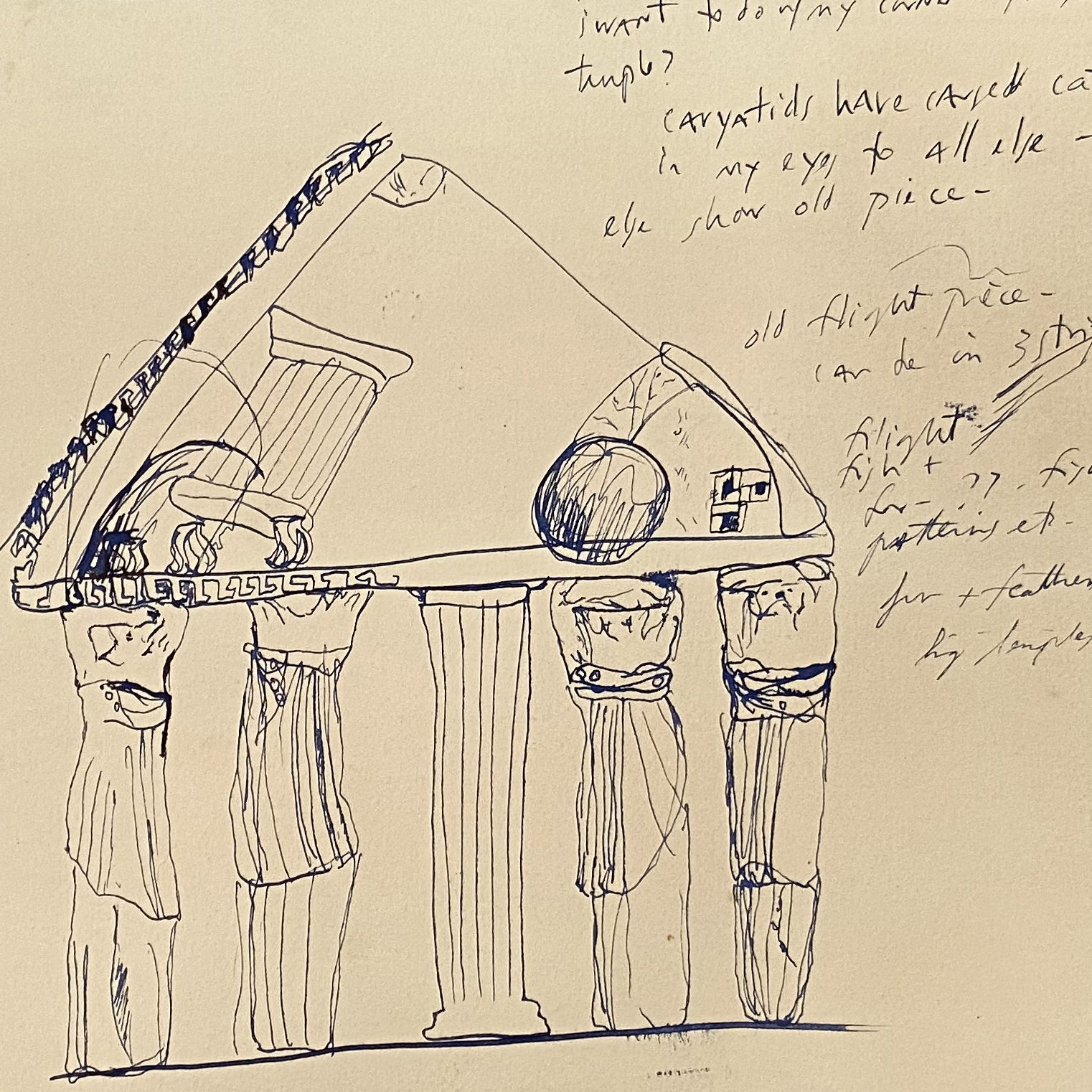

All images related to: Francesca Woodman. "Blueprint for a Temple (I) and (II)," 1980. L to R: Artist's sketches / Installation views, Alternative Museum (including Francesca and Betsy Berne) / 'Beyond Photography 80' exhibition catalogue, Alternative Museum / Installation view, 'Spies in the House of Art,' Metropolitan Museum of Art, 2012 / Diazotype collage, 173 1/4 x 111 3/16 in. / Diazotype, 24 1/2 x 18 in. / Diazotype, 24 1/2 x 18 1/4 in.
Francesca Woodman. Artist's sketch related to "Blueprint for a Temple (I) & (II)," 1980. Woodman Family Foundation Archives.
Francesca Woodman’s "Blueprint for a Temple (I) & (II)," 1980
In the spring of 1980, Francesca Woodman’s "Blueprint for a Temple (II)" was included in the exhibition "Beyond Photography 80" at the Alternative Museum in New York City.
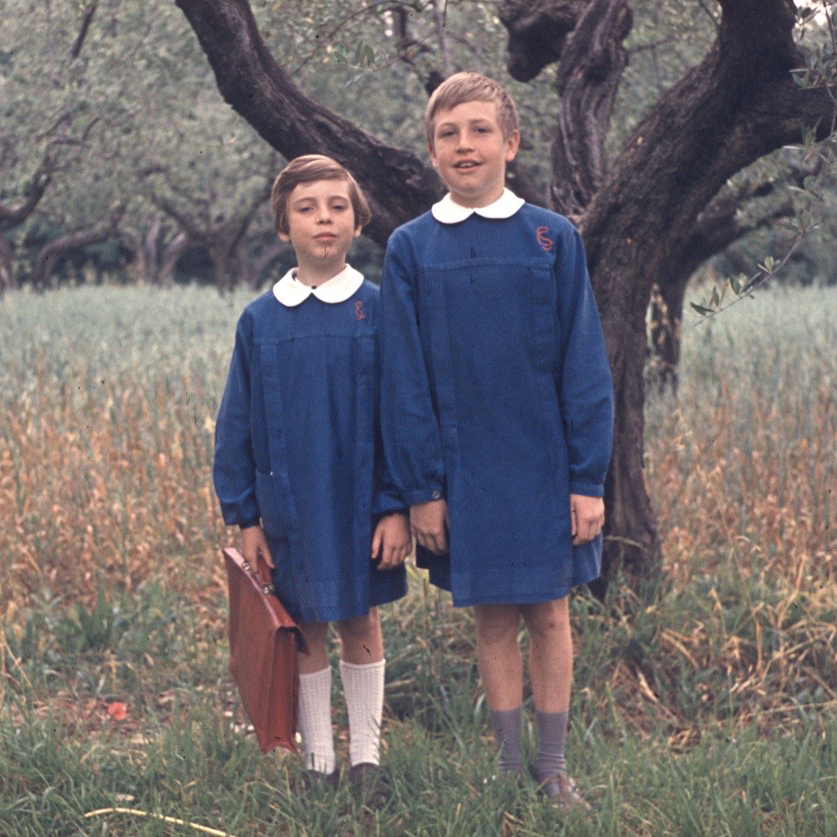

L to R: Francesca and Charlie in their grembiule (Italian school uniforms), c. 1965-66 / George Woodman’s studio in a 16th century building, Italy, c. 1965-66 / Betty Woodman in her studio, Italy, 1965 / Francesca drawing in an Italian museum, c. 1965-66 / Charlie and Betty at the market, c. 1965-66 / George, Francesca and Betty in Italy, c. 1965-66. Woodman Family Foundation Archives.
Francesca and Charlie in their grembiule (Italian school uniforms), c. 1965-66. Woodman Family Foundation Archives.
The Woodmans in Italy, 1960s
Beginning in 1965, Betty, George, Charlie and Francesca Woodman spent an influential year together as a family in Italy, immersed in museums, art, and culture. Their affinity for Florence took root, leading to the acquisition of a farmhouse in Antella several years later that has served as a family and creative nucleus ever since.
L to R: George Woodman’s studio space at Grand Arts, 2004 / Installation views at Grand Arts, 2004 / George Woodman. Chinese Chrysanthemums and the Chaos of Love, 2004. 64 1/4 x 39 1/4 in. Gelatin silver print / George Woodman. Ruth, Baby, Saskia, et al., 2004. 65 3/4 x 39 3/4 in. Gelatin silver print.
George Woodman’s studio space at Grand Arts, 2004. Woodman Family Foundation Archives
George Woodman’s residency at Grand Arts in Kansas City, Missouri, 2004
During his 2004 residency at Grand Arts in Kansas City, Missouri, George Woodman continued his work with one-of-a-kind, large-scale still life photographs, made using a camera obscura.
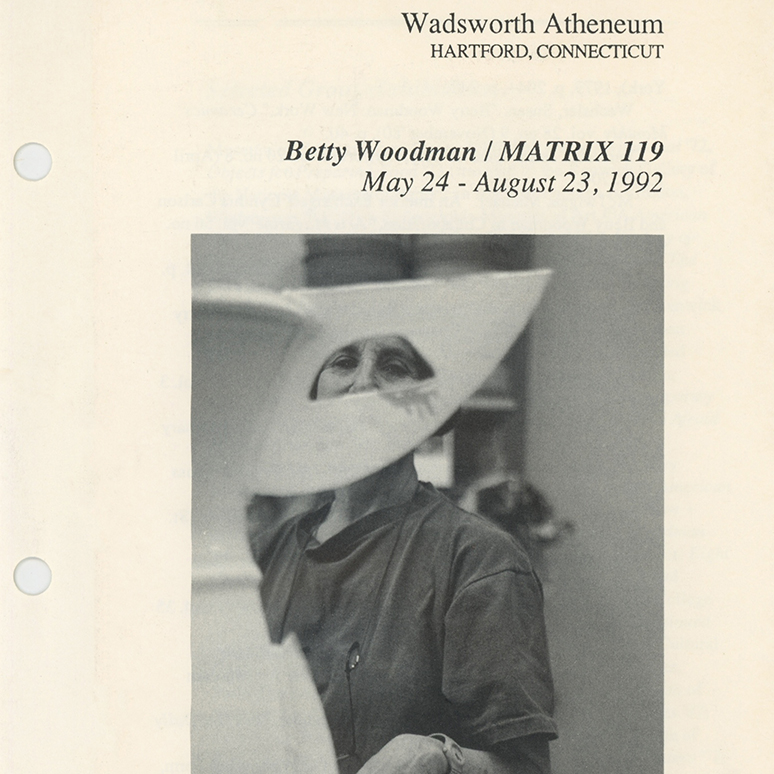
L to R: Brochure for Betty Woodman / MATRIX 119, Wadsworth Atheneum, Hartford, Connecticut, 1992 | Installation view from Betty Woodman / Matrix 119. "Etruscan Vases," 1965-1966, Wadsworth Atheneum, Hartford Connecticut, 1992.
Brochure for Betty Woodman / MATRIX 119, Wadsworth Atheneum, Hartford, Connecticut, 1992. Woodman Family Foundation Archives.
Betty Woodman at the Wadsworth Atheneum in Hartford, Connecticut, 1992
Betty Woodman's exhibition in the Matrix series at Wadsworth Atheneum in 1992 helped to define a context for her work in ceramics within the larger world of contemporary art, highlighting "that Woodman sees herself ‘dealing with painting as much as with sculpture.'"
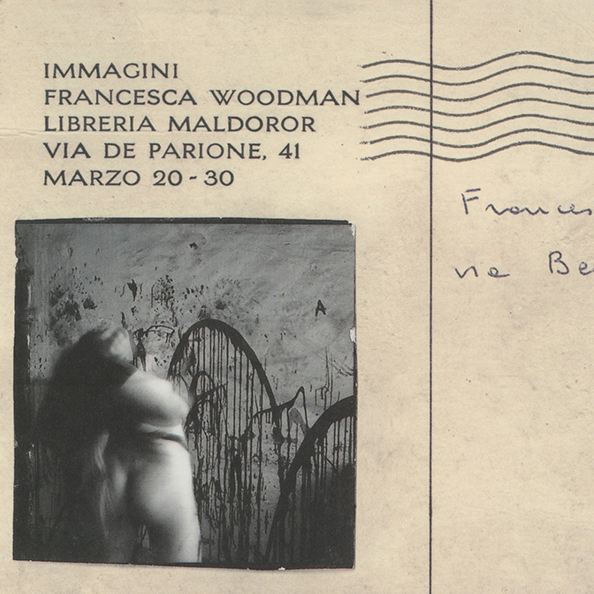
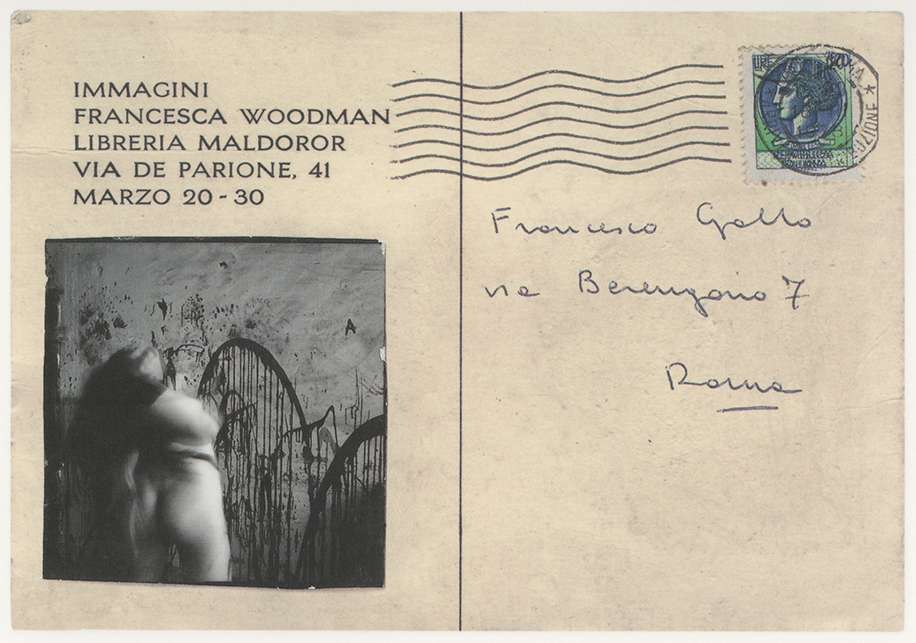
Invitation postcards by Francesca Woodman, Libreria Maldoror, Rome, Italy, 1978
Invitation postcards by Francesca Woodman, Libreria Maldoror, Rome, Italy, 1977
Not long after Francesca Woodman arrived in Rome in 1977 on the RISD European Honors Program, she discovered the surrealist bookshop Maldoror, where she later had her first solo exhibition in Europe. She made unique, individual invitations to the show, each featuring one of her photographs attached to a postcard.