Francesca Woodman
Gagosian, New York
March 13–April 27, 2024
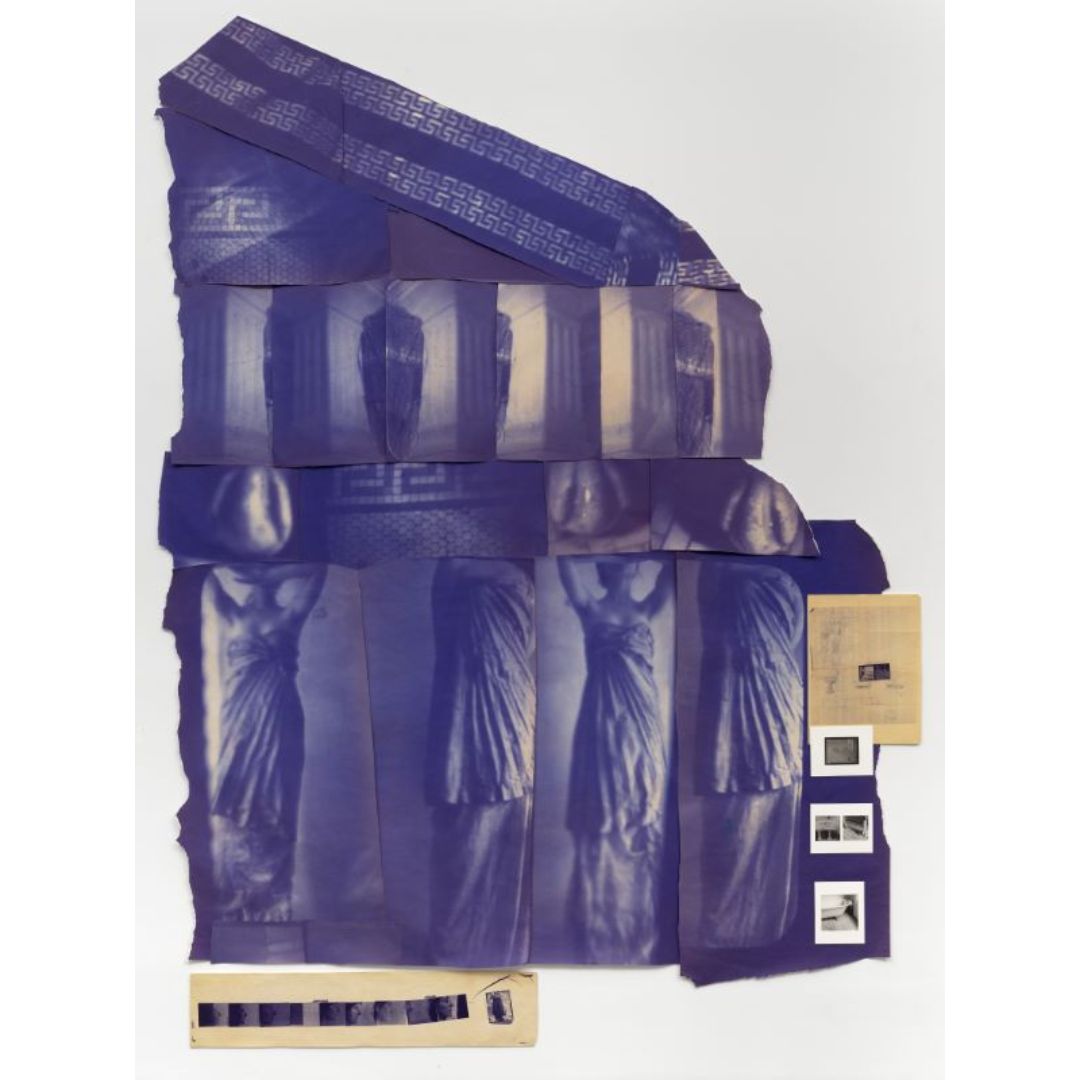
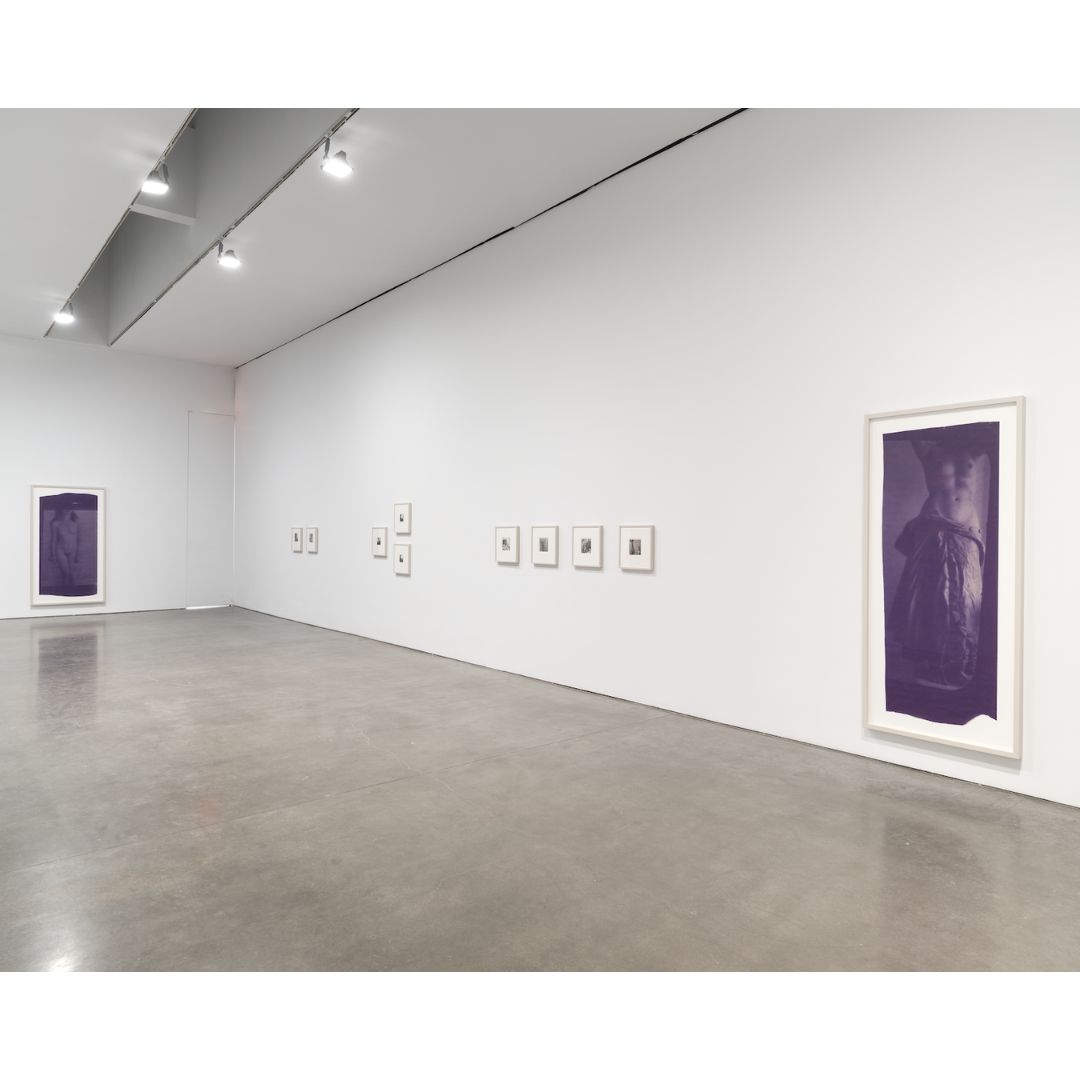
Gagosian's inaugural exhibition of works by Francesca Woodman featured more than fifty lifetime prints—many of which have not been previously exhibited—including Blueprint for a Temple (II) (1980), the largest work she accomplished.
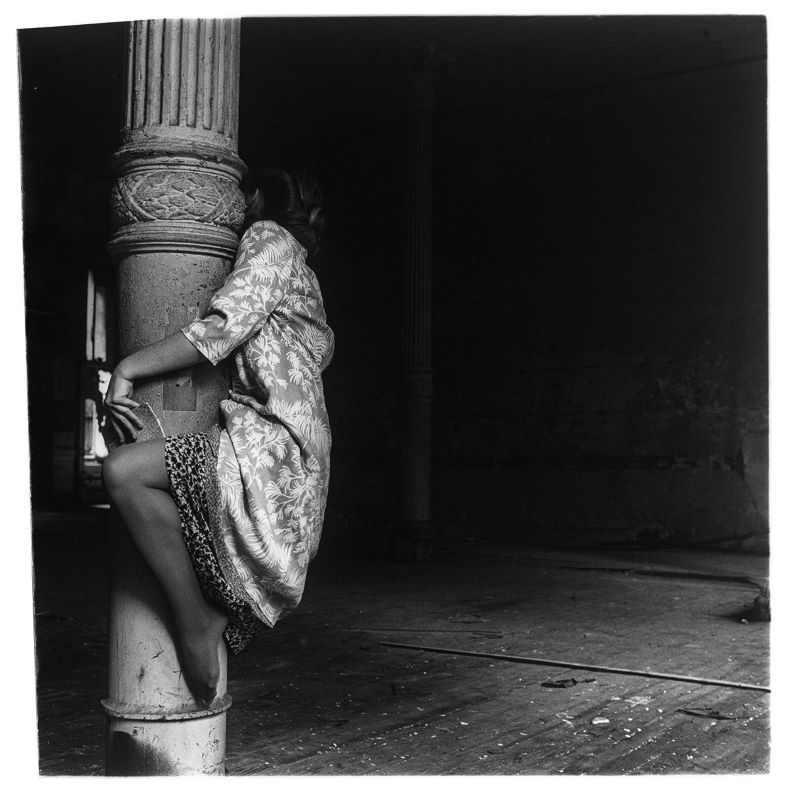
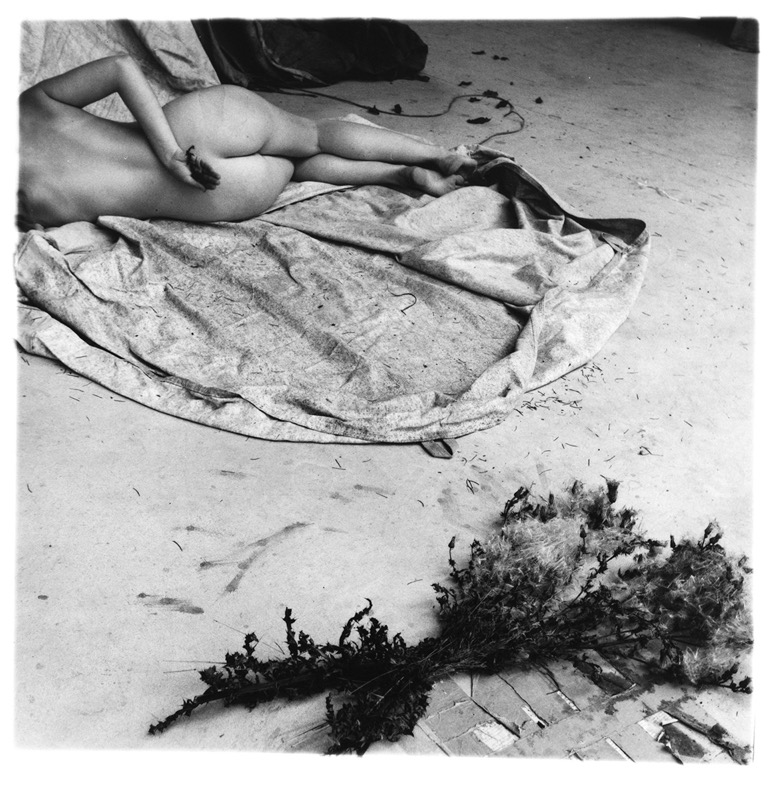
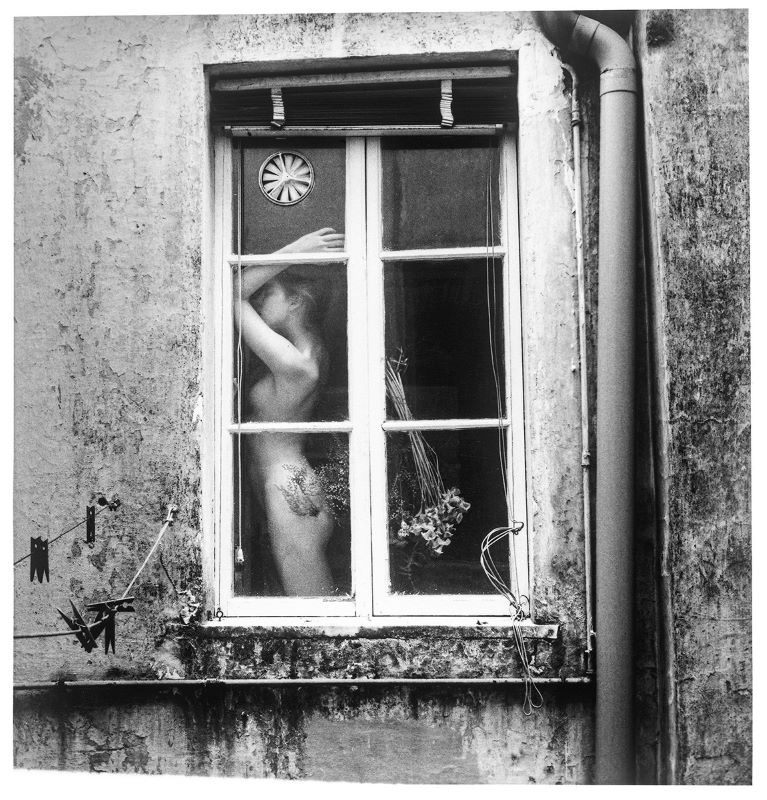
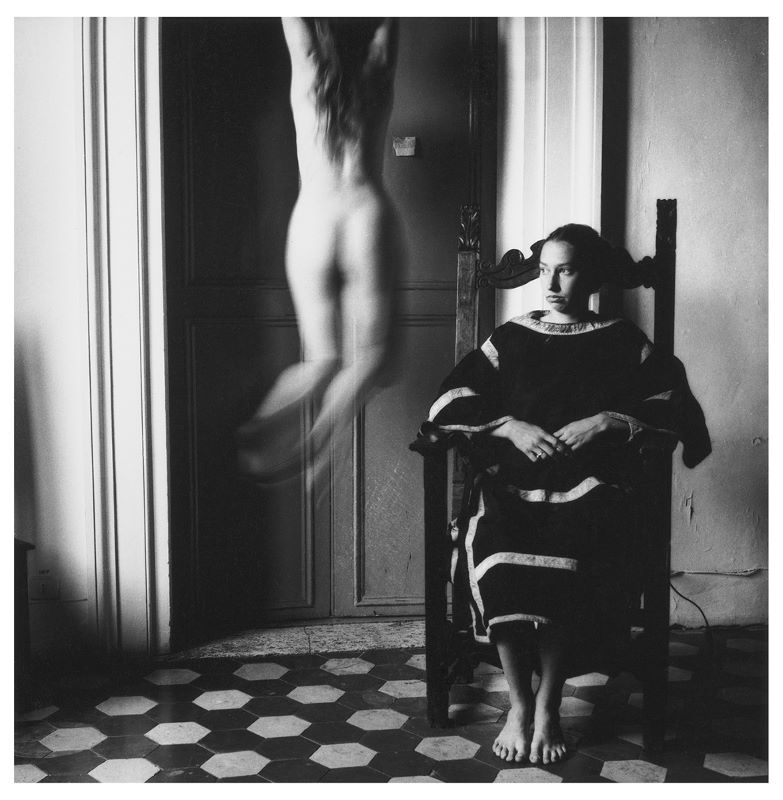
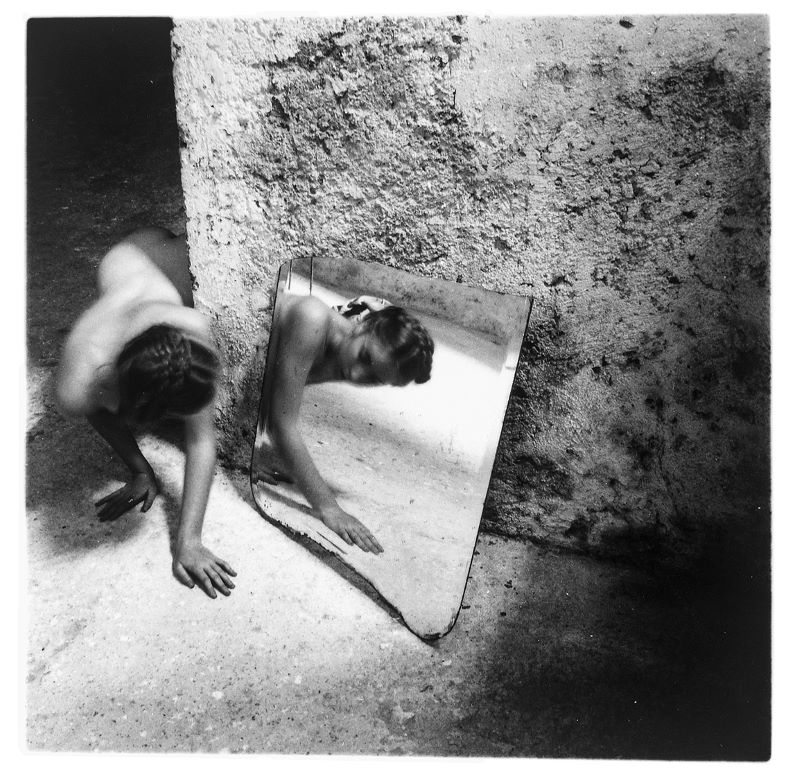
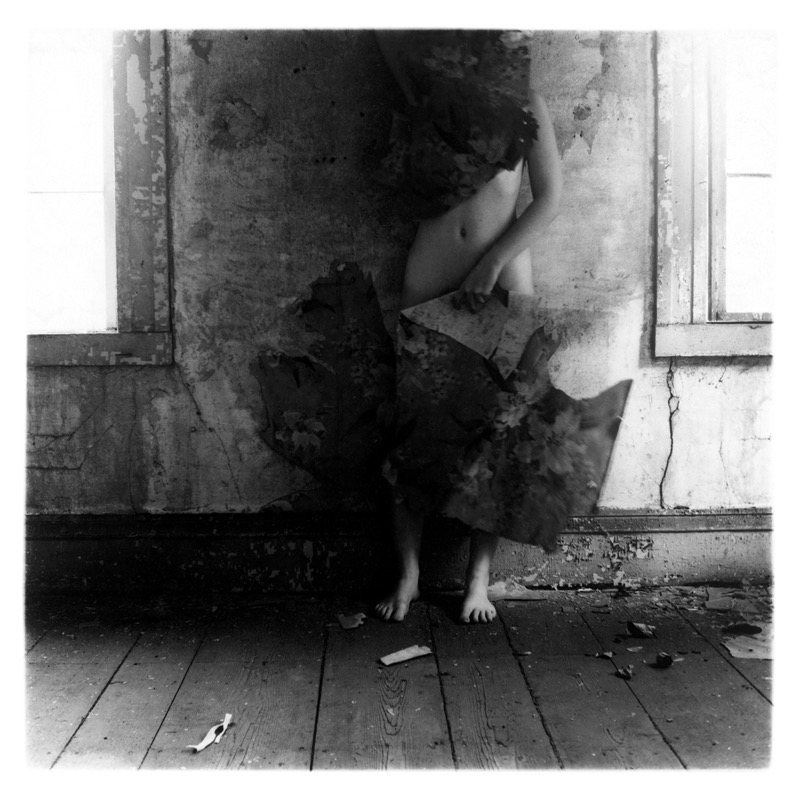
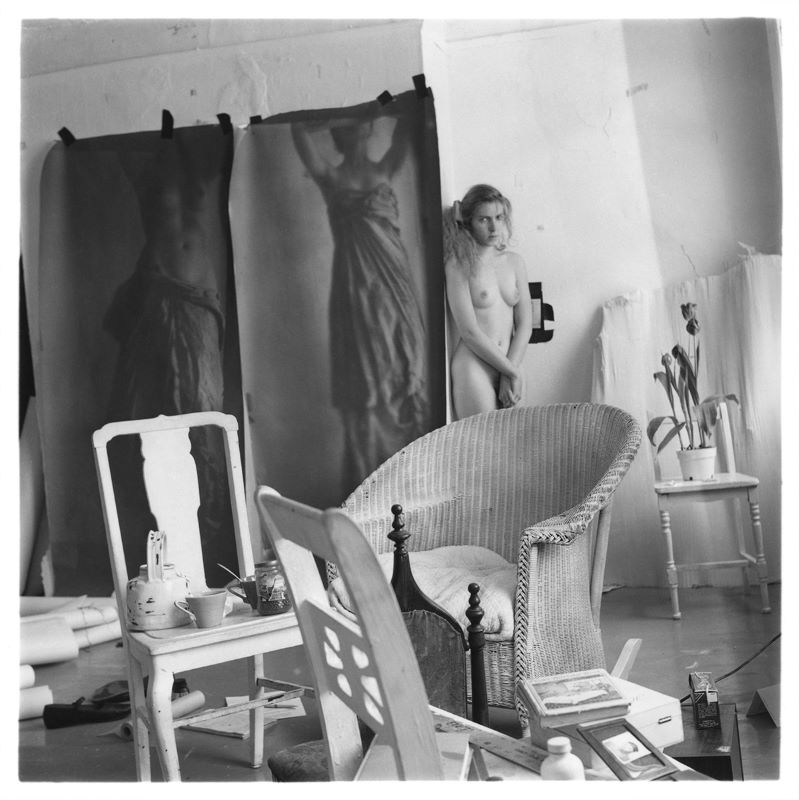
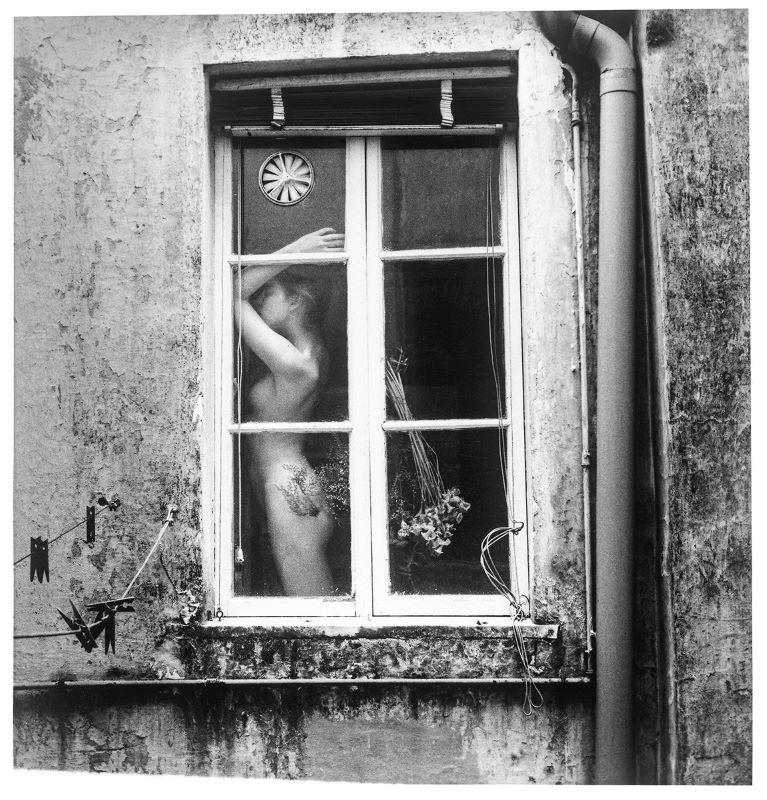
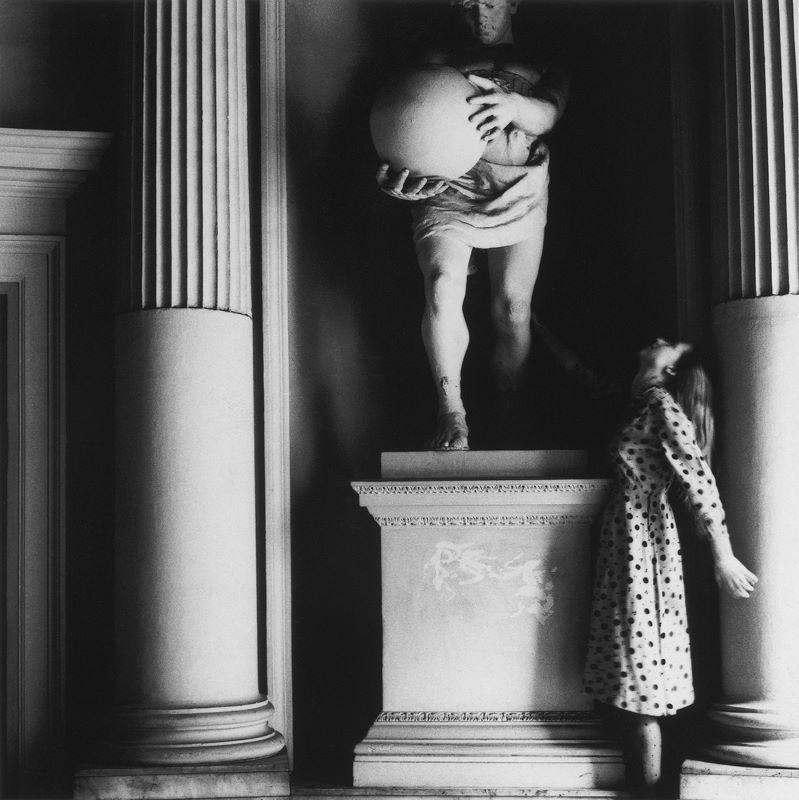
The exhibition presents key prints from approximately 1975 through 1980. Photographing in Providence, Rhode Island; Rome; Ravenna, Italy; and New York, Woodman situated herself and others within dilapidated interiors and ancient architecture to compose her tableaux. Using objects such as chairs and plinths along with architectural elements including doorways, walls, and windows, she staged contrasts with the performative presence of the figures, presenting the body itself as sculpture.
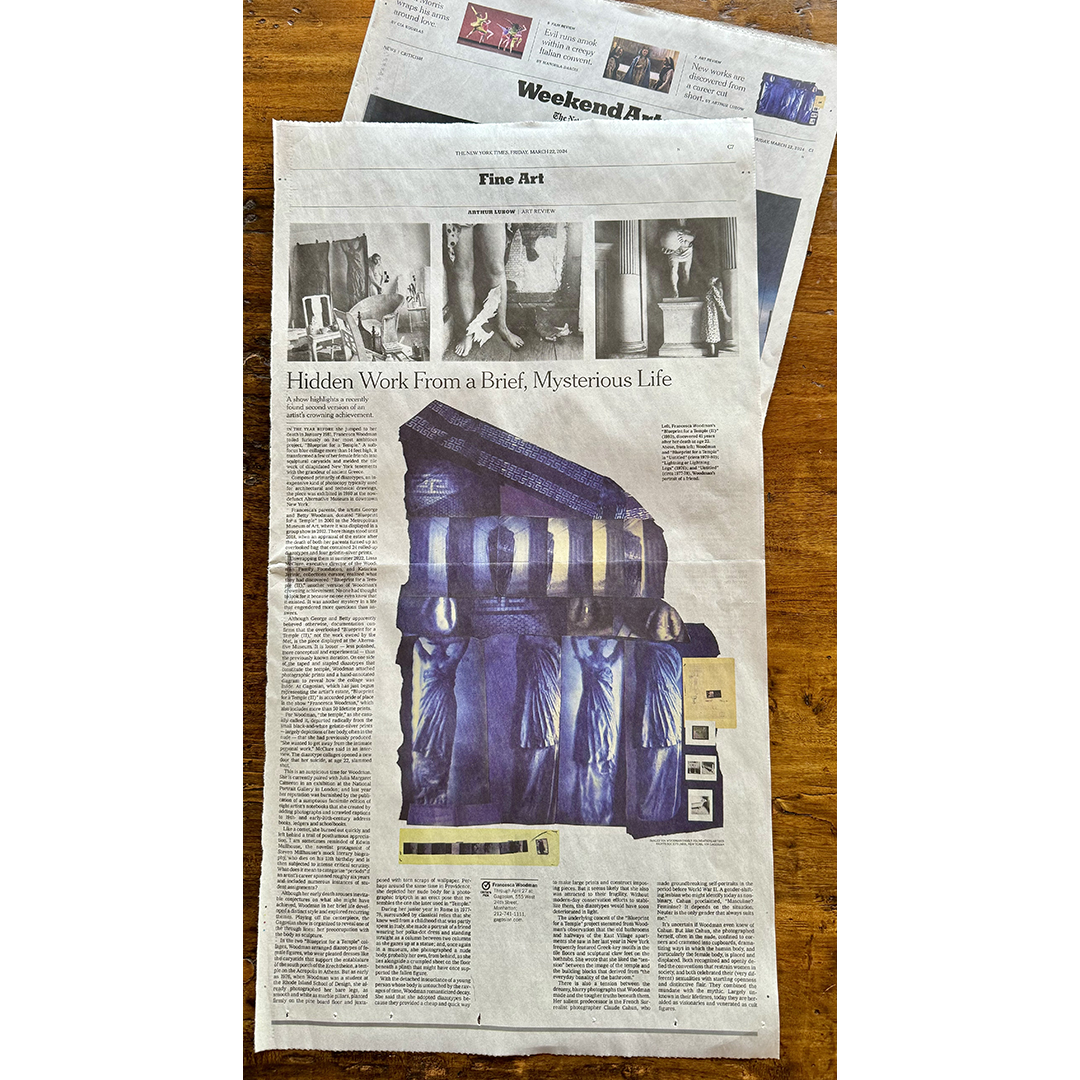
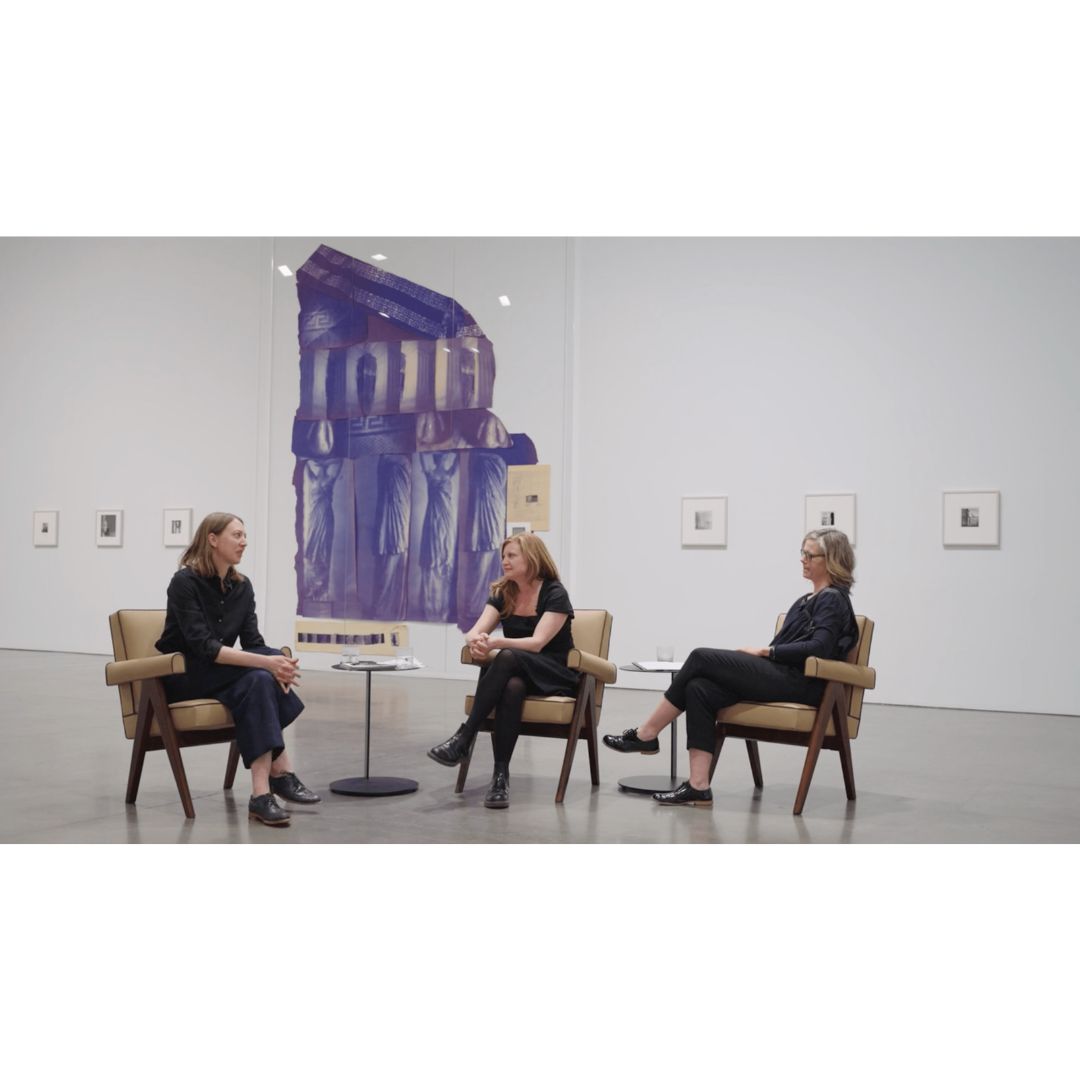
On view for the first time since spring 1980, when it was included in Beyond Photography 80, a group exhibition at the Alternative Museum in New York, Blueprint for a Temple (II) is a collage assembled from twenty-four diazotype elements and four gelatin silver prints. Using diazotype, a medium typically employed to create architectural blueprints, allowed Woodman to work at a monumental scale. The composition depicts the right half of a temple façade and features four caryatids—female figures who form columns in classical architecture. The most famous examples of these features are on the Erechtheion at the Acropolis in Athens, which Woodman visited multiple times.
Please also visit Gagosian's website to learn more about the exhibition and the related catalogue with a newly commissioned essay by classics scholar Brooke Holmes.
Press and Publications
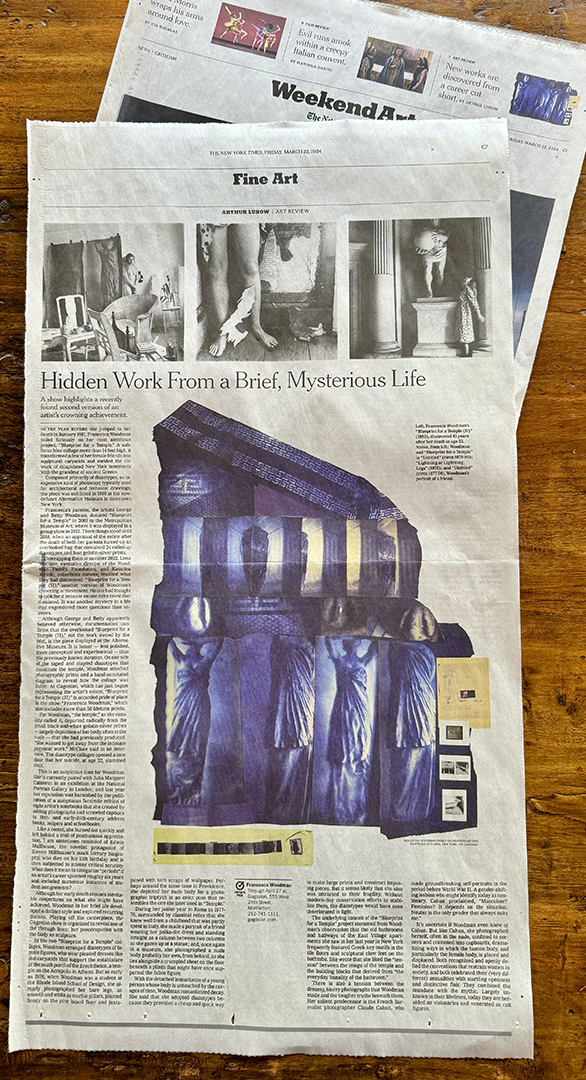
Reviews of the exhibition by: Arthur Lubow, Katie White, Ted Loos, Corey Keller & Putri Tan, Jackson Arn, and Daniel Grant; Canvia ArtSense podcast with Craig Gould.
Videos
Videos commissioned by Gagosian: timelapse and installation of Blueprint for a Temple (II); installation video of the exhibition



Backstories
Additional images and materials from Woodman’s archive which shed light on her process and elaborate on specific works in the exhibition.