

George Woodman's review of "Mrs. Delany’s Flower Collages,” the Village Voice, 1986
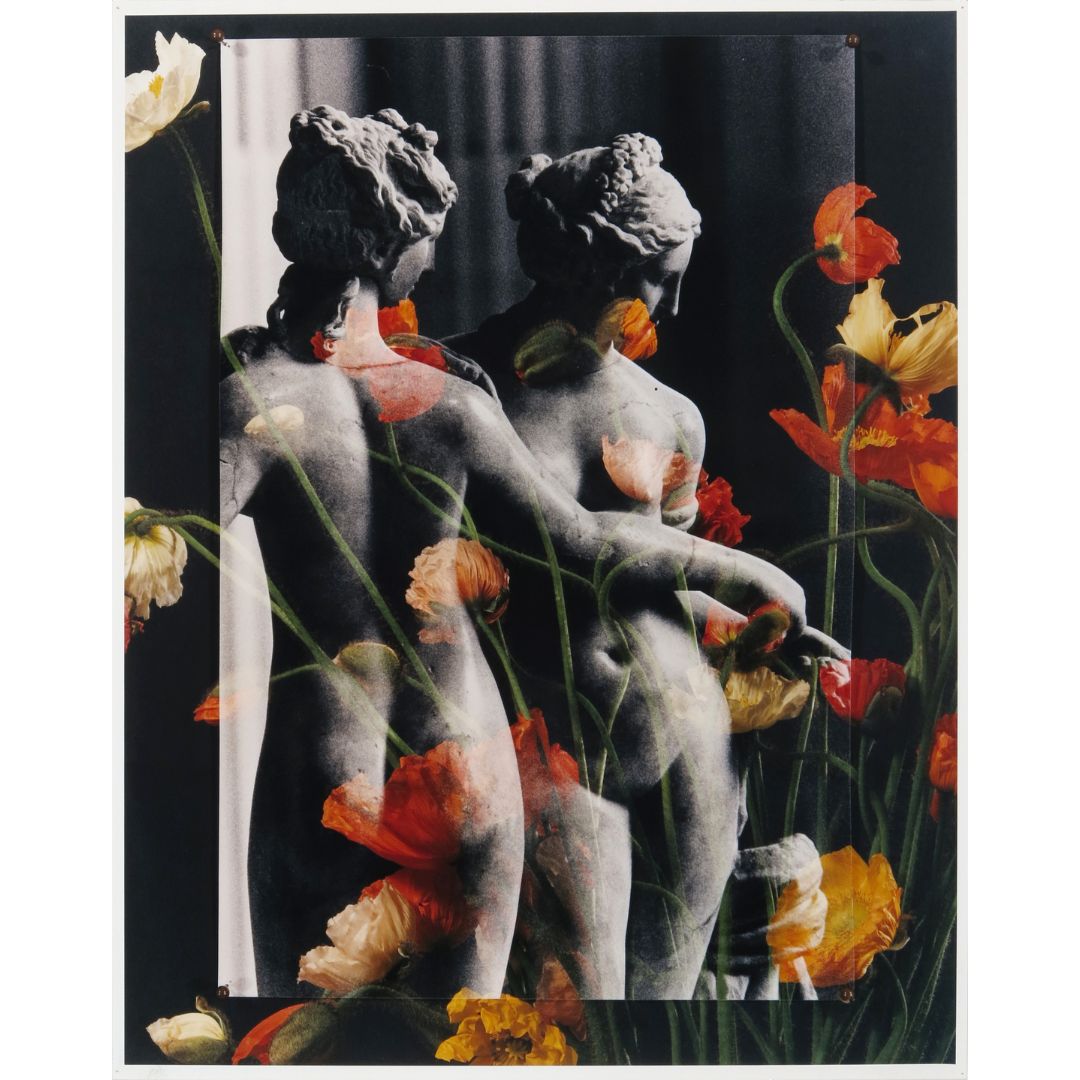

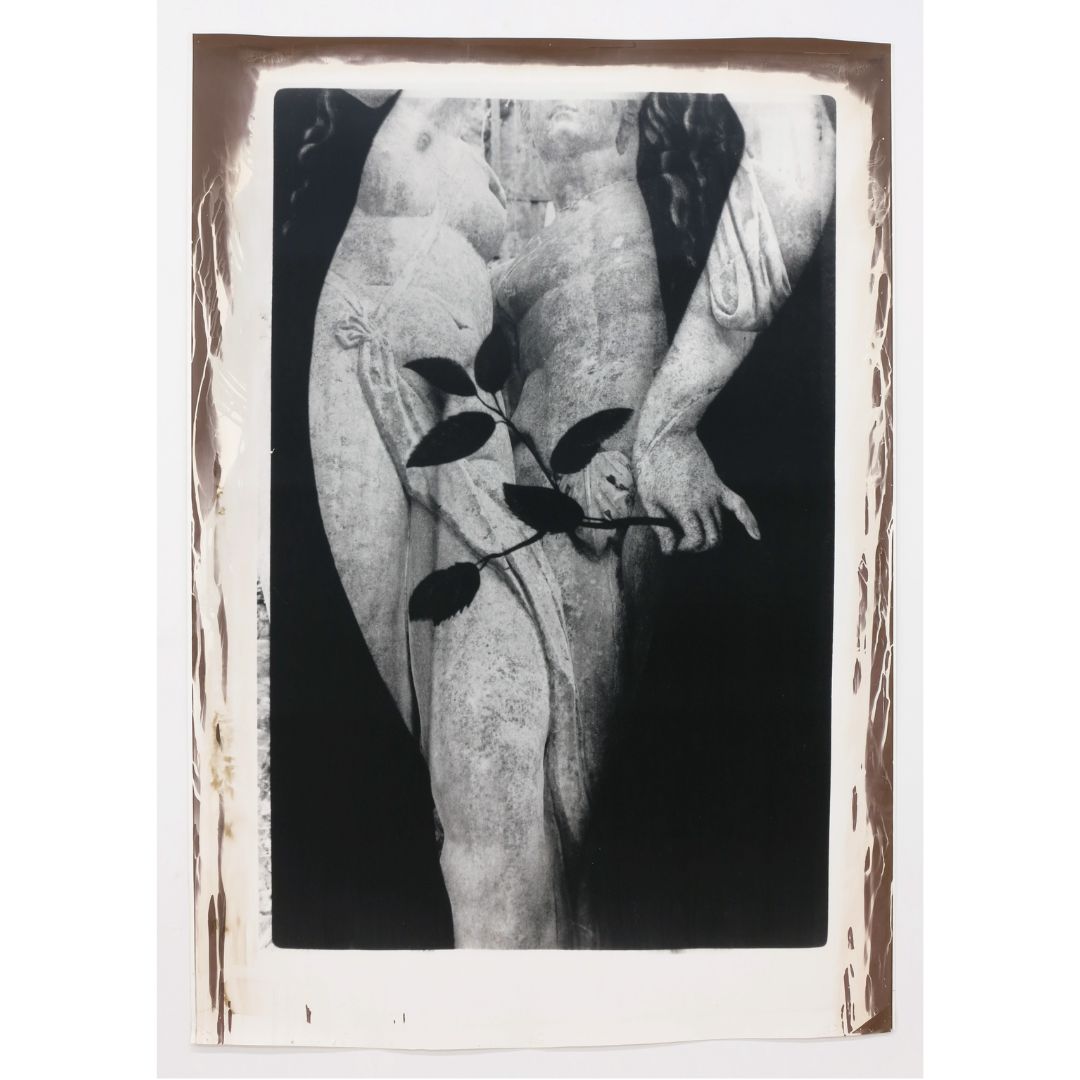
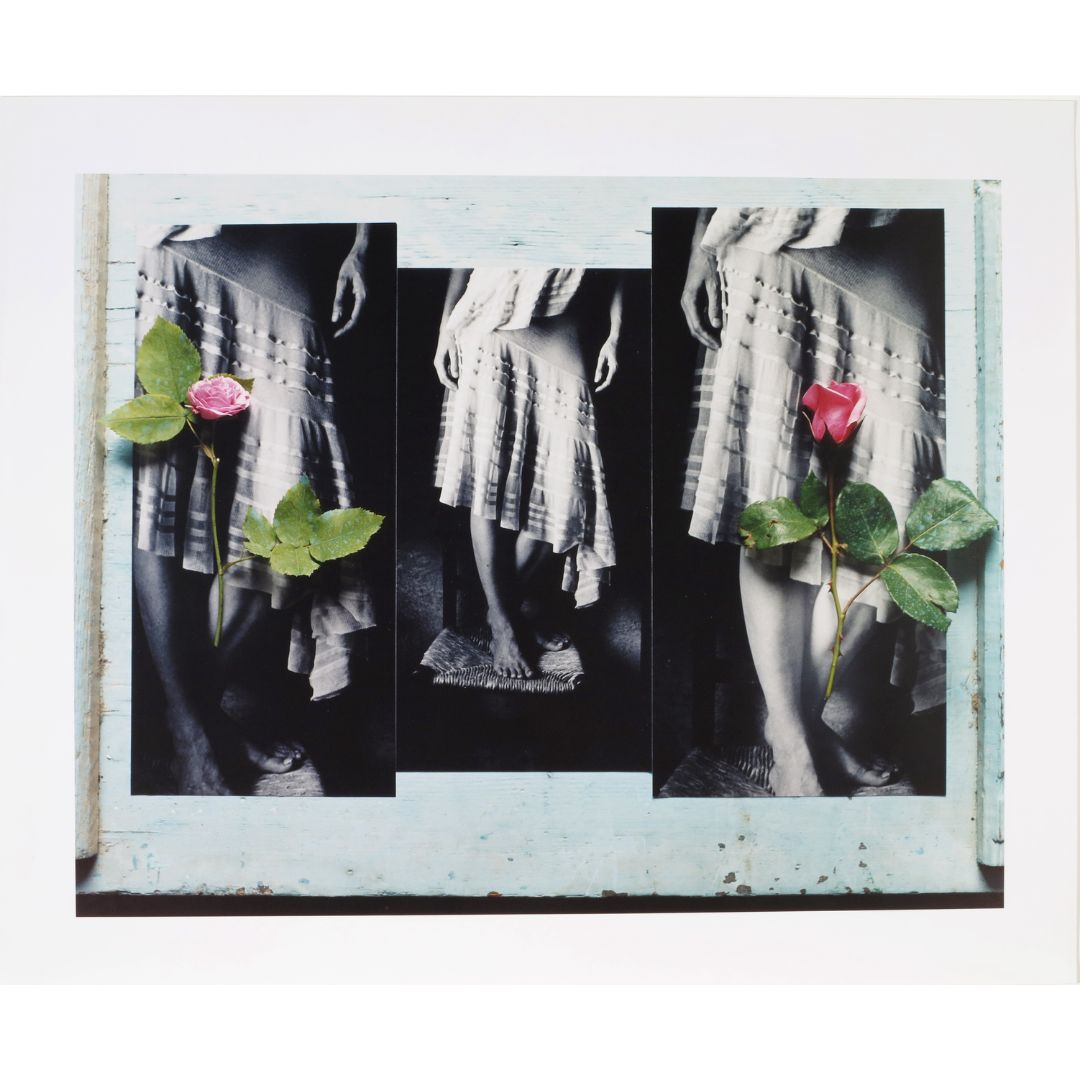
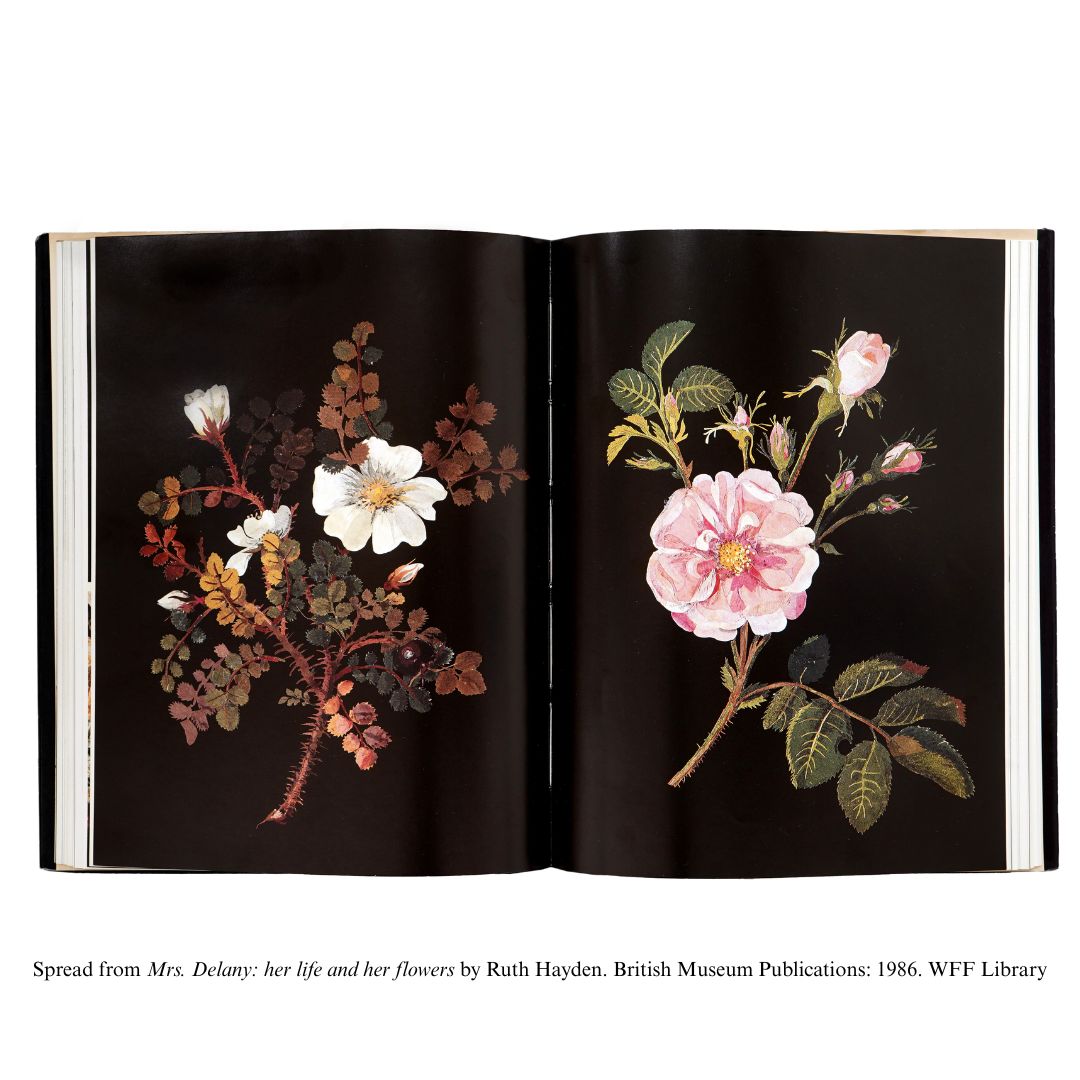


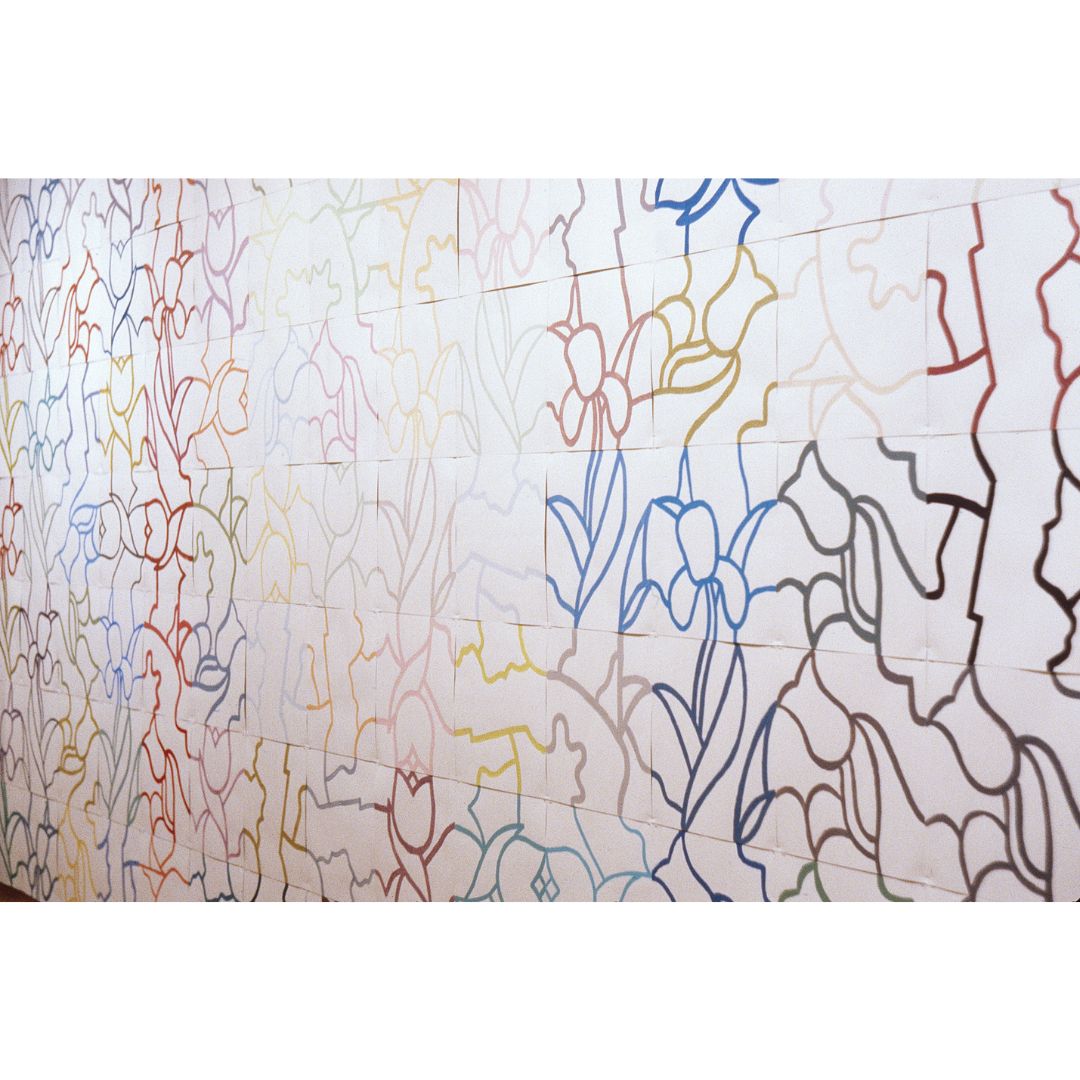
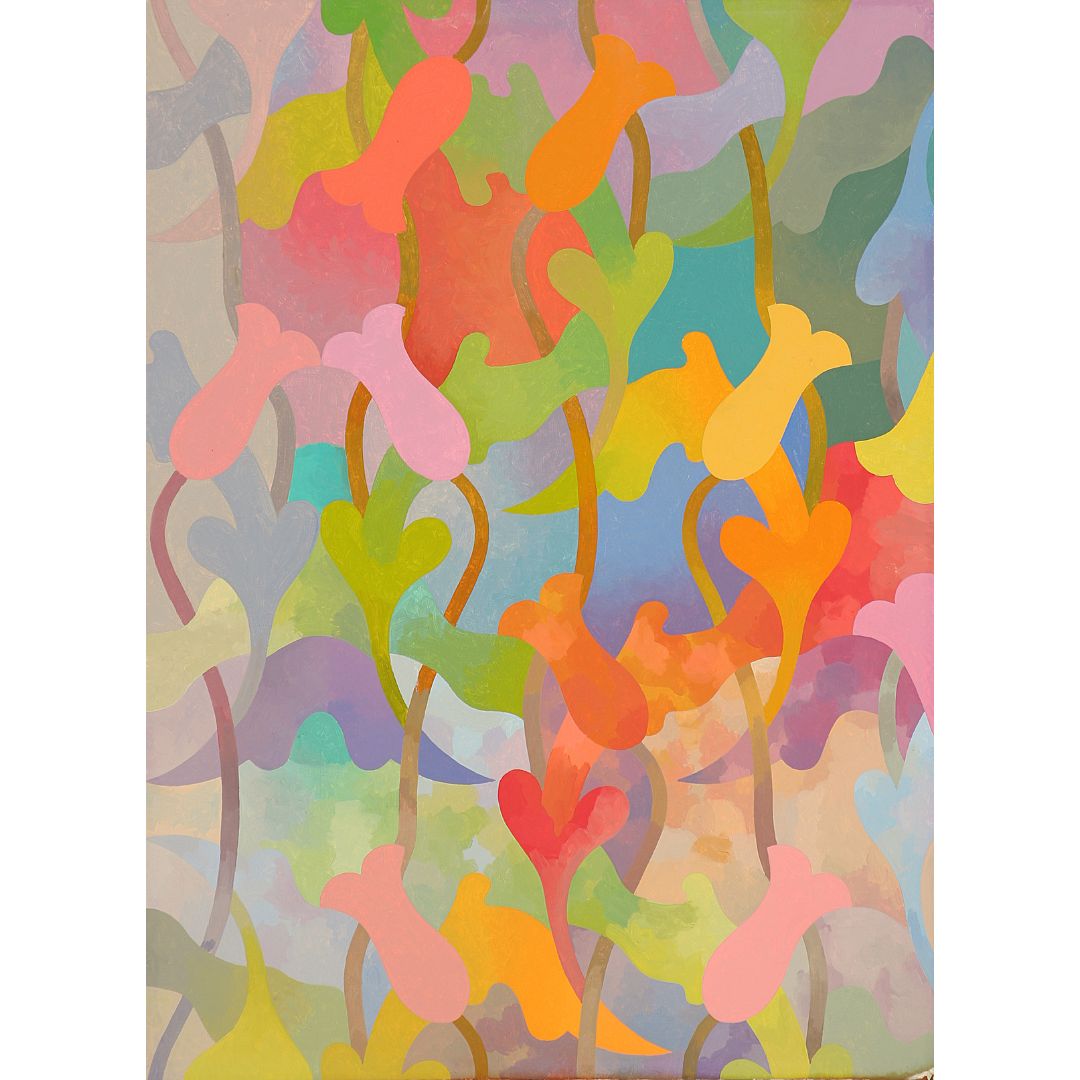

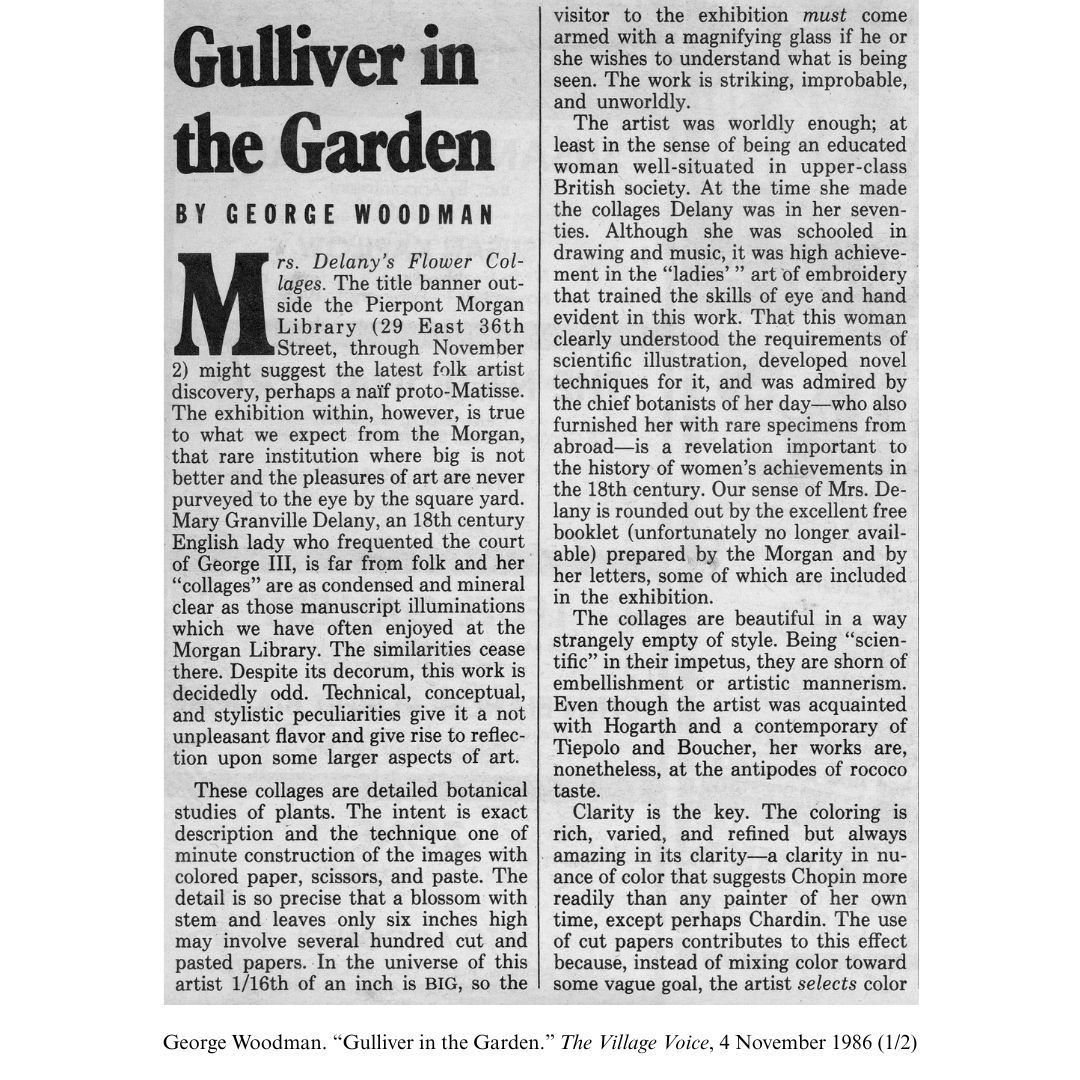
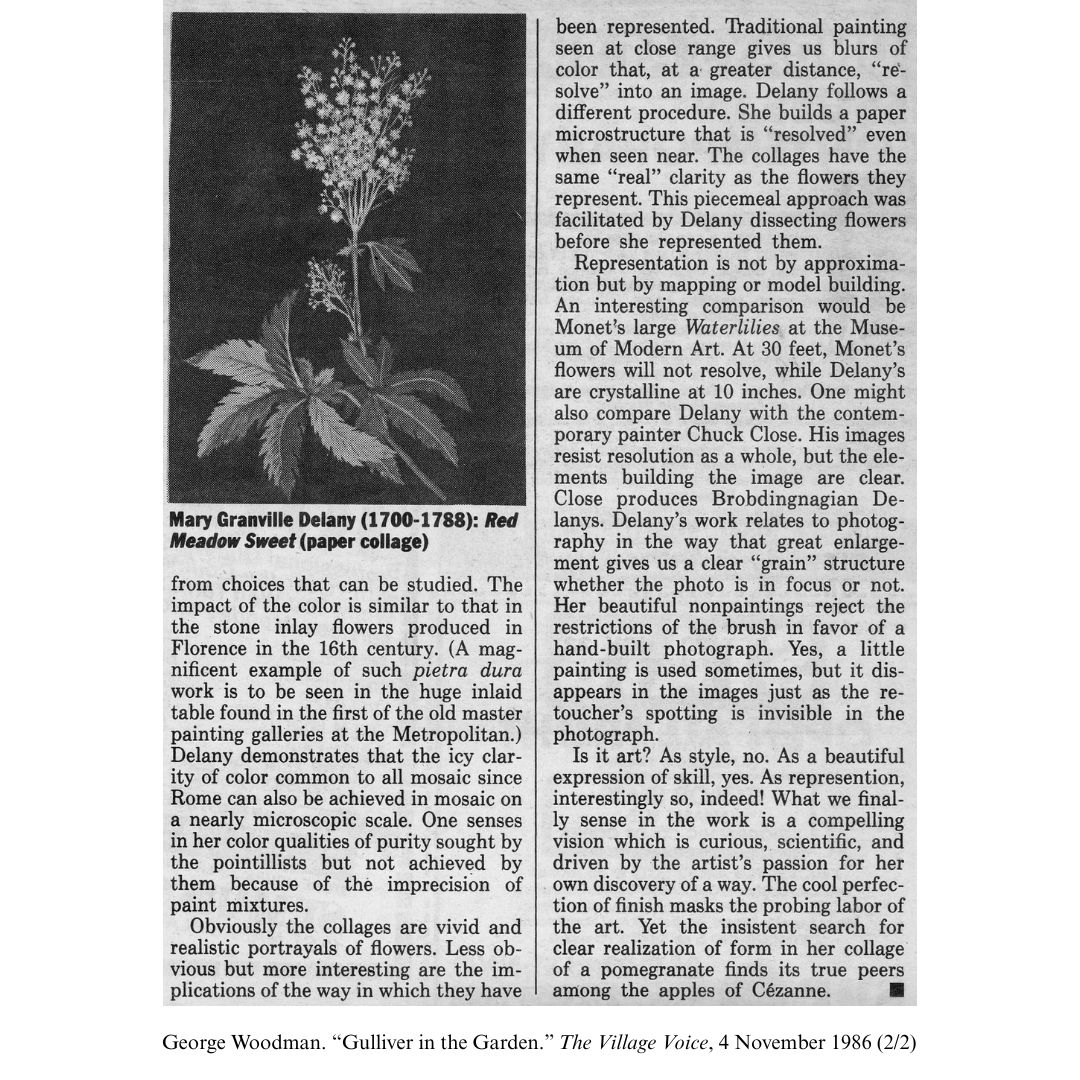
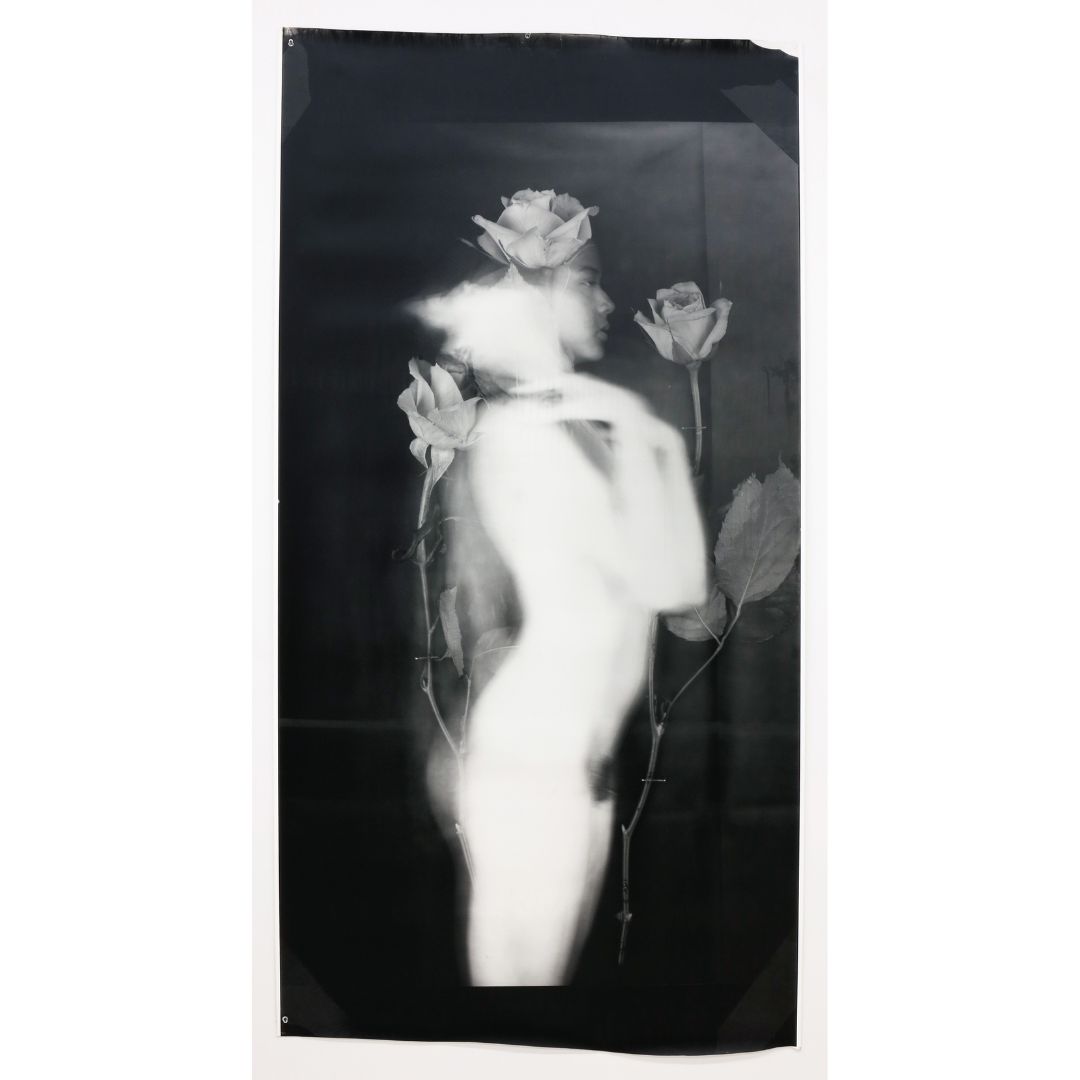

George Woodman’s writings offer rare insight into his artistic sensibilities and philosophy. A prolific commentator on both his own work and that of others, his 1986 review in the Village Voice of Mrs. Delany’s Flower Collages at the Pierpont Morgan Library (now Morgan Library and Museum) reveals much about his enduring preoccupations.
The exhibition featured Mary Delany’s 18th-century botanical paper “mosaicks”—meticulously layered paper collages, sometimes incorporating real plant parts, rendered with scientific precision. Woodman called them “striking, improbable, and unworldly,” captivated by their “icy clarity.” “Clarity is the key,” he wrote, crediting Delany’s use of cut paper over imprecise paint: “The coloring is rich, varied, and refined but always amazing in its clarity.” He continued: “Delany’s work relates to photography in the way that great enlargement gives us a clear ‘grain’ structure whether the photo is in focus or not. Her beautiful nonpaintings reject the restrictions of the brush in favor of a hand-built photograph.”The review echoes Woodman’s sustained pursuit of clarity across distinct mediums—photography, painting, even tilework. In his camera obscura photos, the absence of grain allows detail to emerge with increased proximity—like the mosaics’ “crystalline” resolution. Conversely, his rephotographed prints exaggerate grain, collapsing spatial depth and emphasizing the constructed nature of the image. And like Delany, Woodman sought exactitude in form and color, often distilling shapes into essential signs and undertaking meticulous color studies for his pattern paintings. Both artists also drew from decorative traditions: Delany, accomplished in applied arts such as needlework and shellwork, occasionally embedded wallpaper remnants into her collages; Woodman found inspiration in floral vocabularies of wallpapers, which informed the motifs of his pattern compositions.
He concluded: “What we finally sense in the work is a compelling vision which is curious, scientific, and driven by the artist’s passion for her own discovery of a way… [T]he insistent search for clear realization of form in her collage of a pomegranate finds its true peers among the apples of Cézanne.”